 Call
Call Patient Reports
Advanced Perineal Urethrostomy Hospital with Expert Care
Perineal urethrostomy at Medicover Hospitals is performed using an open surgical approach by skilled urologists with qualifications such as MS, DNB, and MCh. This procedure helps manage complex urethral conditions. Patients often experience a shorter hospital stay and effective symptom relief.
Expert Surgeons
Yearly Surgeries
Patient Satisfaction
What is Perineal Urethrostomy?
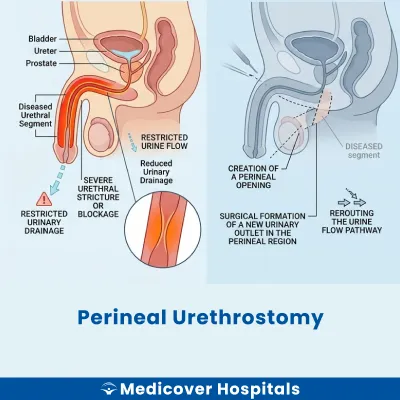
Perineal urethrostomy is a surgical procedure that creates a new opening for the urethra (the tube that carries urine from the bladder to the outside of the body) through the perineum (the area between the genitals and the anus). This procedure is typically performed when the urethra is blocked or damaged, making normal urination difficult or impossible.
This surgery is often needed for conditions like urethral stricture (narrowing of the urethra) or trauma. If untreated, these conditions can lead to severe urinary problems, infections, or kidney damage. Modern surgical approaches for perineal urethrostomy include minimally invasive techniques and robotic-assisted surgery. These methods aim to improve recovery and reduce complications. Always consult a healthcare professional for the most suitable approach.
Perineal Urethrostomy Doctors Near You
Discover expert urologists for perineal urethrostomy at Medicover Hospitals across India. Choose your city and book a consultation to address your urological needs with skilled professionals.
Why Choose Medicover Hospitals for Perineal Urethrostomy?
Get a second opinion from trusted experts and makeconfident, informed decisions.
 Get Second Opinion
Complete Guide To Perineal Urethrostomy
Everything you need to know about the procedure, preparation, and recovery
Perineal urethrostomy Surgery Indications
Perineal urethrostomy is recommended when there are severe blockages or narrowing in the urethra that cannot be managed by other treatments. It is often considered when conservative methods fail to provide relief or when recurrent issues arise.
Recurrent Urethral Strictures
Patients may experience difficulty urinating, frequent urinary tract infections, or pain. Doctors find significant narrowing in the urethra through imaging. When repeated dilations or urethrotomies fail, surgery is considered.
Severe Urethral Trauma
Patients might have blood in urine, pain, or inability to urinate after an injury. Imaging reveals damage or disruption in the urethra. Surgery is recommended when the injury is extensive and not amenable to repair.
Failed Previous Urethral Surgeries
Symptoms include persistent urinary issues despite prior surgeries. Examination and imaging show unresolved strictures or complications. When previous interventions do not resolve the problem, this surgery is advised.
Complex Urethral Strictures
Patients experience severe urinary obstruction and discomfort. Diagnostic tests show long or multi-segment strictures. When less invasive procedures are ineffective, surgery becomes necessary.
Recurrent Urinary Tract Infections
Patients suffer from frequent infections with symptoms like burning sensation and fever. Tests indicate a link to urethral narrowing. Surgery is considered when antibiotics and other treatments fail to prevent recurrence.
How to Prepare for Perineal Urethrostomy?
Proper preparation for perineal urethrostomy is crucial for a smooth surgery and recovery. It helps minimise risks and ensures the procedure goes as planned.
- Medication Review: Stop NSAIDs, anticoagulants, and herbal supplements as advised by your doctor to reduce bleeding risk.
- Fasting Guidelines: Fast for at least 8 hours before the surgery if general anaesthesia is used.
- Bowel Preparation: Follow any bowel prep instructions given by your surgeon to ensure a clear surgical field.
- Clothing Choice: Wear loose, comfortable clothing on the day of the surgery for ease and comfort.
- Transportation Plan: Arrange for someone to drive you home post-surgery as you may feel drowsy from anaesthesia.
- Medication List: Bring a list of all current medications with dosages for the medical team to review.
- Hydration: Stay well-hydrated in the days leading up to the surgery unless advised otherwise.
- Pre-Surgery Hygiene: Bathe with an antiseptic soap as recommended to reduce infection risk.
Perineal urethrostomy Surgery (Step-by-Step)
Performed by expert urologists, this surgery typically lasts 1-2 hours. General anaesthesia is used to ensure the patient is asleep and pain-free during the procedure.
- Preparation: The patient is positioned on the operating table. The surgical area is cleaned and sterilized.
- Incision: A 1-2 cm incision is made in the perineal area. This provides access to the urethra.
- Dissection: The surgeon carefully dissects the surrounding tissue using surgical instruments like a scalpel and bipolar cautery to expose the urethra.
- Urethral Resection: The affected portion of the urethra is removed. A curette may be used to clear any obstructions.
- Creation of Stoma: A new opening (stoma) is created in the perineum. This allows urine to pass directly from the bladder to the outside.
- Closure: The incision is closed with sutures. A catheter may be placed to aid in healing and urine drainage.
- Recovery: The patient is moved to a recovery area. They are monitored as they wake from anaesthesia.
Who Performs Perineal urethrostomy Surgery?
This surgery is performed by urologists. They are specialists in treating conditions of the urinary tract and male reproductive organs. Their expertise ensures the procedure is conducted with precision and care.
Recovery After Perineal Urethrostomy Surgery
Recovering from perineal urethrostomy surgery requires careful attention to post-operative care. Patients can expect some discomfort and will need to follow specific guidelines to ensure proper healing.
Day 1-3:
- Rest is crucial. Limit movement to avoid strain on the surgical site.
- Maintain a liquid diet initially, including clear soups and broths.
- Hydration is important. Drink plenty of water.
Day 4-7:
- Gradually introduce soft foods like khichdi, dal-rice, and moong dal.
- Avoid spicy and oily foods to prevent irritation.
- Continue to limit physical activity. Short walks are allowed.
Day 8-14:
- Resume normal diet with easily digestible foods like curd and soft vegetables.
- Increase activity slowly. Avoid heavy lifting and strenuous exercise.
- Most patients can return to work or school, depending on comfort and job demands.
Phase 3 (Week 3-4):
- Regular activities can be resumed, but avoid activities that put pressure on the surgical area.
- Continue to monitor for any unusual symptoms.
When to Seek Urgent Help
- Severe pain not relieved by medication.
- Fever or chills indicating possible infection.
- Excessive bleeding or discharge from the surgical site.
- Difficulty urinating or changes in urine flow.
Benefits of Perineal urethrostomy Surgery
Perineal urethrostomy is a surgical procedure aimed at improving urinary function. It offers several benefits for patients with specific urological conditions.
- Improved Urinary Flow: Helps in restoring normal urine flow by bypassing obstructions in the urethra.
- Reduced Discomfort: Alleviates pain and discomfort associated with urinary blockages.
- Prevention of Infections: Decreases the risk of recurrent urinary tract infections by ensuring better drainage.
- Enhanced Quality of Life: Improves overall quality of life by addressing chronic urinary issues.
Risks and Complications of Perineal urethrostomy Surgery
Like any surgical procedure, perineal urethrostomy carries certain risks and potential complications. It is important to be aware of these before undergoing the surgery.
- Common: Bleeding during or after the procedure.
- Common: Infection at the surgical site.
- Common: Urinary incontinence or leakage.
- Rare: Stricture formation at the new urethral opening.
- Rare: Damage to surrounding tissues or organs.
- Rare: Long-term changes in urinary habits.
Cost of Perineal urethrostomy Surgery
The cost of Perineal urethrostomy surgery at Medicover Hospitals ranges from Rs. 56,500 to Rs. 152,000. The price varies depending on the ward category chosen, such as outpatient, day care, general, and various sharing options. We offer transparent pricing to ensure clarity for our patients.
Insurance and TPA support is available, with CGHS, ESI, and major TPAs accepted. We also provide a cashless facility for added convenience. Please contact the hospital for the latest insurance panel details as these may change periodically.
Frequently Asked Questions
1. How much does Perineal urethrostomy surgery cost at Medicover Hospitals?
The cost for Perineal urethrostomy surgery at Medicover Hospitals ranges from Rs. 56,500 to Rs. 152,000, depending on the type of room and care required.
2. Is Perineal urethrostomy surgery covered under health insurance at Medicover?
Perineal urethrostomy surgery may be covered by CGHS, ESI, and major TPAs with cashless options. Please contact the hospital for current panel details.
3. Will I need a catheter after Perineal urethrostomy?
Yes, a catheter is typically required after Perineal urethrostomy to ensure proper healing. Your doctor will advise when it can be safely removed.
4. Can I sit comfortably after Perineal urethrostomy?
Sitting may be uncomfortable initially after Perineal urethrostomy. Gradual adjustments and cushions can help improve comfort during the recovery period.
5. What foods aid recovery after Perineal urethrostomy?
Soft foods like curd, dal-rice, and khichdi are recommended post-surgery. These help avoid strain and support healing.
6. Is urinary incontinence a risk after Perineal urethrostomy?
Urinary incontinence can occur after Perineal urethrostomy, but it's often temporary. Discuss concerns with your doctor for management options.
7. How soon can I resume activities post-Perineal urethrostomy?
Light activities can typically resume within a few weeks post-surgery. Consult your doctor for specific guidance based on your recovery progress.


