 Call
Call Patient Reports
Best Hospital for Pericardiocentesis with Advanced Cardiology Care
Pericardiocentesis at Medicover Hospitals is performed using an open surgical approach by skilled cardiologists with DM and DNB qualifications. This procedure helps relieve fluid accumulation around the heart. Patients often experience shorter hospital stays due to the minimally invasive nature of the procedure.
Expert Specialists
Yearly Procedures
Patient Satisfaction
What is Pericardiocentesis?
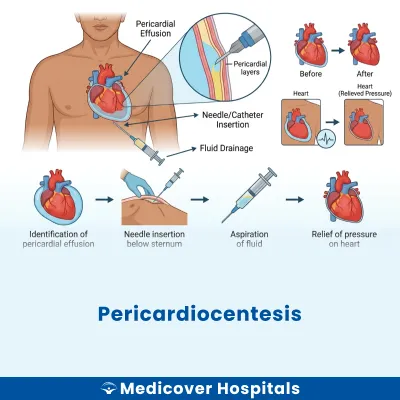
Pericardiocentesis is a medical procedure involving the pericardium, the sac surrounding the heart. It involves the removal of excess fluid from the pericardial cavity (the space between the heart and the pericardium). This is done using a needle and catheter to relieve pressure on the heart.
This procedure is necessary when fluid accumulation, known as pericardial effusion, occurs. Conditions like infection, inflammation, or injury can lead to this. If untreated, it can cause cardiac tamponade, a life-threatening condition where the heart's ability to pump blood is compromised. Modern approaches include ultrasound-guided pericardiocentesis, which enhances precision and safety during the procedure.
Pericardiocentesis Doctors Near You
Discover skilled cardiologists for pericardiocentesis at Medicover Hospitals across India. Choose your city and book a consultation to address your heart health needs effectively.
Why Choose Medicover Hospitals for Pericardiocentesis Procedure ?
Get a second opinion from trusted experts and makeconfident, informed decisions.
 Get Second Opinion
Complete Guide To Pericardiocentesis
Everything you need to know about the procedure, preparation, and recovery
Pericardiocentesis Procedure Indications
Doctors recommend pericardiocentesis when there is a need to remove excess fluid from the pericardial sac. This procedure is crucial in relieving symptoms and preventing complications associated with fluid accumulation around the heart.
Cardiac Tamponade
Patients may experience severe chest pain, shortness of breath, and a feeling of pressure in the chest. Doctors often find low blood pressure, muffled heart sounds, and distended neck veins. When these symptoms persist despite initial treatments, pericardiocentesis is advised.
Pericardial Effusion
Symptoms include difficulty breathing and a persistent cough. Imaging tests like echocardiograms reveal excess fluid around the heart. If the effusion does not resolve with medication, pericardiocentesis is necessary to prevent further complications.
Infectious Pericarditis
Patients might have fever, chest pain, and general malaise. Blood tests and imaging may show inflammation and fluid accumulation. When antibiotics alone do not alleviate symptoms, pericardiocentesis helps in fluid drainage and symptom relief.
Post-Cardiac Surgery Complications
After heart surgery, some patients experience fluid build-up, leading to chest discomfort and breathing issues. If conservative measures fail, pericardiocentesis is performed to remove the fluid and improve recovery.
Traumatic Pericardial Effusion
Following chest trauma, patients may suffer from chest pain and breathing difficulties. Imaging can reveal fluid accumulation due to injury. When symptoms persist despite initial interventions, pericardiocentesis is required to alleviate pressure on the heart.
How to Prepare for Pericardiocentesis?
Proper preparation for pericardiocentesis is crucial to ensure a smooth procedure and reduce potential complications. Follow these steps to get ready:
- Medication Review: Inform your doctor about all medications. You may need to stop NSAIDs, anticoagulants, and herbal supplements.
- Fasting: If sedation is used, fast for 6-8 hours before the procedure. Confirm with your doctor.
- Clothing: Wear loose, comfortable clothing. It helps in easy access and comfort during the procedure.
- Transportation: Arrange for someone to drive you home post-procedure. Sedation may affect your ability to drive.
- Medication List: Bring a list of your medications with dosages. It helps the medical team manage your care effectively.
- Allergy Information: Inform your doctor of any allergies, especially to medications or anaesthesia.
- Consent Form: You may need to sign a consent form. Ensure you understand the procedure and ask questions if needed.
- Health Changes: Report any recent changes in your health, like fever or infection, to your doctor before the procedure.
Pericardiocentesis Procedure (Step-by-Step)
Performed by cardiologists, this procedure typically lasts 30-60 minutes. It is usually done under local anaesthesia.
- Preparation: The patient lies on their back. The chest area is cleaned and sterilised. Local anaesthesia is administered to numb the area.
- Needle Insertion: Using a long, thin needle, the cardiologist carefully inserts it into the chest, aiming for the pericardial space. The patient may feel pressure but should not feel pain.
- Guidance: An echocardiogram or fluoroscopy is used to guide the needle accurately. This ensures the needle reaches the fluid-filled pericardial sac.
- Fluid Aspiration: A catheter is threaded over the needle into the pericardial space. The needle is removed, and the catheter remains to drain the fluid. The patient may feel relief as pressure decreases.
- Monitoring: The fluid is collected for analysis. The patient's vital signs are closely monitored to ensure stability.
- Catheter Removal: Once enough fluid is drained, the catheter is carefully removed. A small bandage is applied to the site.
- Post-Procedure Care: The patient is observed for a short period to monitor for any complications. Instructions for care and follow-up are provided.
Who Performs Pericardiocentesis Procedure?
Pericardiocentesis is performed by cardiologists who specialise in heart-related procedures. They are trained to handle the delicate nature of accessing the pericardial space and managing potential complications.
Recovery After Pericardiocentesis Procedure
Recovery from a pericardiocentesis procedure is generally swift, but it's important to follow medical advice to ensure a smooth healing process. Patients can expect to stay in the hospital for observation immediately after the procedure.
Day 1-2:
- Rest is crucial. Avoid strenuous activities.
- Hospital monitoring for any immediate complications.
- Start with light meals. Opt for easily digestible foods like dal-rice or moong dal soup.
Day 3-5:
- Gradually increase activity levels, but avoid heavy lifting.
- Continue with a light diet. Include curd and khichdi for easy digestion.
- Monitor for any signs of discomfort or unusual symptoms.
Day 6-7:
- Most patients can resume normal activities, but still avoid intense physical exertion.
- Return to work or school may be possible, depending on individual recovery.
- Maintain a balanced diet. Include plenty of fluids and nutritious foods.
Phase 2 (Week 2 onwards):
- Gradually return to regular exercise routines as advised by your doctor.
- Continue to eat a balanced diet with a variety of Indian foods to support recovery.
- Regular follow-up appointments to monitor heart health.
When to Seek Urgent Help:
- Sudden chest pain or discomfort.
- Shortness of breath or difficulty breathing.
- Fever or signs of infection.
- Swelling or redness at the procedure site.
Benefits of Pericardiocentesis Procedure
Pericardiocentesis is a medical procedure aimed at relieving pressure on the heart caused by fluid accumulation in the pericardium.
- Immediate Symptom Relief: Quickly alleviates symptoms like chest pain and shortness of breath.
- Improved Heart Function: Enhances cardiac efficiency by reducing pressure on the heart.
- Diagnostic Aid: Helps in diagnosing the cause of fluid accumulation by analyzing the extracted fluid.
- Life-Saving Potential: Can be crucial in emergency situations to prevent cardiac tamponade.
Risks and Complications of Pericardiocentesis Procedure
While pericardiocentesis is generally safe, it carries some risks and potential complications.
- Bleeding at the puncture site.
- Infection risk due to needle insertion.
- Injury to the heart or surrounding tissues.
- Arrhythmias caused by irritation of the heart.
- Pneumothorax if the lung is accidentally punctured.
- Re-accumulation of fluid requiring further intervention.
What is the Cost of Pericardiocentesis Procedure?
The cost of a Pericardiocentesis procedure at Medicover Hospitals ranges from Rs. 60,000 to Rs. 1,16,000. The price varies depending on the ward category chosen. We offer transparent pricing and support for insurance and TPA, including CGHS, ESI, and major TPAs. A cashless facility is also available for your convenience. Please contact the hospital for the latest insurance panel details as these may change periodically.
Frequently Asked Questions
1. How much does Pericardiocentesis cost at Medicover Hospitals?
The cost of a Pericardiocentesis procedure ranges from Rs. 60,000 to Rs. 1,16,000 across Medicover Hospitals.
2. Is Pericardiocentesis covered under health insurance at Medicover?
Pericardiocentesis may be covered by CGHS, ESI, and major TPAs, offering cashless options. Please contact the hospital for current panel details.
3. Can fluid reaccumulate after Pericardiocentesis?
Yes, fluid can reaccumulate in the pericardial space after the procedure. Regular follow-ups are essential to monitor and manage this condition.
4. Will I experience chest pain post-Pericardiocentesis?
Mild chest pain can occur after the procedure due to needle insertion. It usually subsides in a few days with medication.
5. What lifestyle changes are needed after Pericardiocentesis?
Avoid strenuous activities for a few weeks post-procedure. Incorporate light exercises and a balanced diet including curd, dal-rice, and khichdi.
6. How soon can I return to work after Pericardiocentesis?
Most patients can return to work within a week, depending on recovery. Consult your doctor for personalised advice based on your condition.
7. Are there risks of infection after Pericardiocentesis?
Infection is a potential risk, though rare, after Pericardiocentesis. Watch for symptoms like fever and redness, and seek medical attention if needed.


