 Call
Call Patient Reports
Best Hospital for Percutaneous Transluminal Angioplasty
At Medicover Hospitals, our team of skilled cardiologists, holding qualifications such as MD and DM, perform Percutaneous Transluminal Angioplasty using minimally invasive techniques. This approach allows for smaller incisions, leading to shorter hospital stays and quicker recovery for patients across India.
Expert Surgeons
Yearly Surgeries
Patient Satisfaction
What is Percutaneous Transluminal Angioplasty?
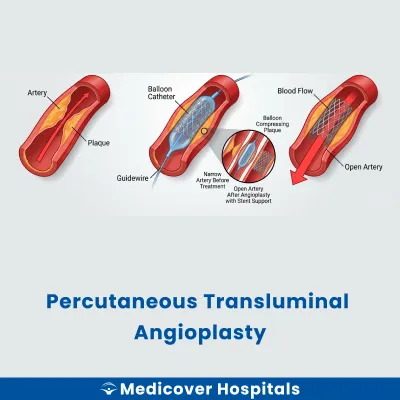
Percutaneous Transluminal Angioplasty (PTA) is a minimally invasive procedure. It is used to open narrowed or blocked blood vessels, typically in the heart (coronary arteries) or legs (peripheral arteries). A small balloon is inserted into the vessel and inflated. This widens the vessel and improves blood flow.
This procedure is needed when arteries become narrowed due to plaque buildup, a condition known as atherosclerosis. If untreated, it can lead to serious issues like heart attack or stroke. PTA helps restore proper blood flow and reduce symptoms. Modern approaches include drug-eluting balloons and stent placements. These methods enhance the effectiveness of the angioplasty.
Percutaneous Transluminal Angioplasty Doctors Near You
Discover experienced cardiologists for percutaneous transluminal angioplasty at Medicover Hospitals across India. Choose your city and book a consultation to explore your treatment options today.
Why Choose Medicover Hospitals for Percutaneous Transluminal Angioplasty?
Get a second opinion from trusted experts and makeconfident, informed decisions.
 Get Second Opinion
Complete Guide To Percutaneous Transluminal Angioplasty
Everything you need to know about the procedure, preparation, and recovery
Percutaneous Transluminal Angioplasty Procedure Indications
Doctors recommend Percutaneous Transluminal Angioplasty (PTA) when blood flow through the arteries is restricted. This procedure is often suggested when symptoms persist despite medication or lifestyle changes.
Coronary Artery Disease
Patients often experience chest pain or discomfort, known as angina, especially during physical activity. Diagnostic tests like an angiogram may show narrowed or blocked coronary arteries. When medications and lifestyle changes do not relieve symptoms, PTA may be advised.
Peripheral Artery Disease
Symptoms include leg pain while walking, numbness, or weakness. Ankle-brachial index tests or Doppler ultrasounds may reveal reduced blood flow in the legs. If symptoms worsen or do not improve with conservative treatments, PTA can be considered.
Carotid Artery Stenosis
Patients may experience transient ischemic attacks or strokes. Imaging tests like carotid ultrasound or CT angiography can show significant narrowing of the carotid arteries. When medical management fails to prevent symptoms, PTA may be recommended.
Renal Artery Stenosis
High blood pressure that is difficult to control and reduced kidney function are common symptoms. Imaging tests such as MR angiography may show narrowed renal arteries. PTA is considered when blood pressure remains uncontrolled despite medication.
Chronic Mesenteric Ischemia
Symptoms include abdominal pain after eating and unintended weight loss. CT or MR angiography may reveal narrowed mesenteric arteries. If dietary changes and medications do not alleviate symptoms, PTA may be necessary.
How to Prepare for Percutaneous Transluminal Angioplasty?
Proper preparation for Percutaneous Transluminal Angioplasty (PTA) is crucial to ensure a smooth procedure and quick recovery. Following the guidelines helps reduce risks and complications.
- Medication Review: Consult your doctor about stopping NSAIDs, anticoagulants, and herbal supplements a few days before the procedure.
- Fasting: Do not eat or drink anything for at least 6-8 hours before the procedure due to anaesthesia requirements.
- Medical History: Bring a list of all medications you are taking, including dosages, to the hospital.
- Clothing: Wear loose, comfortable clothing on the day of the procedure for ease of changing and comfort post-procedure.
- Transportation: Arrange for someone to drive you home after the procedure, as you may not be able to drive yourself.
- Pre-Procedure Tests: Complete any required blood tests or imaging studies as instructed by your healthcare provider.
- Allergy Information: Inform your doctor about any allergies, especially to contrast dyes or medications.
- Smoking and Alcohol: Avoid smoking and alcohol for at least 24 hours before the procedure to reduce complications.
Percutaneous Transluminal Angioplasty Procedure (Step-by-Step)
This procedure is performed by interventional cardiologists. It typically takes about 1 to 2 hours. Local anaesthesia is commonly used.
- Preparation: The patient is positioned on a procedure table. Local anaesthesia is administered to numb the area.
- Access Site: A small incision, about 1-2 cm, is made in the groin or wrist. A sheath is inserted to provide access to the blood vessels.
- Catheter Insertion: A guide wire is threaded through the sheath. A catheter is then advanced over the guide wire to the site of the blockage.
- Balloon Inflation: A balloon-tipped catheter is positioned at the blockage. The balloon is inflated to widen the narrowed artery.
- Stent Placement: If necessary, a stent is placed to keep the artery open. The stent is expanded with the balloon and left in place.
- Catheter Removal: The balloon and catheter are deflated and removed. The sheath is also taken out, and pressure is applied to stop bleeding.
- Recovery: The patient is monitored for a few hours. Instructions are given for post-procedure care.
Who Performs Percutaneous Transluminal Angioplasty Procedure?
This procedure is performed by interventional cardiologists. They specialise in diagnosing and treating cardiovascular conditions using minimally invasive techniques. Their expertise ensures the procedure is carried out safely and effectively.
Recovery After Percutaneous Transluminal Angioplasty Procedure
Recovery from Percutaneous Transluminal Angioplasty (PTA) is generally smooth, but it's important to follow your doctor's advice for a successful outcome. You may experience some discomfort at the catheter insertion site and mild fatigue.
Day 1-2:
- Rest is crucial. Avoid strenuous activities.
- Keep the insertion site clean and dry.
- Eat light meals. Opt for easily digestible foods like khichdi or dal-rice.
Day 3-5:
- Gradually increase light activities like walking.
- Continue with a heart-healthy diet. Include curd, moong dal, and soups.
- Monitor the insertion site for any signs of infection.
Day 6-10:
- You may resume work or school if your job is not physically demanding.
- Avoid lifting heavy objects or intense exercises.
- Maintain a balanced diet. Include fruits, vegetables, and whole grains.
Phase: Week 2-4:
- Gradual return to normal activities, including moderate exercise.
- Continue following a heart-healthy diet. Avoid oily and spicy foods.
- Attend follow-up appointments to monitor your recovery.
When to Seek Urgent Help:
- Severe chest pain or shortness of breath.
- Excessive bleeding or swelling at the insertion site.
- Fever or signs of infection.
Benefits of Percutaneous Transluminal Angioplasty Procedure
Percutaneous Transluminal Angioplasty (PTA) is a minimally invasive procedure aimed at improving blood flow in blocked or narrowed arteries.
- Improved Blood Flow: PTA helps restore proper blood circulation, reducing symptoms like chest pain.
- Quick Recovery: As a minimally invasive procedure, PTA typically allows for faster recovery compared to open surgery.
- Reduced Symptoms: Patients often experience relief from symptoms such as shortness of breath and fatigue.
- Outpatient Procedure: Many patients can return home the same day, reducing hospital stay.
Risks and Complications of Percutaneous Transluminal Angioplasty Procedure
While PTA is generally safe, it carries certain risks and potential complications.
- Bleeding or bruising at the catheter insertion site.
- Re-narrowing of the artery over time, known as restenosis.
- Damage to the blood vessel, which may require further treatment.
- Allergic reaction to the contrast dye used during the procedure.
- Blood clots forming at the site of the angioplasty.
- Heart attack or stroke during or after the procedure.
Cost of Percutaneous Transluminal Angioplasty Procedure
The cost of Percutaneous Transluminal Angioplasty at Medicover Hospitals ranges from Rs. 80,000 to Rs. 1,52,000, depending on the ward category. Prices vary based on the type of accommodation chosen, such as day care, general, private, or deluxe options.
We offer transparent pricing and support for insurance and TPA, including CGHS, ESI, and major TPAs. Cashless facilities are available for your convenience. Please contact the hospital for the latest insurance panel details as these may change periodically.
Frequently Asked Questions
1. How much does Percutaneous Transluminal Angioplasty procedure cost at Medicover Hospitals?
The cost for Percutaneous Transluminal Angioplasty at Medicover Hospitals ranges from Rs. 80,000 to Rs. 1,52,000, depending on the type of accommodation.
2. Is Percutaneous Transluminal Angioplasty procedure covered under health insurance at Medicover?
Yes, it is covered under CGHS, ESI, and major TPAs with cashless options. Please contact the hospital for current panel details.
3. Can I walk immediately after angioplasty?
Walking is usually encouraged soon after the procedure to promote blood flow. However, follow your doctor's advice on activity levels.
4. Will I need medication after angioplasty?
Yes, medications like blood thinners are often prescribed to prevent clots. Follow your doctor's prescription for optimal recovery.
5. Can I eat spicy food after angioplasty?
Avoid spicy food initially; opt for lighter meals like dal-rice or khichdi. Gradually reintroduce spices based on your doctor's advice.
6. Is chest pain normal after angioplasty?
Mild discomfort can occur but persistent chest pain needs immediate attention. Consult your doctor if you experience severe pain.
7. Will I need a stent after angioplasty?
A stent may be placed to keep the artery open, depending on your condition. Your doctor will decide based on the angioplasty results.


