 Call
Call Patient Reports
Percutaneous Endoscopic Gastrostomy Hospital Procedure by Expert General Medicine
At Medicover Hospitals, Percutaneous Endoscopic Gastrostomy (PEG) is performed using an endoscopic approach. Our team of skilled physicians, holding qualifications like MBBS, MD, and DNB, ensures precise placement of the feeding tube. This method typically results in smaller incisions and a shorter hospital stay.
Expert Experts
Yearly Procedures
Patient Satisfaction
What is Percutaneous Endoscopic Gastrostomy?
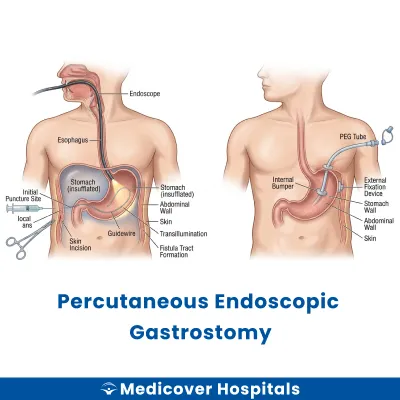
Percutaneous Endoscopic Gastrostomy (PEG) is a medical procedure. It involves placing a tube directly into the stomach (gastrostomy). This is done through the abdominal wall. The procedure uses an endoscope, a flexible tube with a camera. It helps provide nutrition to patients who cannot eat by mouth.
PEG is needed for individuals with swallowing difficulties. Conditions like stroke, neurological disorders, or head and neck cancers may require it. Without treatment, patients risk malnutrition and dehydration. Modern approaches for PEG include endoscopic and radiologic guidance. These methods ensure accurate tube placement. They also reduce complications associated with the procedure.
Percutaneous Endoscopic Gastrostomy Doctors Near You
Find experienced general-medicine specialists for percutaneous endoscopic gastrostomy at Medicover Hospitals across India. Choose your city and book a consultation to address your healthcare needs today.
Why Choose Medicover Hospitals for Percutaneous Endoscopic Gastrostomy?
Get a second opinion from trusted experts and makeconfident, informed decisions.
 Get Second Opinion
Complete Guide To Percutaneous Endoscopic Gastrostomy
Everything you need to know about the procedure, preparation, and recovery
Percutaneous Endoscopic Gastrostomy procedure Indications
Percutaneous Endoscopic Gastrostomy (PEG) is recommended when patients cannot eat by mouth. It provides long-term nutritional support. Doctors suggest this procedure when other feeding methods are ineffective.
Severe Dysphagia
Patients experience difficulty swallowing, leading to inadequate nutrition. Doctors find aspiration risks during swallowing tests. When speech therapy and dietary changes fail, PEG is considered.
Neurological Disorders
Conditions like stroke or ALS cause muscle weakness, affecting swallowing. Patients may show weight loss and dehydration. When oral feeding is unsafe, PEG offers a solution.
Head and Neck Cancers
Tumours or treatments cause swallowing difficulties. Patients may have pain or obstruction. Imaging shows tumour size impacting the esophagus. PEG is used when oral intake is insufficient.
Chronic Malnutrition
Patients with severe weight loss and nutrient deficiencies need intervention. Lab tests show low protein and vitamin levels. When dietary supplements fail, PEG ensures adequate nutrition.
Prolonged Coma
Unconscious patients cannot eat or drink. Doctors note persistent unresponsiveness. PEG is recommended when recovery is uncertain and nutrition is critical.
How to Prepare for Percutaneous Endoscopic Gastrostomy?
Proper preparation for a Percutaneous Endoscopic Gastrostomy (PEG) is crucial to ensure a smooth procedure and recovery. It helps minimise risks and complications.
- Medication Review: Inform your doctor about all medications you take. You may need to stop NSAIDs, anticoagulants, and herbal supplements a few days before the procedure.
- Fasting: Do not eat or drink anything for at least 6-8 hours before the procedure to ensure safety during anaesthesia.
- Medical History: Share your complete medical history, including allergies and previous surgeries, with your healthcare provider.
- Clothing: Wear loose, comfortable clothing on the day of the procedure to allow easy access and comfort.
- Transportation: Arrange for someone to drive you home after the procedure, as you may feel drowsy from the anaesthesia.
- Medication List: Bring a list of your current medications, including dosages, to the hospital for reference.
- Consent Form: Ensure you understand the procedure and sign the consent form after discussing any concerns with your doctor.
- Pre-Procedure Tests: Complete any required tests, such as blood tests, as advised by your healthcare provider.
Percutaneous Endoscopic Gastrostomy procedure (Step-by-Step)
Overview: The procedure is performed by specialists in gastroenterology. It typically takes about 30 to 45 minutes. Local anaesthesia is commonly used, sometimes with sedation.
- Preparation: The patient is positioned comfortably. Local anaesthesia is administered to numb the area. Sedation may be given to help the patient relax.
- Endoscope Insertion: An endoscope, a flexible tube with a camera, is gently inserted through the mouth into the stomach. This helps the doctor view the stomach lining.
- Site Selection: The doctor identifies the optimal site on the abdominal wall for the feeding tube. This is done using the endoscopic view and external palpation.
- Incision and Trocar Insertion: A small incision, about 1-2 cm, is made on the abdomen. A trocar, a sharp instrument, is inserted through the incision to access the stomach.
- Feeding Tube Placement: A feeding tube is guided through the trocar into the stomach. The tube is then secured in place, ensuring proper positioning.
- Closure: The incision site is cleaned and dressed. The tube is checked for proper function and secured to prevent movement.
- Recovery: The patient is monitored for a short period. Instructions are given on how to care for the tube at home.
Who Performs Percutaneous Endoscopic Gastrostomy procedure?
The procedure is performed by gastroenterologists. These specialists have expertise in digestive system procedures. They ensure the safe and effective placement of the feeding tube.
Recovery After Percutaneous Endoscopic Gastrostomy procedure
After a Percutaneous Endoscopic Gastrostomy (PEG) procedure, patients can expect a gradual recovery process. It's important to follow medical advice closely to ensure proper healing and avoid complications.
Day 1-3:
- Rest is crucial. Avoid strenuous activities.
- Initial discomfort around the site is normal. Pain relief medication may be prescribed.
- Start with clear liquids and gradually introduce soft foods like soups and thin dal.
Day 4-7:
- Gradually increase activity levels as tolerated. Avoid heavy lifting.
- Introduce semi-solid foods such as khichdi, moong dal, and curd rice.
- Maintain good hygiene around the tube site to prevent infection.
Week 2:
- Most patients can resume light work or school activities.
- Continue with a balanced diet including soft foods like mashed potatoes and well-cooked vegetables.
- Regular follow-up with the healthcare provider is essential for monitoring progress.
Phase 3 (Beyond Week 2):
- Gradually return to normal activities as advised by the doctor.
- Maintain a nutritious diet including dals, soft chapatis, and cooked vegetables.
- Ensure the tube is functioning properly and report any issues immediately.
When to Seek Urgent Help:
- Severe pain or redness around the tube site.
- Fever or signs of infection.
- Difficulty feeding through the tube or leakage around the site.
- Unusual swelling or bleeding.
Benefits of Percutaneous Endoscopic Gastrostomy procedure
Percutaneous Endoscopic Gastrostomy (PEG) is a procedure that allows nutritional support for patients who cannot eat by mouth.
- Improved Nutrition: PEG provides a reliable way to deliver nutrients directly to the stomach.
- Enhanced Quality of Life: Patients can receive adequate nutrition without discomfort from nasal tubes.
- Long-term Solution: Suitable for patients needing extended nutritional support.
- Minimally Invasive: The procedure is less invasive compared to surgical alternatives.
Risks and Complications of Percutaneous Endoscopic Gastrostomy procedure
While PEG is generally safe, it carries certain risks and complications that patients should be aware of.
- Common: Infection at the insertion site can occur, requiring medical attention.
- Common: Tube dislodgement may happen, necessitating repositioning or replacement.
- Rare: Bleeding can occur during or after the procedure.
- Rare: Perforation of the stomach or bowel is a potential risk.
- Rare: Aspiration pneumonia may develop if stomach contents enter the lungs.
Cost of Percutaneous Endoscopic Gastrostomy procedure
The cost of a Percutaneous Endoscopic Gastrostomy procedure at Medicover Hospitals ranges from Rs.400 to Rs.2900, depending on the ward category chosen. Prices vary across different ward types, offering flexibility to suit various needs and preferences.
We maintain transparent pricing and offer support for insurance and TPA, including CGHS, ESI, and major TPAs. A cashless facility is also available for added convenience. Please contact the hospital for the latest insurance panel details as these may change periodically.
Frequently Asked Questions
1. How much does Percutaneous Endoscopic Gastrostomy procedure cost at Medicover Hospitals?
The cost of a Percutaneous Endoscopic Gastrostomy procedure at Medicover Hospitals ranges from Rs.400 to Rs.2900, depending on the facility and care level.
2. Is Percutaneous Endoscopic Gastrostomy procedure covered under health insurance at Medicover?
Percutaneous Endoscopic Gastrostomy may be covered by CGHS, ESI, and major TPAs for cashless treatment. Please contact the hospital for current panel details.
3. Can I eat normally after a PEG tube placement?
After a PEG tube placement, you will initially consume liquid foods like dal-rice and khichdi. Solid foods are gradually introduced as per medical advice.
4. Will my stomach feel different with a PEG tube?
You may experience some discomfort or bloating initially after PEG tube placement. These sensations typically decrease as you adjust to the tube.
5. Can a PEG tube cause infections?
Yes, infections can occur at the PEG tube site if not properly cared for. Regular cleaning and monitoring are essential to prevent complications.
6. How soon can I return to work after PEG?
Most patients can return to light activities within a week after PEG tube placement. Consult your doctor for specific advice based on your condition.
7. Will I need to change my lifestyle with a PEG tube?
Yes, you will need to adapt to new feeding routines and care for the tube. Regular follow-ups are necessary to ensure proper function and health.


