 Call
Call Patient Reports
Pelvic Osteotomy and Internal Fixation Surgery Hospital with Advanced Care
At Medicover Hospitals, our orthopaedic team, with qualifications like MS and DNB, performs open pelvic osteotomy and internal fixation. This procedure addresses hip deformities and injuries. Patients benefit from reduced blood loss and improved recovery times, enhancing overall treatment outcomes across India.
Expert Surgeons
Yearly Surgeries
Patient Satisfaction
What is Pelvic Osteotomy and Internal Fixation?
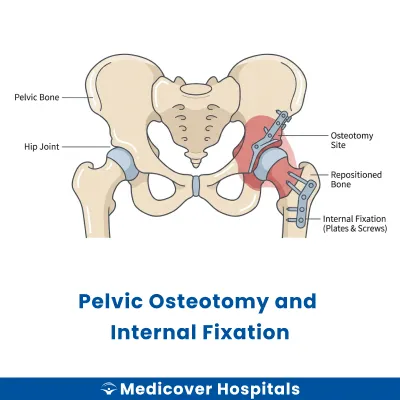
Pelvic Osteotomy and Internal Fixation is a surgical procedure involving the pelvis. The pelvis is the bony structure located at the base of the spine. In this surgery, the bones of the pelvis are cut and realigned. Internal fixation involves using metal plates or screws to hold the bones in their new position. This helps in stabilizing the pelvic structure.
This surgery is needed for conditions like hip dysplasia or pelvic fractures. Hip dysplasia occurs when the hip joint is misaligned. If untreated, it can lead to arthritis or chronic pain. Pelvic fractures can result from trauma. Modern surgical approaches include minimally invasive techniques and computer-assisted navigation. These methods aim to improve precision and recovery.
Pelvic Osteotomy and Internal Fixation Doctors Near You
Discover orthopedics for pelvic osteotomy and internal fixation at Medicover Hospitals across India. Choose your city and book a consultation to explore your treatment options with our specialists.
Why Choose Medicover Hospitals for Pelvic Osteotomy and Internal Fixation?
Get a second opinion from trusted experts and makeconfident, informed decisions.
 Get Second Opinion
Complete Guide To Pelvic Osteotomy And Internal Fixation
Everything you need to know about the procedure, preparation, and recovery
Pelvic Osteotomy and Internal Fixation Surgery Indications
Doctors recommend pelvic osteotomy and internal fixation surgery when conservative treatments do not alleviate symptoms or correct structural issues. This procedure is often necessary to restore function and relieve pain in specific pelvic conditions.
Developmental Dysplasia of the Hip (DDH)
Patients may experience hip pain, limping, or a noticeable difference in leg lengths. Imaging studies like X-rays reveal misalignment or underdevelopment of the hip joint. Surgery is considered when bracing or physical therapy fails to improve joint stability.
Acetabular Fractures
Severe pelvic pain and inability to bear weight are common symptoms. CT scans or X-rays show fractures in the acetabulum. Surgery is advised when fractures do not heal with immobilization or if there is joint instability.
Hip Impingement
Patients often report groin pain and limited hip movement. MRI or X-ray findings show abnormal bone growth affecting hip joint function. Surgery is needed when physical therapy and medications do not relieve symptoms.
Legg-Calvé-Perthes Disease
Children may limp or experience hip stiffness and pain. X-rays reveal changes in the femoral head shape. Surgery is recommended when conservative treatments like rest and bracing do not prevent joint deformity.
Slipped Capital Femoral Epiphysis (SCFE)
Symptoms include hip or knee pain and a waddling gait. X-rays show slippage at the growth plate of the femur. Surgery is necessary when slippage progresses despite activity modification and weight management.
How to Prepare for Pelvic Osteotomy and Internal Fixation?
Proper preparation for pelvic osteotomy and internal fixation is crucial for a smooth surgery and recovery. It helps reduce complications and ensures a quicker return to daily activities.
- Medication Review: Stop NSAIDs, anticoagulants, and herbal supplements as advised by your doctor.
- Fasting: Fast for at least 8 hours before the surgery if general anaesthesia is used.
- Bowel Preparation: Follow any specific bowel prep instructions given by your healthcare provider.
- Pelvic Floor Exercises: Engage in recommended exercises to strengthen pelvic muscles before surgery.
- Comfortable Clothing: Wear loose, comfortable clothing on the day of surgery for ease of movement.
- Transportation: Arrange for someone to drive you home post-surgery as you may feel drowsy.
- Medication List: Bring a list of all medications with dosages to the hospital for reference.
- Insurance Details: Confirm coverage with your insurance provider. Contact the hospital for current details as insurance panels may change.
Pelvic Osteotomy and Internal Fixation Surgery (Step-by-Step)
This procedure is performed by orthopaedic surgeons. It typically lasts 2-4 hours. General anaesthesia is commonly used to ensure the patient is asleep and pain-free.
- Preparation: The patient is positioned on the operating table. The surgical area is cleaned and sterilised.
- Incision: A 10-15 cm incision is made over the pelvic area. This allows access to the bone.
- Osteotomy: The surgeon uses a harmonic scalpel to carefully cut and reshape the pelvic bone. This step corrects deformities or misalignments.
- Internal Fixation: Metal plates and screws are used to stabilise the bone. A curette may be used to smooth bone edges.
- Closure: The incision is closed using sutures or staples. A sterile dressing is applied to protect the wound.
- Recovery: The patient is moved to a recovery room. Vital signs are monitored as anaesthesia wears off.
Who Performs Pelvic Osteotomy and Internal Fixation Surgery?
This surgery is performed by orthopaedic surgeons. They specialise in diagnosing and treating musculoskeletal system conditions. Their expertise ensures precise surgical interventions for bone-related issues.
Recovery After Pelvic Osteotomy and Internal Fixation Surgery
Recovery from pelvic osteotomy and internal fixation surgery requires patience and adherence to medical advice. The healing process is gradual, and it is important to follow your surgeon's instructions to ensure a smooth recovery.
Day 1-3:
- Hospital stay is common. Pain management and monitoring are priorities.
- Begin with a liquid diet, gradually moving to soft foods like soups and khichdi.
Day 4-7:
- Transition to a semi-solid diet. Include curd, dal-rice, and moong dal for protein and easy digestion.
- Start gentle physiotherapy as advised by your doctor.
Week 2-4:
- Continue a balanced diet rich in nutrients to aid bone healing.
- Gradually increase mobility with the help of a physiotherapist.
- Most patients can resume light activities but avoid heavy lifting or strenuous tasks.
Month 2-3:
- Regular follow-up appointments to monitor healing progress.
- Return to work or school may be possible, depending on your recovery and type of activity involved.
- Continue physiotherapy exercises to regain strength and flexibility.
When to Seek Urgent Help
- Severe pain not relieved by medication.
- Signs of infection: fever, redness, or discharge at the incision site.
- Sudden swelling or inability to move the leg.
- Any unusual symptoms or concerns should be reported to your doctor immediately.
Benefits of Pelvic Osteotomy and Internal Fixation Surgery
This surgery is designed to correct deformities and improve hip function.
- Improved Mobility: Enhances joint movement and reduces pain.
- Corrects Deformities: Realigns the hip for better function.
- Prevents Arthritis: Reduces the risk of developing arthritis in the future.
- Enhanced Stability: Provides better support to the hip joint.
Risks and Complications of Pelvic Osteotomy and Internal Fixation Surgery
While generally safe, this surgery carries certain risks and complications.
- Common: Infection at the surgical site.
- Common: Blood clots in the legs or lungs.
- Rare: Nerve or blood vessel damage.
- Rare: Non-union or delayed healing of the bone.
- Rare: Hip joint stiffness or limited range of motion.
- Rare: Implant-related issues, such as loosening or breakage.
Cost of Pelvic Osteotomy and Internal Fixation Surgery
The cost of Pelvic Osteotomy and Internal Fixation Surgery at Medicover Hospitals ranges from Rs. 220000 to Rs.680800, depending on the ward category chosen. Prices vary across different ward types, ensuring options for every budget.
We offer transparent pricing and support for insurance and TPA, including CGHS, ESI, and major TPAs. A cashless facility is also available for your convenience. Please contact the hospital for the latest insurance panel details as these may change periodically.
Frequently Asked Questions
1. How much does Pelvic Osteotomy and Internal Fixation surgery cost at Medicover Hospitals?
The cost for Pelvic Osteotomy and Internal Fixation surgery at Medicover Hospitals ranges from Rs. 220000 to Rs. 680,800, depending on the type of accommodation.
2. Is Pelvic Osteotomy and Internal Fixation surgery covered under health insurance at Medicover?
Yes, Pelvic Osteotomy and Internal Fixation surgery may be covered under CGHS, ESI, and major TPAs. Please contact the hospital for current panel details.
3. Will I need crutches after pelvic osteotomy?
Yes, crutches are often needed for several weeks post-surgery to aid mobility and healing. Your doctor will guide you on the duration.
4. Can I sit comfortably after pelvic osteotomy?
Sitting may be uncomfortable initially, but it improves as healing progresses. Follow your doctor's advice on sitting positions and duration.
5. Is there a risk of hip dislocation post-surgery?
There is a risk of hip dislocation after pelvic osteotomy. Adhering to movement restrictions advised by your doctor can reduce this risk.
6. When can I resume normal activities post-surgery?
Resuming normal activities typically happens around 6-12 weeks post-surgery. Your doctor will provide a personalised timeline based on your recovery.
7. What foods help recovery after pelvic osteotomy?
A balanced diet with curd, dal-rice, and khichdi can aid recovery. These foods provide essential nutrients for healing and energy.
8. What is the recovery time for a pelvic osteotomy?
Recovery after Pelvic osteotomy usually takes about 6–12 weeks for basic healing, but full recovery may take 3–6 months. Physical therapy is often needed to regain strength and mobility.
9. How painful is osteotomy surgery?
Osteotomy can be moderately to significantly painful initially, especially in the first few days after surgery. Pain is usually well controlled with medications and gradually improves over a few weeks.


