 Call
Call Patient Reports
Best Hospital for Pediatric Intraparenchymal Hematoma Evacuation Surgery
At Medicover Hospitals, our skilled neurosurgeons perform Pediatric Intraparenchymal Hematoma Evacuation using open surgical techniques. Our team, with qualifications like MS, MCh, and DNB, ensures precise treatment. This approach often results in reduced blood loss, aiding quicker recovery for young patients.
Expert Surgeons
Yearly Surgeries
Patient Satisfaction
What is Pediatric Intraparenchymal Hematoma Evacuation?
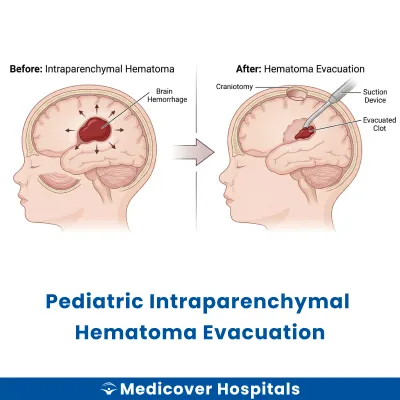
Pediatric Intraparenchymal Hematoma Evacuation is a surgical procedure to remove a hematoma (a collection of blood) from the brain tissue. This condition occurs when blood accumulates within the brain's parenchyma, the functional tissue. The procedure aims to relieve pressure on the brain and prevent further damage.
This surgery is needed when a child suffers from a traumatic brain injury, vascular malformations, or bleeding disorders. If left untreated, the hematoma can lead to increased intracranial pressure, brain damage, or even be life-threatening. Modern surgical approaches include minimally invasive techniques and image-guided surgery. These methods help in accurately targeting and removing the hematoma with reduced risk and recovery time.
Pediatric Intraparenchymal Hematoma Evacuation Doctors Near You
Find expert neurosurgeons for pediatric intraparenchymal hematoma evacuation at Medicover Hospitals across India. Choose your city and book a consultation today for specialised care.
Why Choose Medicover Hospitals for Pediatric Intraparenchymal Hematoma Evacuation?
Get a second opinion from trusted experts and makeconfident, informed decisions.
 Get Second Opinion
Complete Guide To Pediatric Intraparenchymal Hematoma Evacuation
Everything you need to know about the procedure, preparation, and recovery
Pediatric Intraparenchymal Hematoma Evacuation Surgery Indications
Doctors recommend pediatric intraparenchymal hematoma evacuation surgery when a child has a significant brain bleed that cannot be managed with medication alone. This procedure is considered when symptoms worsen or when imaging shows a large hematoma causing pressure on the brain.
Severe Headache and Vomiting
Children experiencing intense headaches and frequent vomiting may have a brain bleed. If imaging reveals a large hematoma, surgery might be necessary to relieve pressure and prevent further complications.
Altered Consciousness
When a child shows confusion, drowsiness, or loss of consciousness, it may indicate a serious brain injury. If scans confirm a substantial hematoma, surgical intervention is often required to prevent further neurological damage.
Seizures
Uncontrolled seizures in a child can be a sign of a brain bleed. If medication does not control the seizures and imaging shows a significant hematoma, surgery may be the next step.
Focal Neurological Deficits
Weakness or numbness in limbs, or difficulty speaking, can suggest brain pressure from a hematoma. If conservative treatments fail and imaging supports it, surgery is considered to alleviate symptoms.
Progressive Neurological Deterioration
Worsening neurological status, despite medical management, indicates the need for surgical evaluation. Imaging that shows an expanding hematoma often leads to the decision for surgical evacuation.
How to Prepare for Pediatric Intraparenchymal Hematoma Evacuation?
Preparation is crucial for the success of pediatric intraparenchymal hematoma evacuation. It ensures the safety and comfort of the child during and after the procedure.
- Medication Review: Stop NSAIDs, anticoagulants, and herbal supplements at least 7 days before surgery.
- Fasting Guidelines: Ensure your child fasts for at least 6 hours before the procedure for general anaesthesia.
- Pre-Surgery Tests: Complete all recommended blood tests and imaging studies as advised by the doctor.
- Clothing: Dress your child in loose, comfortable clothing on the day of surgery.
- Transportation: Arrange for a responsible adult to drive your child home after the procedure.
- Medication List: Bring a list of all medications your child is taking, including dosages.
- Hydration: Keep your child well-hydrated until the fasting period begins.
- Emotional Support: Talk to your child about the procedure to help reduce anxiety.
Pediatric Intraparenchymal Hematoma Evacuation Surgery (Step-by-Step)
This procedure is performed by neurosurgical specialists. It typically lasts 3-5 hours and is done under general anaesthesia.
- Preparation: The child is given general anaesthesia to ensure they are asleep and pain-free. Vital signs are monitored closely.
- Incision: A small incision, usually 1-2 cm, is made on the scalp to access the skull. The location depends on the hematoma's position.
- Craniotomy: A section of the skull is carefully removed using a drill and other surgical tools to expose the brain tissue.
- Hematoma Evacuation: The neurosurgeon uses instruments like a suction device and bipolar cautery to carefully remove the hematoma from the brain tissue.
- Hemostasis: Bleeding is controlled using bipolar cautery to ensure no further bleeding occurs in the brain.
- Closure: The bone flap is replaced and secured. The scalp incision is closed with sutures or staples.
- Recovery: The child is moved to the recovery room where they gradually wake up. Pain management and monitoring continue.
Who Performs Pediatric Intraparenchymal Hematoma Evacuation Surgery?
This surgery is performed by neurosurgeons who specialise in treating brain conditions in children. They are trained to handle the delicate structures of a child's brain with precision and care.
Recovery After Pediatric Intraparenchymal Hematoma Evacuation Surgery
Recovery from pediatric intraparenchymal hematoma evacuation surgery involves careful monitoring and gradual return to daily activities. Parents should be prepared for a period of rest and rehabilitation to ensure optimal healing.
Day 1-3:
- Child will be in the hospital for close monitoring.
- Pain management and infection prevention are priorities.
- Diet may start with clear fluids, gradually moving to soft foods like curd and dal-rice.
Day 4-7:
- Child may be discharged if stable.
- Encourage light activities at home, avoiding strenuous tasks.
- Introduce easily digestible foods like khichdi and moong dal.
Week 2-4:
- Follow-up appointments to monitor recovery progress.
- Gradually increase activity levels as advised by the doctor.
- Include nutrient-rich foods like soups and vegetables in the diet.
Phase 2 (1-3 Months):
- Child can resume school with doctor's approval.
- Continue to avoid contact sports and heavy lifting.
- Maintain a balanced diet to support healing and growth.
When to Seek Urgent Help
- Sudden severe headache or vomiting.
- Changes in consciousness or alertness.
- Seizures or unusual behaviour.
- Signs of infection like fever or redness at the surgical site.
Benefits of Pediatric Intraparenchymal Hematoma Evacuation Surgery
This surgery can significantly improve outcomes for children with brain hematomas.
- Reduced Pressure: Helps alleviate pressure on the brain, potentially preventing further damage.
- Improved Neurological Function: Can lead to better recovery of neurological functions.
- Prevention of Complications: Reduces the risk of complications associated with untreated hematomas.
- Enhanced Recovery: May speed up the recovery process, allowing children to return to normal activities sooner.
Risks and Complications of Pediatric Intraparenchymal Hematoma Evacuation Surgery
While this surgery can be beneficial, it carries certain risks and potential complications.
- Infection: Risk of infection at the surgical site.
- Bleeding: Possibility of bleeding during or after the procedure.
- Neurological Deficits: Potential for new or worsening neurological issues.
- Seizures: Some children may experience seizures post-surgery.
- Swelling: Brain swelling may occur, requiring additional treatment.
- Anesthesia Risks: Complications related to anesthesia may arise.
Cost of Pediatric Intraparenchymal Hematoma Evacuation Surgery
The cost of Pediatric Intraparenchymal Hematoma Evacuation Surgery typically ranges from Rs. 2,50,000 to Rs. 8,00,000 depending on factors such as the surgical approach, duration of hospital stays, room category, diagnostic tests, and post-operative care required. At Medicover Hospitals, we ensure transparent pricing to help you plan better.
We offer insurance and TPA support, including CGHS, ESI, and major TPAs, with a cashless facility available for your convenience. Please contact the hospital for the latest insurance panel details as these may change periodically.
Frequently Asked Questions
1. How much does Pediatric Intraparenchymal Hematoma Evacuation surgery cost at Medicover Hospitals?
The cost of Pediatric Intraparenchymal Hematoma Evacuation surgery typically ranges from Rs. 2,50,000 to Rs. 8,00,
2. Please contact Medicover Hospitals for detailed pricing information. 2. Is Pediatric Intraparenchymal Hematoma Evacuation surgery covered under health insurance at Medicover?
Many insurance plans, including CGHS and ESI, may cover this surgery. Please contact the hospital for current panel details as insurance panels may change.
3. Can my child return to school after brain surgery?
Your child may return to school 4-6 weeks post-surgery, depending on recovery. Consult the doctor for specific recommendations.
4. Will my child have headaches after hematoma evacuation?
Some children may experience headaches after surgery. These usually improve over time with proper medical management.
5. Can my child play sports after brain surgery?
Physical activities like sports should be avoided for at least 3 months post-surgery. Consult your doctor for a tailored recovery plan.
6. Will my child need therapy after hematoma evacuation?
Post-surgery, some children may require physical or occupational therapy. This helps in regaining motor skills and overall recovery.
7. What foods should my child eat after surgery?
Post-surgery, a soft diet including curd, dal-rice, and khichdi is recommended. Gradually reintroduce regular foods as advised by the doctor.


