 Call
Call Patient Reports
Patent Ductus Arteriosus Stenting Procedure at Medicover Hospitals
Patent Ductus Arteriosus Stenting at Medicover Hospitals is performed using minimally invasive techniques by our skilled team with MS, DNB, and MCh qualifications. This approach ensures smaller incisions and reduced blood loss, leading to a shorter hospital stay for patients across India.
Expert Surgeons
Yearly Surgeries
Patient Satisfaction
What is Patent Ductus Arteriosus Stenting?
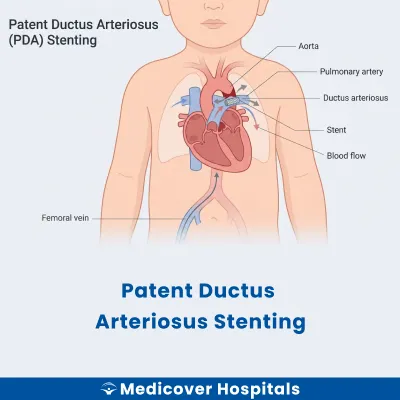
Patent Ductus Arteriosus (PDA) Stenting is a medical procedure involving the heart. It is used to keep the ductus arteriosus (a blood vessel connecting the pulmonary artery to the aorta) open. This is crucial for certain congenital heart defects. The stent is a small tube inserted to maintain blood flow between these vessels.
This surgery is needed when the ductus arteriosus does not close naturally after birth. Conditions like congenital heart defects may require PDA Stenting. If untreated, it can lead to heart failure or inadequate oxygen supply to the body. Modern surgical approaches include catheter-based techniques. These are minimally invasive and allow precise placement of the stent. This helps improve blood circulation effectively.
Patent Ductus Arteriosus Stenting Doctors Near You
Discover expert CTVS specialists for Patent Ductus Arteriosus stenting at Medicover Hospitals across India. Choose your city and book a consultation to receive the care you need.
Why Choose Medicover Hospitals for Patent Ductus Arteriosus Stenting?
Get a second opinion from trusted experts and makeconfident, informed decisions.
 Get Second Opinion
Complete Guide To Patent Ductus Arteriosus Stenting
Everything you need to know about the procedure, preparation, and recovery
Patent Ductus Arteriosus Stenting Procedure Indications
Doctors recommend Patent Ductus Arteriosus (PDA) stenting when the ductus arteriosus fails to close naturally after birth, causing complications. This procedure helps maintain blood flow in certain heart condition.
Severe Pulmonary Stenosis
Patients may experience difficulty breathing and fatigue due to restricted blood flow to the lungs. Imaging tests reveal narrowed pulmonary valves. When medications and balloon valvuloplasty do not improve symptoms, PDA stenting is considered.
Hypoplastic Left Heart Syndrome
Infants show signs of poor feeding and cyanosis. Echocardiograms indicate underdeveloped left heart structures. When initial medical management is insufficient, PDA stenting helps maintain systemic circulation.
Transposition of the Great Arteries
Newborns may have severe cyanosis and low oxygen levels. Diagnostic imaging shows the aorta and pulmonary artery are switched. If balloon atrial septostomy is inadequate, PDA stenting is needed to improve oxygenation.
Interrupted Aortic Arch
Symptoms include poor feeding and respiratory distress. Imaging reveals a break in the aortic arch. When medication fails to sustain blood flow, PDA stenting is used to bridge the gap.
Critical Coarctation of the Aorta
Infants present with weak pulses and high blood pressure. Tests show severe narrowing of the aorta. When medical therapy does not relieve symptoms, PDA stenting is performed to ensure adequate blood flow.
How to Prepare for Patent Ductus Arteriosus Stenting?
Proper preparation is crucial for Patent Ductus Arteriosus Stenting to ensure a smooth procedure and recovery. It helps in reducing risks and enhancing the effectiveness of the treatment.
- Medication Review: Stop NSAIDs, anticoagulants, and herbal supplements as advised by your doctor to reduce bleeding risk.
- Fasting: Fast for at least 6-8 hours before the procedure, as general anaesthesia is typically used.
- Hydration: Stay hydrated up to the fasting period, unless otherwise instructed by your healthcare provider.
- Clothing: Wear loose, comfortable clothing on the day of the procedure for ease and comfort.
- Transport: Arrange for someone to drive you home after the procedure, as you may feel drowsy from the anaesthesia.
- Medication List: Bring a list of all medications with dosages you are currently taking for reference.
- Pre-Procedure Tests: Complete any required blood tests or imaging studies as scheduled by your doctor.
- Follow Instructions: Adhere to any additional instructions provided by your healthcare team for optimal results.
Patent Ductus Arteriosus Stenting procedure (Step-by-Step)
Overview: Performed by CTVS (Cardiothoracic and Vascular Surgery) specialists. The procedure typically lasts 1-2 hours and is done under general anaesthesia.
- Preparation: The patient is placed under general anaesthesia. Vital signs are monitored. The surgical area is sterilised.
- Access: A small incision, approximately 1-2 cm, is made in the groin area. A catheter is inserted into the femoral artery using a guidewire.
- Catheter Navigation: The catheter is guided through the blood vessels to reach the ductus arteriosus. Imaging techniques like fluoroscopy are used for precision.
- Stent Placement: A stent is carefully positioned in the ductus arteriosus using the catheter. The stent is expanded to open the duct, allowing blood flow.
- Verification: The position and function of the stent are checked using imaging. Adjustments are made if necessary to ensure proper placement.
- Closure: The catheter is removed. The incision is closed with sutures or adhesive strips. A bandage is applied to the site.
- Recovery: The patient is moved to a recovery area. Vital signs are monitored. Pain management is provided as needed.
Who Performs Patent Ductus Arteriosus Stenting procedure?
This procedure is performed by cardiothoracic and vascular surgeons. These specialists have expertise in heart and blood vessel surgeries. They are trained to use specific instruments like catheters and stents for minimally invasive procedures.
Recovery After Patent Ductus Arteriosus Stenting Procedure
Recovery from Patent Ductus Arteriosus (PDA) stenting is generally smooth, but it requires careful monitoring. Patients can expect to stay in the hospital for a short period for observation. Following discharge, adhering to dietary and activity guidelines is crucial for a successful recovery.
Day 1-3:
- Rest is essential. Avoid strenuous activities.
- Hospital stay for monitoring vital signs and ensuring no immediate complications.
- Start with a light diet. Include easily digestible foods like curd, dal-rice, and soups.
Day 4-7:
- Gradually increase light activities at home. Avoid heavy lifting or intense exercise.
- Continue with a balanced diet. Incorporate moong dal and khichdi for nutrition.
- Monitor the incision site for any signs of infection.
Week 2:
- Follow up with your doctor for a check-up.
- Most patients can resume school or work, depending on individual recovery and doctor's advice.
- Maintain a healthy diet. Include fruits and vegetables for added vitamins.
Phase 3 (Week 3-4):
- Gradually return to normal activities, but continue to avoid high-impact sports.
- Continue regular follow-ups as advised by your healthcare provider.
When to Seek Urgent Help:
- Fever or chills, which may indicate an infection.
- Increased pain, redness, or swelling at the incision site.
- Breathing difficulties or chest pain.
- Any unusual symptoms or concerns.
Benefits of Patent Ductus Arteriosus Stenting procedure
Patent Ductus Arteriosus (PDA) Stenting is a minimally invasive procedure used to treat certain heart conditions in infants and children.
- Improved Blood Flow: Helps maintain adequate blood flow from the heart to the lungs.
- Minimally Invasive: Reduces recovery time compared to open-heart surgery.
- Preserves Heart Function: Supports normal heart function by ensuring proper circulation.
- Temporary Solution: Provides a bridge to more definitive treatments if needed later.
- Reduced Hospital Stay: Often results in a shorter hospital stay for patients.
Risks and Complications of Patent Ductus Arteriosus Stenting procedure
While PDA Stenting is generally safe, it carries certain risks and potential complications.
Common Risks
- Bleeding at the catheter insertion site.
- Infection risk at the site of entry.
Rare Risks
- Stent migration or displacement.
- Blood clot formation within the stent.
- Narrowing of the stented area over time.
- Allergic reaction to the materials used in the stent.
Cost of Patent Ductus Arteriosus Stenting procedure
The cost of the Patent Ductus Arteriosus Stenting procedure varies from ₹1,50,000 to ₹4,60,000, based on the surgical approach, duration of hospital stay, room category, required diagnostics, and post-operative care.
At Medicover Hospitals, we ensure transparent pricing. We support insurance and TPA services, including CGHS, ESI, and major TPAs, with a cashless facility available. Please contact the hospital for the latest insurance panel details as these may change periodically.
Frequently Asked Questions
1. How much does Patent Ductus Arteriosus Stenting procedure cost at Medicover Hospitals?
The cost of Patent Ductus Arteriosus Stenting can vary from ₹1,50,000 to ₹4,60,
2. Please contact Medicover Hospitals for detailed pricing information. 2. Is Patent Ductus Arteriosus Stenting procedure covered under health insurance at Medicover?
Many insurance providers, including CGHS and ESI, may cover this procedure. Please contact the hospital for current panel details.
3. Will my child need oxygen after PDA stenting?
Some children may require oxygen support temporarily post-procedure. This helps ensure adequate oxygenation while the heart adjusts.
4. Can my child play sports after PDA stenting?
Your child can usually resume normal activities after recovery. Consult your doctor for specific guidelines based on your child's condition.
5. Are there dietary restrictions post-PDA stenting?
A balanced diet including dal-rice, fruits, and vegetables is recommended. Avoid heavy, oily foods for a few weeks post-procedure.
6. What are the risks of infection after PDA stenting?
Infections are rare but possible after PDA stenting. Watch for fever or redness at the incision site and consult your doctor if they occur.
7. Can PDA reopen after stenting?
Reopening is uncommon but possible if the stent shifts. Regular follow-ups are crucial to monitor stent position and heart function.


