 Call
Call Patient Reports
Best Hospital for Robotic-Assisted Partial Nephrectomy Surgery by Expert Urologists
Partial nephrectomy at Medicover Hospitals is performed using advanced laparoscopic techniques. Our consultant urologists, with qualifications like MS, DNB, and MCh, ensure precise removal of kidney tumours while preserving healthy tissue. This approach results in smaller incisions and reduced blood loss, promoting quicker recovery.
Expert Surgeons
Yearly Surgeries
Patient Satisfaction
What is Partial Nephrectomy?
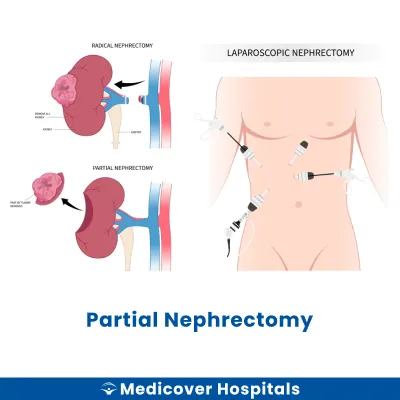
Partial nephrectomy is a surgical procedure involving the removal of a portion of the kidney. The kidney is an essential organ responsible for filtering waste from the blood and producing urine. In this surgery, only the diseased or damaged part of the kidney is removed, preserving as much healthy tissue as possible.
This surgery is often needed for conditions like kidney tumours or localized renal cancer. It helps in removing cancerous cells while retaining kidney function. If left untreated, these conditions can lead to kidney failure or spread of cancer. Modern surgical approaches for partial nephrectomy include laparoscopic and robotic-assisted techniques. These methods aim to reduce recovery time and minimize complications.
Partial Nephrectomy Doctors Near You
Discover skilled urologists for partial nephrectomy at Medicover Hospitals across India. Choose your city and book a consultation to discuss your kidney health needs with our experienced specialists.
Why Choose Medicover Hospitals for Partial Nephrectomy?
Get a second opinion from trusted experts and makeconfident, informed decisions.
 Get Second Opinion
Complete Guide To Partial Nephrectomy
Everything you need to know about the procedure, preparation, and recovery
Partial nephrectomy Surgery Indications
Partial nephrectomy is recommended when preserving kidney function is crucial while removing a tumour or diseased tissue. Urologists suggest this procedure when specific conditions affect only a part of the kidney.
Small Renal Tumours
Patients may experience no symptoms, but imaging tests like CT or MRI reveal small masses. When these tumours are confined to a portion of the kidney, partial nephrectomy is advised to remove the tumour while preserving kidney function.
Localised Kidney Cancer
Symptoms might include blood in urine or flank pain. Imaging studies show a tumour limited to one area of the kidney. If the cancer cells is localised and hasn't spread, partial nephrectomy can effectively remove the cancerous tissue.
Benign Kidney Tumours
Some patients may notice pain or a palpable mass. Imaging confirms a benign tumour, such as an angiomyolipoma. When these tumours cause symptoms or risk complications, partial nephrectomy is considered.
Complex Kidney Cysts
Patients might experience pain or discomfort. Ultrasound or CT scans show complex cysts with suspicious features. If these cysts pose a risk of malignancy, surgical removal of the affected part is recommended.
Traumatic Kidney Injury
Following an injury, patients may have pain and blood in urine. Imaging reveals damage to a specific kidney area. When conservative management fails, partial nephrectomy helps repair the injured section.
How to Prepare for a Partial Nephrectomy?
Proper preparation for a partial nephrectomy procedure is crucial to ensure a smooth surgical process and recovery. It helps minimise risks and enhances the effectiveness of the procedure.
- Medication Review: Stop NSAIDs, anticoagulants, and herbal supplements at least a week before surgery.
- Fasting: Do not eat or drink anything for at least 8 hours before the surgery to prepare for anaesthesia.
- Medical History: Bring a list of current medications with dosages to the hospital.
- Clothing: Wear loose, comfortable clothing on the day of the surgery for ease of movement post-operation.
- Transport Arrangement: Arrange for someone to drive you home after the procedure as you may feel groggy.
- Pre-Surgery Tests: Complete any required blood tests or imaging studies as advised by your doctor.
- Smoking and Alcohol: Avoid smoking and alcohol consumption at least 24 hours before the surgery.
- Personal Items: Leave valuables at home and bring only essentials to the hospital.
Partial Nephrectomy Surgery (Step-by-Step)
Partial nephrectomy is performed by experienced specialists from the Urology department. The surgery usually takes 2-4 hours and is carried out under general anaesthesia to ensure the patient remains comfortable and pain-free.
- Preparation: The patient is positioned on the operating table. General anaesthesia is administered. Vital signs are monitored continuously.
- Incision: Small incisions, usually 1-2 cm, are made in the abdomen. A laparoscope, a thin tube with a camera, is inserted through one incision to guide the surgery.
- Accessing the Kidney: Additional small incisions are made for surgical instruments like trocars and bipolar cautery. These tools help in accessing the kidney and controlling bleeding.
- Resection of Tumour: The surgeon uses instruments such as a harmonic scalpel to carefully remove the tumour or diseased tissue from the kidney, preserving as much healthy tissue as possible.
- Closure: Once the tumour is removed, the kidney is repaired. The incisions are closed with sutures or staples. The area is cleaned and dressed.
- Recovery: The patient is moved to a recovery room. Vital signs are monitored as the patient wakes up from anaesthesia. Pain management is provided as needed.
- Post-Operative Care: The patient may need to stay in the hospital for a few days. Instructions on wound care and activity restrictions are given before discharge.
Who Performs Partial Nephrectomy Surgery?
Partial nephrectomy is performed by experienced urologists. These specialists are trained in surgeries involving the urinary tract and male reproductive organs. They have expertise in minimally invasive techniques, ensuring precise removal of kidney tumours while preserving kidney functi-
Recovery After Partial Nephrectomy Surgery
Recovery from partial nephrectomy surgery requires patience and care. Initially, you may experience discomfort and fatigue. Gradual improvement is expected as you follow your doctor's advice and take necessary precautions.
Day 1-3:
- Hospital stay is common. Pain management and monitoring are priorities.
- Start with a liquid diet. Gradually introduce soft foods like soups and khichdi.
- Rest is crucial. Avoid any physical exertion.
Day 4-7:
- Pain should lessen. Continue with prescribed medications.
- Introduce light meals such as dal-rice and moong dal.
- Begin short, gentle walks to aid circulation.
Day 8-14:
- Most patients can go home if not already discharged.
- Resume normal diet gradually. Include curd and easily digestible foods.
- Avoid lifting heavy objects. Continue light activities.
Week 3-6:
- Energy levels improve. Gradually increase activity.
- Return to work or school may be possible, depending on your recovery.
- Follow-up appointments are essential to monitor healing.
When to Seek Urgent Help
- High fever or chills.
- Severe pain unrelieved by medication.
- Persistent nausea or vomiting.
- Signs of infection at the incision site, such as redness or discharge.
- Difficulty urinating or blood in urine.
Contact your healthcare provider immediately if you experience any of these symptoms.
Benefits of Partial Nephrectomy Surgery
Partial nephrectomy is a surgical procedure aimed at removing a portion of the kidney, typically to treat kidney tumours while preserving kidney function.
- Preservation of Kidney Function: This procedure helps maintain more of the kidney's natural function compared to removing the entire kidney.
- Reduced Risk of Chronic Kidney Disease: By preserving part of the kidney, the risk of developing chronic kidney disease is lowered.
- Minimally Invasive Options: Laparoscopic or robotic-assisted techniques may be used, leading to quicker recovery times.
- Effective Cancer Treatment: It effectively removes cancerous tissues while sparing healthy kidney tissue.
Risks and Complications of Partial nephrectomy Surgery
While partial nephrectomy is generally safe, like any surgery, it carries certain risks and potential complications.
- Common: Bleeding during or after surgery may occur, requiring further intervention.
- Common: Infection at the surgical site is a potential risk.
- Rare: Injury to surrounding organs or tissues may happen.
- Rare: Urine leakage from the kidney can occur, necessitating additional treatment.
- Rare: High blood pressure or decreased kidney function may develop post-surgery.
Cost of Partial Nephrectomy Surgery
The cost of Partial nephrectomy surgery at Medicover Hospitals ranges from Rs. 69,500 to Rs. 109,000, depending on the ward category chosen. Costs vary by ward type, offering flexibility to suit different needs and budgets.
Medicover Hospitals ensures transparent pricing and supports insurance and TPA services, including CGHS, ESI, and major TPAs. A cashless facility is available for added convenience. Please contact the hospital for the latest insurance panel details as these may change periodically.
Frequently Asked Questions
1. How much does Partial nephrectomy surgery cost at Medicover Hospitals?
The cost for Partial nephrectomy surgery at Medicover Hospitals ranges from Rs. 69,500 to Rs. 109,000, depending on the type of room and care.
2. Is Partial nephrectomy surgery covered under health insurance at Medicover?
Partial nephrectomy surgery is often covered by CGHS, ESI, and major TPAs. Please contact the hospital for current panel details.
3. Will I need dialysis after partial nephrectomy?
Dialysis is generally not required after a partial nephrectomy as only part of the kidney is removed. Your remaining kidney tissue usually functions adequately.
4. Can I drink alcohol after partial nephrectomy?
It's advisable to avoid alcohol for at least 6 weeks after surgery to aid recovery. Consult your doctor for personalized advice.
5. Will my kidney function be affected long-term?
Partial nephrectomy aims to preserve kidney function, but some reduction may occur. Regular follow-ups will help monitor your kidney health.
6. What foods should I eat after partial nephrectomy?
Post-surgery, a diet of soft, easy-to-digest foods like curd, dal-rice, and khichdi is recommended. Avoid spicy and oily foods initially.
7. Can I exercise after partial nephrectomy?
Light activities like walking are encouraged after 2 weeks. Avoid heavy lifting or strenuous exercise for at least 6 weeks.
8. How long after a nephrectomy can you walk?
Most patients are encouraged to start walking within 24 hours after surgery. Early movement helps prevent complications and supports faster recovery, though activity should be gradual.
9. What can you not do after a partial nephrectomy?
After surgery, you should avoid heavy lifting, strenuous exercise, bending or straining, and driving (initially). These restrictions usually last for a few weeks, depending on recovery and your doctor's advice.
10. How long does it take to poop after a kidney removal?
Bowel movements typically return within 2 to 4 days after surgery. Delays can occur due to anesthesia, pain medications, and reduced activity, but walking and hydration help restore normal bowel function.


