 Call
Call Patient Reports
Best Hospital for Paratubal Cystectomy Surgery by Expert Gynecologists
At Medicover Hospitals, our skilled gynecologists, with qualifications like MS, DNB, and FMAS, perform paratubal cystectomy using laparoscopic techniques. This minimally invasive approach ensures smaller incisions and reduced blood loss, leading to a shorter hospital stay for patients across India.
Expert Surgeons
Yearly Surgeries
Patient Satisfaction
What is Paratubal Cystectomy?
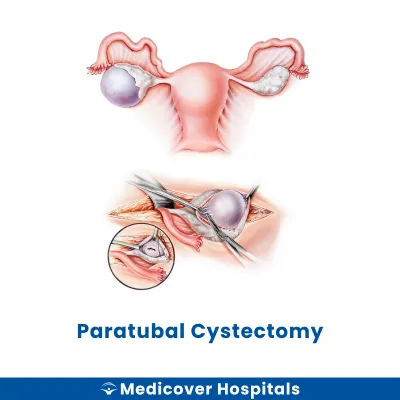
Paratubal cystectomy is a surgical procedure to remove a paratubal cyst. This cyst forms near the fallopian tubes (tubes connecting ovaries to the uterus). These cysts are fluid-filled sacs. They are usually benign (non-cancerous) but can cause discomfort or complications if they grow large.
This surgery is needed when the cyst causes pain, pressure, or other symptoms. It may also be necessary if there's a risk of the cyst twisting (torsion) or rupturing. If untreated, these complications can lead to severe pain or damage to reproductive organs. Modern surgical approaches include laparoscopy (minimally invasive surgery) and traditional open surgery. These methods help in effectively removing the cyst while minimizing recovery time.
Paratubal Cystectomy Doctors Near You
Find expert gynecologists for paratubal cystectomy at Medicover Hospitals across India. Choose your city and book a consultation today for professional care and guidance.
Why Choose Medicover Hospitals for Paratubal Cystectomy?
Get a second opinion from trusted experts and makeconfident, informed decisions.
 Get Second Opinion
Complete Guide To Paratubal Cystectomy
Everything you need to know about the procedure, preparation, and recovery
Paratubal cystectomy Surgery Indications
Doctors recommend paratubal cystectomy when a paratubal cyst causes symptoms or complications. This procedure is often suggested when conservative treatments do not provide relief or when the cyst poses a risk to the patient's health.
Persistent Pelvic Pain
Patients may experience ongoing pelvic pain that does not improve with medication. On examination, doctors might find a palpable mass near the ovary. Imaging tests like ultrasound can reveal a cyst, leading to the recommendation for surgery.
Large Cyst Size
When a cyst grows significantly, it can cause discomfort or pressure on surrounding organs. Ultrasound or MRI may show a large cyst, prompting doctors to suggest removal to prevent complications.
Cyst Rupture
Sudden, severe abdominal pain may indicate a ruptured cyst. This can be confirmed through imaging and physical examination. Surgery is often needed to address the rupture and prevent further issues.
Risk of Torsion
Severe, sudden pain and nausea might suggest ovarian torsion. An ultrasound can show a twisted cyst, which requires surgical intervention to prevent damage to the ovary.
Infertility Concerns
Some patients face difficulty conceiving due to cysts affecting reproductive organs. Doctors may find cysts during fertility evaluations, and surgery can be recommended to improve chances of conception.
Failed Conservative Management
When symptoms persist despite medication and lifestyle changes, surgery becomes necessary. Imaging and symptom tracking help doctors decide when conservative methods are insufficient.
How to Prepare for Paratubal Cystectomy?
Proper preparation for a paratubal cystectomy can help ensure a smoother procedure and recovery. It reduces risks and enhances surgical outcomes.
- Medication Review: Stop NSAIDs, anticoagulants, and herbal supplements 7 days prior. Consult your doctor.
- Fasting Guidelines: Fast for at least 8 hours before the surgery. This is crucial for anaesthesia safety.
- Bowel Preparation: Follow any specific bowel prep instructions given by your doctor to clear the intestines.
- Comfortable Clothing: Wear loose, comfortable clothing on the day of surgery for ease of changing and comfort.
- Transportation Arrangement: Arrange for someone to drive you home post-surgery as you may feel drowsy.
- Medication List: Bring a list of all medications with dosages. This helps the medical team manage your care.
- Avoid Smoking and Alcohol: Refrain from smoking and alcohol at least 24 hours before surgery to aid recovery.
- Pre-Surgery Consultation: Attend all pre-surgery appointments to discuss any concerns and confirm instructions.
Paratubal cystectomy Surgery (Step-by-Step)
Paratubal cystectomy is performed by experienced specialists from the Gynecology department. The procedure usually takes 1-2 hours and is commonly carried out under general anaesthesia.
- Preparation: The patient is positioned on the operating table. General anaesthesia is administered to ensure comfort and pain-free experience.
- Incision: Small incisions (1-2 cm) are made in the abdomen. A trocar is inserted to allow access for surgical instruments.
- Insertion of Laparoscope: A laparoscope is inserted through one of the incisions. This instrument provides a clear view of the pelvic area on a monitor.
- Identification of Cyst: The surgeon locates the paratubal cyst. Careful examination ensures no damage to surrounding structures.
- Excision of Cyst: Using a harmonic scalpel or bipolar cautery, the cyst is carefully separated and removed. Precision is key to avoid affecting nearby tissues.
- Closure: Once the cyst is removed, the incisions are closed with sutures or surgical glue. The area is cleaned and bandaged.
- Recovery: The patient is moved to a recovery room. Vital signs are monitored as they awaken from anaesthesia.
Who Performs Paratubal cystectomy Surgery?
Paratubal cystectomy is performed by Skilled gynecologists. These specialists are trained in diagnosing and treating conditions related to the female reproductive system. They use their expertise to ensure the procedure is done safely and effectively.
Recovery After Paratubal cystectomy Surgery
Recovery from paratubal cystectomy surgery involves a gradual return to normal activities. It's important to follow your doctor's advice to ensure a smooth healing process. Expect some discomfort initially, but it should improve over time.
Day 1-3:
- Rest is crucial. Avoid any strenuous activities.
- Stick to a light diet. Opt for easily digestible foods like curd, dal-rice, and soups.
- Stay hydrated. Drink plenty of water.
Day 4-7:
- Gradually increase light activities as tolerated.
- Continue with a soft diet. Include khichdi and moong dal for nutrition.
- Monitor the incision site for any signs of infection.
Day 8-14:
- You may start gentle exercises, but avoid heavy lifting.
- Return to work or school if you feel comfortable, usually after two weeks.
- Maintain a balanced diet with plenty of fruits and vegetables.
Phase 3 (Week 3-4):
- Resume most normal activities, but listen to your body.
- Continue to avoid high-impact activities until fully cleared by your doctor.
- Regular follow-up appointments are essential to monitor recovery.
When to Seek Urgent Help:
- Severe abdominal pain or swelling.
- Fever or chills indicating possible infection.
- Excessive bleeding or discharge from the incision site.
- Difficulty urinating or severe nausea.
Benefits of Paratubal cystectomy Surgery
Paratubal cystectomy is a surgical procedure to remove cysts near the fallopian tubes. It offers several benefits for patients experiencing symptoms.
- Symptom Relief: Alleviates pain and discomfort caused by the cyst.
- Preservation of Fertility: Helps maintain reproductive health by removing cysts without affecting the ovaries.
- Reduced Risk of Complications: Prevents potential complications like cyst rupture or torsion.
- Minimally Invasive Options: Often performed laparoscopically, leading to quicker recovery.
Risks and Complications of Paratubal cystectomy Surgery
While paratubal cystectomy is generally safe, it carries some risks and complications, as with any surgical procedure.
- Infection (Common): Risk of infection at the surgical site.
- Bleeding (Common): Possibility of bleeding during or after surgery.
- Damage to Nearby Organs (Rare): Potential for accidental injury to surrounding tissues.
- Adhesion Formation (Rare): Scar tissue may form, causing future complications.
- Anesthesia Reactions (Rare): Uncommon reactions to anesthesia used during the procedure.
Cost of Paratubal cystectomy Surgery
The cost of Paratubal cystectomy surgery at Medicover Hospitals ranges from Rs. 67,500 to Rs. 261,000. Prices vary based on the ward category chosen, such as general, twin sharing, or private rooms. We offer transparent pricing to ensure clarity for our patients.
Insurance and TPA support are available, including CGHS, ESI, and major TPAs, with a cashless facility option. Please contact the hospital for the latest insurance panel details as these may change periodically.
Frequently Asked Questions
1. How much does Paratubal cystectomy cost?
The cost of Paratubal cystectomy surgery at Medicover Hospitals ranges from Rs. 67,500 to Rs. 261,000, depending on the type of room and care.
2. Is Paratubal cystectomy covered under insurance?
Paratubal cystectomy surgery may be covered by CGHS, ESI, and major TPAs. Please contact the hospital for current panel details.
3. Will Paratubal cystectomy affect my fertility?
Paratubal cystectomy typically does not affect fertility, as it involves removing cysts near the fallopian tubes, not the reproductive organs.
4. What are common complications after Paratubal cystectomy?
Common complications include infection and bleeding. These are rare and can be managed effectively with prompt medical care.
5. Can I conceive naturally after Paratubal cystectomy?
Yes, most women can conceive naturally after Paratubal cystectomy, as the procedure does not usually impact the ovaries or uterus.
6. Will I experience pain after Paratubal cystectomy?
Mild pain or discomfort is common after Paratubal cystectomy. It can be managed with prescribed pain relief medications.
7. What diet should I follow post-Paratubal cystectomy?
After Paratubal cystectomy, consume light, easily digestible foods like curd, dal-rice, and khichdi to aid recovery.
8. What is the surgery for a paratubal cyst?
The standard surgery is laparoscopic cystectomy, where the cyst is removed while preserving the ovary and fallopian tube. It is a minimally invasive procedure with faster recovery.
9. Can I get pregnant with a paratubal cyst?
Yes, most women can still get pregnant, as paratubal cysts usually do not affect ovulation or fertility unless they are large or cause complications.
10. Is a paratubal cyst the same as PCOS?
No, a paratubal cyst is not the same as PCOS (Polycystic Ovary Syndrome). A paratubal cyst is a fluid-filled sac near the fallopian tube, while PCOS is a hormonal disorder affecting ovulation and multiple ovarian follicles.


