 Call
Call Patient Reports
Best Paraphimosis Surgery Hospital with Advanced Care
Paraphimosis is treated using open surgical techniques at Medicover Hospitals. Our team of urologists, with qualifications such as MD, DNB, and DM, ensures effective management. This approach typically results in shorter hospital stays and reduced recovery time for patients across India.
Expert Surgeons
Yearly Surgeries
Patient Satisfaction
What is Paraphimosis?
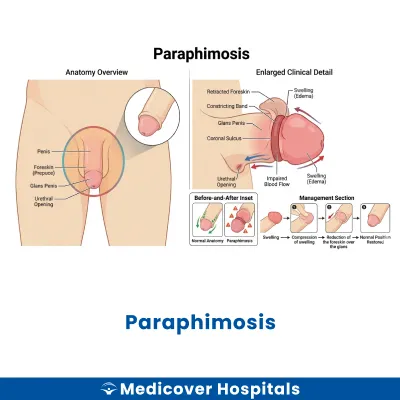
Paraphimosis is a medical condition affecting the penis. It occurs when the foreskin (the skin covering the tip of the penis) is pulled back and cannot return to its normal position. This can cause swelling and pain. The trapped foreskin can lead to restricted blood flow, making it a serious condition that requires prompt medical attention.
Surgery is often needed to treat paraphimosis. Conditions like improper handling during medical procedures or forceful retraction can lead to this issue. If left untreated, it can result in tissue damage or infection. Modern surgical approaches include circumcision surgery and dorsal slit procedures. These methods help relieve the constriction and restore normal blood flow. Early intervention is crucial to prevent complications.
Paraphimosis Doctors Near You
Find experienced urologists across Medicover locations in India. Choose your city and book a consultation for expert respiratory care. Start your journey to better lung health today.
Why Choose Medicover Hospitals for Paraphimosis?
Get a second opinion from trusted experts and makeconfident, informed decisions.
 Get Second Opinion
Complete Guide To Paraphimosis
Everything you need to know about the procedure, preparation, and recovery
Paraphimosis Surgery Indications
Doctors recommend paraphimosis surgery when the foreskin becomes trapped behind the glans penis and cannot be returned to its normal position. This condition can lead to serious complications if not treated promptly.
Severe Pain and Swelling
Patients may experience intense pain and noticeable swelling of the glans penis. On examination, doctors find the foreskin tightly constricted behind the glans. When pain relief and manual reduction fail, surgery is necessary.
Restricted Blood Flow
Some patients show signs of reduced blood flow, such as a bluish discoloration of the glans. Doctors may detect compromised circulation during physical examination. Surgery is advised if circulation does not improve with initial treatments.
Infection Risk
Patients might develop redness, warmth, or discharge, indicating infection. Doctors identify these signs during examination and through lab tests. Surgery is considered when antibiotics and other measures do not resolve the issue.
Recurrent Episodes
Patients with repeated instances of paraphimosis may experience ongoing discomfort and swelling. Doctors observe a pattern of recurrence despite conservative management. Surgery is recommended to prevent future episodes.
Failure of Manual Reduction
In some cases, attempts to manually reduce the foreskin are unsuccessful. Doctors confirm this through physical examination. Surgery becomes necessary when manual methods and medications do not achieve reduction.
How to Prepare for Paraphimosis?
Proper preparation for paraphimosis treatment is crucial to ensure a smooth procedure and recovery. It helps in minimizing risks and enhances the effectiveness of the treatment.
- Medication Review: Stop NSAIDs, anticoagulants, and herbal supplements as advised by your doctor.
- Fasting: Follow a fasting period of 6-8 hours before the procedure if general anaesthesia is used.
- Hygiene: Maintain good personal hygiene. Clean the genital area thoroughly before the procedure.
- Clothing: Wear loose, comfortable clothing on the day of the procedure to avoid discomfort.
- Transportation: Arrange for someone to drive you home post-procedure as you may feel drowsy.
- Medication List: Bring a list of all medications you are currently taking, including dosages.
- Follow Instructions: Adhere to any specific instructions given by your healthcare provider.
- Rest: Ensure you get adequate rest the night before the procedure to help your body prepare.
Paraphimosis Surgery (Step-by-Step)
Paraphimosis surgery is performed by urologists. The procedure typically lasts 30-60 minutes. It is usually done under local anaesthesia.
- Preparation: The patient is positioned comfortably. Local anaesthesia is administered to numb the area. This ensures the patient feels no pain during the procedure.
- Reduction: The urologist attempts manual reduction. Lubrication is applied to the foreskin and glans. Gentle pressure is used to push the glans back while pulling the foreskin forward.
- Incision: If manual reduction fails, a small incision (1-2 cm) may be made in the constricting band of the foreskin. This relieves pressure and allows the foreskin to move back over the glans.
- Instrument Use: Surgical instruments like a scalpel and forceps are used for precision. The incision is carefully made to avoid damage to surrounding tissues.
- Closure: After the foreskin is repositioned, the incision is closed with sutures. This helps in healing and prevents recurrence.
- Post-Procedure Care: The area is cleaned and dressed. The patient is monitored for a short period before discharge. Instructions for care and follow-up are provided.
Who Performs Paraphimosis Surgery?
Paraphimosis surgery is performed by urology doctors. These specialists have expertise in treating conditions related to the urinary tract and male reproductive organs. They ensure the procedure is done safely and effectively.
Recovery After Paraphimosis Surgery
Recovery after paraphimosis surgery involves managing discomfort and ensuring proper healing. Patients can expect some swelling and mild pain, which typically subsides within a few days. Following the doctor's instructions is crucial for a smooth recovery.
Day 1-3:
- Rest is essential. Avoid strenuous activities.
- Keep the surgical area clean and dry.
- Use prescribed pain relief as needed.
- Consume light meals like curd, dal-rice, and khichdi to aid digestion.
Day 4-7:
- Swelling should start to reduce. Continue to avoid heavy lifting.
- Gradually resume light activities as comfort allows.
- Include moong dal and soups in your diet for easy digestion.
Day 8-14:
- Most patients can return to work or school, depending on their comfort level.
- Continue to avoid rigorous physical activities.
- Maintain a balanced diet to support healing.
Phase 3 (Week 3-4):
- Resume normal activities, but listen to your body.
- Continue following dietary recommendations to support overall health.
When to Seek Urgent Help
Contact your healthcare provider if you experience severe pain, excessive swelling, fever, or any signs of infection such as pus or unusual discharge. These could indicate complications that need immediate attention.
Benefits of Paraphimosis Surgery
Paraphimosis surgery is a procedure aimed at relieving the condition where the foreskin becomes trapped behind the glans penis. This surgery offers several benefits:
- Immediate Relief: Quickly alleviates pain and swelling associated with paraphimosis.
- Prevention of Recurrence: Reduces the risk of future episodes of paraphimosis.
- Improved Hygiene: Facilitates better personal hygiene by allowing easier cleaning.
- Enhanced Comfort: Eliminates discomfort during daily activities and sexual intercourse.
Risks and Complications of Paraphimosis Surgery
While paraphimosis surgery is generally safe, it is important to be aware of potential risks and complications:
- Common: Swelling and bruising at the surgical site.
- Common: Temporary pain or discomfort during recovery.
- Rare: Infection at the incision site.
- Rare: Bleeding that may require additional intervention.
- Rare: Adverse reaction to anaesthesia.
- Rare: Scarring that may affect the appearance or function of the foreskin.
Cost of Paraphimosis Surgery
The cost of Paraphimosis Surgery at Medicover Hospitals varies depending on the ward category chosen. Prices range from Rs. 2,300 to Rs. 21,000 across different ward types. This ensures that patients can select an option that best suits their needs and budget.
Medicover Hospitals offers transparent pricing with support for insurance and TPA, including CGHS, ESI, and major TPAs. A cashless facility is also available for added convenience. Please contact the hospital for the latest insurance panel details as these may change periodically.
Frequently Asked Questions
1. How much does Paraphimosis surgery cost?
The cost of Paraphimosis surgery at Medicover Hospitals ranges from Rs. 2300 to Rs. 21000, depending on the type of care and services required.
2. Is Paraphimosis surgery covered under insurance?
Paraphimosis surgery may be covered by CGHS, ESI, and major TPAs. Please contact the hospital for current panel details.
3. Will I need a catheter after Paraphimosis surgery?
A catheter may be required temporarily to ensure proper urine flow. Your doctor will advise based on your specific condition.
4. Can Paraphimosis recur after surgery?
Recurrence of Paraphimosis is rare after surgery if proper care is taken. Follow your doctor's post-operative instructions diligently.
5. What lifestyle changes are needed post-surgery?
Avoid strenuous activities and maintain good hygiene to aid recovery. Regular follow-ups with your doctor are essential to monitor healing.
6. Can I experience pain during recovery?
Some discomfort or pain is normal during the initial recovery phase. Pain relief medications will be prescribed to manage this effectively.
7. What foods should I avoid after surgery?
Avoid spicy and oily foods to prevent irritation. Opt for light meals like curd, dal-rice, and khichdi for a smoother recovery.
8. Is paraphimosis surgery painful?
Surgery for paraphimosis is usually done under local or general anesthesia, so you won’t feel pain during the procedure. Mild pain or discomfort can occur afterward, but it is typically manageable with medications.
9. Can we treat paraphimosis without surgery?
Yes, early cases of paraphimosis can often be treated without surgery by manually reducing the foreskin and using medications to reduce swelling. Surgery is needed if these methods fail or if the condition is severe.


