 Call
Call Patient Reports
Best Hospital for Palliative Surgery with Expert Surgical Care
At Medicover Hospitals, our oncologists, with qualifications like MS, DNB, MCh, and DM, specialise in palliative surgery using advanced laparoscopic techniques. This approach helps manage cancer symptoms effectively, leading to smaller incisions and reduced blood loss, enhancing patient recovery and comfort across India.
Expert Surgeons
Yearly Surgeries
Patient Satisfaction
What is Palliative Surgery?
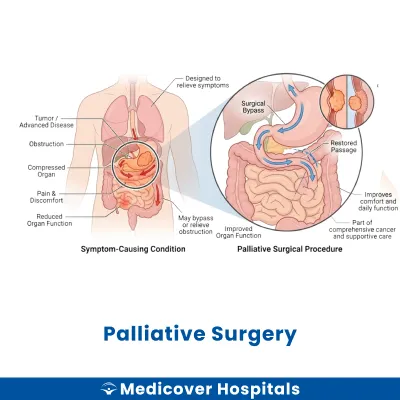
Palliative surgery is a medical procedure aimed at alleviating symptoms rather than curing the disease. It is often performed on organs or body parts like the lungs, liver, or intestines. The goal is to improve quality of life by reducing pain or discomfort. This type of surgery does not aim to remove the disease entirely but focuses on symptom management.
Palliative surgery is needed when a condition causes severe symptoms that affect daily life. Conditions like advanced cancer, severe blockages, or inoperable tumours often lead to this surgery. If left untreated, these conditions can cause significant pain or complications. Modern surgical approaches include minimally invasive techniques and laparoscopic surgery. These methods aim to reduce recovery time and improve outcomes.
Palliative Surgery Doctors Near You
Discover oncologists for palliative surgery at Medicover Hospitals across India. Choose your city and book a consultation to discuss your needs and explore available treatment options.
Why Choose Medicover Hospitals for Palliative Surgery?
Get a second opinion from trusted experts and makeconfident, informed decisions.
 Get Second Opinion
Complete Guide To Palliative Surgery
Everything you need to know about the procedure, preparation, and recovery
Palliative Surgery Indications
Palliative surgery is recommended when symptoms from advanced diseases significantly impact quality of life. It aims to relieve symptoms rather than cure the disease, often when other treatments are no longer effective.
Obstruction Relief
Patients may experience severe nausea, vomiting, or inability to pass stools due to intestinal blockage. Imaging may show a tumour causing obstruction. When medications and other non-surgical methods fail, surgery may be needed to bypass or remove the blockage.
Pain Management
Severe, persistent pain that does not respond to medications can be debilitating. Doctors may find tumours pressing on nerves or other structures. Surgery might be considered to remove or reduce the tumour, alleviating pressure and pain.
Bleeding Control
Patients might suffer from significant bleeding, leading to anaemia and fatigue. Endoscopy or imaging can reveal bleeding tumours in organs like the stomach. When other interventions are ineffective, surgery may be performed to control the bleeding.
Respiratory Distress
Difficulty breathing due to tumours in the chest can be distressing. Imaging may show fluid accumulation or tumour growth in the lungs. If draining fluid or medications do not help, surgery might be needed to improve breathing.
Spinal Cord Compression
Patients may experience weakness or paralysis due to spinal cord compression. MRI scans can reveal tumours pressing on the spine. When radiation or medications fail, surgery might be necessary to relieve pressure and prevent further damage.
How to Prepare for Palliative Surgery?
Preparation for palliative surgery is crucial to ensure a smooth procedure and recovery. It helps in managing symptoms effectively and reduces potential risks.
- Medication Review: Stop NSAIDs, anticoagulants, and herbal supplements at least a week before surgery.
- Fasting Guidelines: Follow a fasting window of 6-8 hours before surgery for anaesthesia safety.
- Pre-Surgery Tests: Complete any required blood tests or imaging studies as advised by your doctor.
- Comfortable Clothing: Wear loose, comfortable clothing on the day of surgery for ease of movement.
- Transport Arrangement: Arrange for someone to drive you home post-surgery, as you may feel drowsy.
- Medication List: Bring a list of current medications with dosages for the healthcare team.
- Hydration: Stay well-hydrated leading up to the fasting period, unless advised otherwise.
- Emotional Support: Consider having a family member or friend accompany you for emotional support.
Palliative Surgery (Step-by-Step)
Palliative surgery is performed by cancer doctors to relieve symptoms and improve quality of life. The procedure typically lasts between 1 to 3 hours, depending on the complexity. General anaesthesia is commonly used to ensure the patient is comfortable and pain-free.
- Pre-operative Preparation: The patient undergoes pre-surgery assessments, including blood tests and imaging. This helps the medical team plan the procedure. The patient is advised to fast for several hours before surgery.
- Administration of Anaesthesia: The anaesthetist administers general anaesthesia. The patient will be asleep and unaware of the procedure.
- Incision and Access: The surgeon makes small incisions, usually 1-2 cm, to access the affected area. Instruments like a laparoscope or trocar may be used for minimally invasive access.
- Tumour Reduction or Symptom Relief: The surgeon uses tools such as a harmonic scalpel or bipolar cautery to remove or reduce tumour size, or to alleviate symptoms. This step aims to improve patient comfort.
- Closure of Incisions: Once the procedure is complete, the incisions are closed using sutures or surgical glue. The patient is then moved to the recovery area.
- Post-operative Care: The patient is monitored as they wake up from anaesthesia. Pain management and vital signs are closely observed. Instructions for recovery and follow-up are provided.
Who Performs Palliative Surgery?
Palliative surgery is performed by oncologists who specialise in cancer treatment. They are trained to manage complex cases and focus on improving the patient's quality of life through surgical intervention. Please contact the hospital for current details as insurance panels may change.
Recovery After Palliative Surgery
Recovery after palliative surgery focuses on comfort and improving quality of life. The timeline can vary based on the individual's condition and the type of surgery performed. Here is a general guide to what you can expect during the recovery period.
Day 1-3:
- Rest is crucial. Limit movement and avoid strenuous activities.
- Pain management will be a priority. Follow the doctor's advice on medications.
- Start with a liquid diet, including clear soups and broths.
Day 4-7:
- Gradually introduce soft foods like khichdi, dal-rice, and curd.
- Continue to avoid heavy lifting and strenuous activities.
- Short walks around the house may be encouraged to improve circulation.
Week 2-4:
- Increase activity levels slowly, but avoid any activity that causes discomfort.
- Introduce more solid foods, such as moong dal and soft-cooked vegetables.
- Discuss with your doctor about resuming work or school, usually after 3-4 weeks, depending on your recovery.
When to Seek Urgent Help:
- Severe or increasing pain not relieved by medication.
- Signs of infection, such as fever or redness around the surgical site.
- Persistent nausea or vomiting.
- Any unusual symptoms or concerns.
It's important to follow your doctor's instructions and attend follow-up appointments to ensure a smooth recovery. Please contact the hospital for current details as insurance panels may change.
Benefits of Palliative Surgery
Palliative surgery aims to improve the quality of life for patients with serious illnesses. It focuses on relieving symptoms rather than curing the disease.
- Pain Relief: Helps reduce pain caused by tumours or other conditions.
- Improved Functionality: Restores or maintains the function of affected organs.
- Symptom Management: Alleviates symptoms like bleeding or obstruction.
- Enhanced Comfort: Increases overall comfort and well-being.
Risks and Complications of Palliative Surgery
While palliative surgery can offer significant benefits, it also carries certain risks. It is important to be aware of these potential complications.
- Infection: Risk of infection at the surgical site.
- Bleeding: Possibility of bleeding during or after the procedure.
- Blood Clots: Formation of blood clots in veins or lungs.
- Organ Damage: Potential damage to nearby organs during surgery.
- Adverse Reaction to Anesthesia: Unforeseen reactions to anesthesia used during the procedure.
Cost of Palliative Surgery
The cost of palliative surgery at Medicover Hospitals ranges from Rs. 43,000 to Rs. 2,11,000. The price varies based on the ward category chosen, such as outpatient, day care, general, and private suites. We offer transparent pricing to ensure clarity for our patients. Insurance and TPA support, including CGHS, ESI, and major TPAs, are accepted. A cashless facility is also available for added convenience. Please contact the hospital for the latest insurance panel details as these may change periodically.
Frequently Asked Questions
1. How much does Palliative Surgery cost?
The cost of Palliative Surgery at Medicover Hospitals ranges from Rs. 43,000 to Rs. 2,11,000, depending on the specifics of the procedure.
2. Is Palliative Surgery covered under insurance?
Palliative Surgery may be covered under CGHS, ESI, and major TPAs. Please contact the hospital for current panel details.
3. Will I need a feeding tube after oesophageal surgery?
A feeding tube might be necessary temporarily after oesophageal surgery. Your doctor will guide you on its usage and duration.
4. Can I eat spicy food after stomach surgery?
It's advisable to avoid spicy foods like chilli and pepper post-stomach surgery. Opt for bland foods like curd and dal-rice initially.
5. Will I experience breathlessness after lung surgery?
Breathlessness can occur after lung surgery due to reduced lung capacity. Breathing exercises and physiotherapy may help improve your condition.
6. Can I lift weights after liver surgery?
Avoid lifting heavy weights for at least six weeks post-liver surgery. Gradual increase in activity should be guided by your doctor.
7. Will my bowel habits change after colon surgery?
Changes in bowel habits are common after colon surgery. You may experience diarrhoea or constipation, which should be discussed with your doctor.


