 Call
Call Patient Reports
Paediatric Split Thickness Skin Grafting 4 8 Tbsa Surgery by Expert Plastic Surgeons
Paediatric split thickness skin grafting for 4-8% TBSA at Medicover Hospitals is performed using an open surgical approach. Our plastic surgeons, with qualifications like MS, MCh, and DNB, ensure precise care. This technique often results in shorter hospital stays for young patients.
Expert Surgeons
Yearly Surgeries
Patient Satisfaction
What is Paediatric Split Thickness Skin Grafting 4 8 Tbsa?
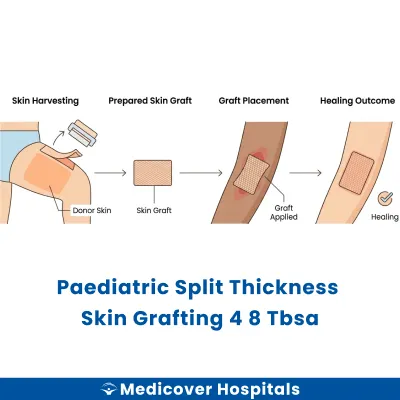
Paediatric split thickness skin grafting 4 8 TBSA involves transplanting a thin layer of skin from a donor site to a damaged area. TBSA stands for Total Body Surface Area, indicating the extent of skin affected. In this procedure, the epidermis and part of the dermis (outer and middle skin layers) are used. The graft helps in covering wounds or burns, promoting healing and restoring skin function.
This surgery is essential for children with burns, trauma, or skin loss due to infections. If untreated, these conditions can lead to severe complications like infections or impaired healing. Modern surgical approaches include using dermatomes (special surgical instruments) for precise grafting. These techniques ensure better outcomes for paediatric patients. Early intervention is crucial for effective recovery.
Paediatric Split Thickness Skin Grafting 4 8 Tbsa Doctors Near You
Find experienced plastic-surgeons for paediatric split thickness skin grafting (4-8% TBSA) at Medicover Hospitals across India. Choose your city and book a consultation today for expert care.
Why Choose Medicover Hospitals for Paediatric Split Thickness Skin Grafting 4 8 Tbsa?
Get a second opinion from trusted experts and makeconfident, informed decisions.
 Get Second Opinion
Complete Guide To Paediatric Split Thickness Skin Grafting 4 8 Tbsa
Everything you need to know about the procedure, preparation, and recovery
Paediatric Split Thickness Skin Grafting 4-8 TBSA Surgery Indications
Doctors recommend paediatric split thickness skin grafting for children with significant skin loss. This procedure is often necessary when the affected area ranges between 4% to 8% of the total body surface area (TBSA).
Severe Burns
Children with second-degree burns may experience intense pain and blistering. Doctors find damaged skin layers that do not heal with dressings or ointments. When healing stalls, skin grafting becomes essential.
Traumatic Skin Loss
In cases of trauma, children might have open wounds with exposed tissue. Examination reveals that the skin cannot regenerate naturally. When wound closure is not possible through other means, grafting is advised.
Infection-Induced Skin Damage
Severe infections can lead to skin necrosis, causing pain and fever. Doctors observe dead skin areas that do not respond to antibiotics. When infection control fails to restore skin integrity, grafting is needed.
Congenital Skin Defects
Some children are born with skin defects that cause persistent ulcers. These defects are visible upon examination and do not improve with topical treatments. Surgery is considered when the defect impairs function or appearance.
Post-Surgical Skin Loss
After surgery, some children may have areas where skin fails to regenerate. This results in open wounds that do not heal with standard care. Grafting is performed to promote healing and restore skin coverage.
How to Prepare for paediatric split thickness skin grafting 4 8 tbsa?
Proper preparation is crucial for paediatric split thickness skin grafting to ensure a smooth procedure and recovery. It helps minimise risks and enhances the healing process.
- Medication Review: Stop NSAIDs, anticoagulants, and herbal supplements at least 1 week before surgery.
- Fasting Guidelines: Ensure your child fasts for at least 6 hours before the procedure for general anaesthesia.
- Skin Preparation: Follow any specific instructions from the doctor regarding skin cleaning or antiseptic use.
- Clothing: Dress your child in loose, comfortable clothing on the day of surgery.
- Transport Arrangements: Plan for safe transport home post-surgery, as your child will be unable to travel alone.
- Medication List: Bring a list of your child's current medications, including dosages, to the hospital.
- Emotional Preparation: Talk to your child about the procedure to reduce anxiety and ensure they understand what to expect.
- Post-Op Care Plan: Discuss and plan for post-operative care, including wound care and follow-up appointments.
Pediatric Split-Thickness Skin Grafting 4-8 TBSA Surgery (Step-by-Step)
Pediatric split-thickness skin grafting is performed by experienced specialists from the Plastic Surgery department. The procedure usually takes 2-4 hours and is carried out under general anaesthesia.
- Preparation: The child is placed under general anaesthesia to ensure comfort and immobility during the procedure. The surgical areas are cleaned and sterilised.
- Donor Site Selection: A healthy skin donor site, commonly the thigh or buttocks, is selected based on skin quality and suitability for grafting.
- Harvesting the Graft: A specialised instrument called a dermatome is used to remove a thin layer of healthy skin from the donor site.
- Recipient Site Preparation: The affected area is cleaned thoroughly, and damaged or non-viable tissue is removed to prepare the site for graft placement.
- Graft Placement: The harvested skin graft is carefully positioned over the recipient area and adjusted to ensure proper coverage and adherence.
- Securing the Graft: The graft is secured using sutures, staples, or specialised dressings to promote healing and stability.
- Post-Operative Care: The child is monitored closely after surgery for pain control, infection prevention, and graft healing, with follow-up visits scheduled to assess recovery.
Who Performs Pediatric Split-Thickness Skin Grafting Surgery?
This surgery is performed by skilled plastic and reconstructive surgeons trained in paediatric burn care, wound management, and advanced skin grafting procedures.
Recovery After Pediatric Split-Thickness Skin Grafting 4-8% TBSA Surgery
Recovery from paediatric split thickness skin grafting involves careful monitoring and support. Children may experience discomfort, and it's essential to follow the doctor's advice to ensure proper healing.
Day 1-3:
- Rest is crucial. The child should remain in bed with minimal movement.
- Pain management and wound care will be ongoing. Follow the prescribed medication schedule.
- Diet should be light and nutritious. Offer curd, dal-rice, and soups to aid recovery.
Day 4-7:
- Gradual increase in activity as advised by the healthcare team.
- Continue with a balanced diet. Include khichdi and moong dal for protein and energy.
- Regular dressing changes and monitoring for signs of infection.
Day 8-14:
- Encourage gentle movement to prevent stiffness but avoid strenuous activities.
- Children may return to school with precautions if advised by the doctor.
- Maintain a nutritious diet to support healing.
Phase 3 (Week 3-4):
- Gradual return to normal activities. Avoid sports or heavy physical tasks.
- Continue monitoring the graft site for any changes or complications.
- Ensure a balanced diet to maintain energy levels and promote healing.
When to Seek Urgent Help:
- High fever or chills.
- Increased redness, swelling, or pus at the graft site.
- Severe pain not relieved by medication.
- Any unusual symptoms or concerns.
Benefits of pediatric split thickness skin grafting 4 8 tbsa Surgery
Paediatric split thickness skin grafting is a procedure used to treat burns covering 4-8% of the total body surface area (TBSA). It offers several benefits for young patients.
- Enhanced Healing: This procedure promotes faster wound healing by covering large burn areas effectively.
- Pain Reduction: Grafting can significantly reduce pain by protecting exposed nerve endings.
- Improved Functionality: It helps in restoring skin function, allowing better movement and flexibility.
- Reduced Infection Risk: By covering the wound, the risk of infection is minimized.
Risks and Complications of paediatric split thickness skin grafting 4 8 tbsa Surgery
While this procedure is beneficial, it carries certain risks and complications. It's important to be aware of these possibilities.
- Common: Scarring can occur at both the donor and graft sites.
- Common: Infection at the graft site is a potential risk.
- Rare: Graft failure may occur, requiring additional procedures.
- Rare: Changes in skin pigmentation can happen over time.
- Rare: Allergic reactions to anaesthesia or dressings may occur.
Cost of pediatric split thickness skin grafting 4 8 tbsa Surgery
The cost of paediatric split thickness skin grafting 4 8 tbsa surgery at Medicover Hospitals ranges from Rs. 35,500 to Rs. 71,500. The price varies depending on the ward category chosen, such as day care, general, or private suites.
Medicover Hospitals offers transparent pricing and supports insurance and TPA services, including CGHS, ESI, and major TPAs. A cashless facility is also available for convenience. Please contact the hospital for the latest insurance panel details as these may change periodically.
Frequently Asked Questions
1. How much does paediatric split thickness skin grafting 4 8 tbsa surgery cost at Medicover Hospitals?
The cost for paediatric split thickness skin grafting 4 8 tbsa surgery ranges from Rs. 35,500 to Rs. 71,500 at Medicover Hospitals.
2. Is paediatric split thickness skin grafting 4 8 tbsa surgery covered under health insurance at Medicover?
Yes, it is often covered by CGHS, ESI, and major TPAs. Please contact the hospital for current panel details.
3. Can my child play sports after skin grafting?
Your child may need to avoid sports for 6-8 weeks post-surgery. Consult your doctor for specific recommendations based on recovery.
4. Will my child feel pain after the grafting?
Some discomfort and pain are expected after surgery. Pain management will be provided to ensure your child's comfort during recovery.
5. What foods help in healing after skin grafting?
Include protein-rich foods like dal-rice, curd, and paneer. These help in faster recovery and promote healing of the grafted area.
6. Will the grafted skin look different?
The grafted skin may have a different texture or colour initially. Over time, it will blend better with the surrounding skin.
7. Can my child bathe normally after surgery?
Your child should avoid soaking the grafted area for at least 2 weeks. Follow your doctor's advice on how to keep the area clean.
8. What is the normal thickness of a split thickness skin graft?
A split thickness skin graft usually includes the epidermis and part of the dermis, with a typical thickness of about 0.012 to 0.018 inches (0.3 to 0.45 mm), depending on the clinical need.
9. Where should a split graft in children be taken from?
In children, common donor sites include the thigh (especially the lateral thigh), buttocks, or upper arm, as these areas heal well and provide suitable skin for grafting.
10. How long does it take for a split thickness skin graft to heal?
The graft usually begins to "take" within 3 to 5 days, with complete healing in about 2 to 3 weeks. Donor sites may heal within a similar timeframe.
11. When are split thickness skin grafts used?
They are used for burns, large wounds, skin loss due to trauma or infection, and after tumor removal, where skin coverage is needed to promote healing.


