 Call
Call Patient Reports
Best Hospital for Ovarian Endometrioma Cystectomy Surgery with Expert Care
At Medicover Hospitals, our gynecologists, equipped with qualifications like MS, DNB, and FMAS, perform ovarian endometrioma cystectomy using laparoscopic techniques. This minimally invasive approach ensures smaller incisions and reduced blood loss, facilitating a quicker recovery for patients across India.
Expert Surgeons
Yearly Surgeries
Patient Satisfaction
What is Ovarian Endometrioma Cystectomy?
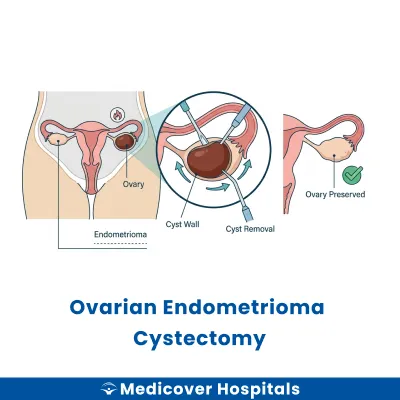
ovarian endometrioma cystectomy is a surgical procedure to remove cysts from the ovaries. These cysts, known as endometriomas, form when endometrial tissue (lining of the uterus) grows on the ovaries. This condition is associated with endometriosis, where similar tissue grows outside the uterus, causing pain and other symptoms.
This surgery is needed to alleviate pain and prevent complications. Endometriomas can cause severe pelvic pain, infertility, and other issues. If untreated, they may lead to ovarian damage or rupture. Modern surgical approaches include laparoscopy (minimally invasive surgery) and robotic-assisted surgery. These methods aim to remove cysts while preserving healthy ovarian tissue. Early intervention can improve quality of life and reproductive outcomes.
Ovarian Endometrioma Cystectomy Doctors Near You
Find skilled gynecologists for ovarian endometrioma cystectomy at Medicover Hospitals across India. Choose your city and book a consultation to discuss your treatment options today.
Why Choose Medicover Hospitals for Ovarian Endometrioma Cystectomy Surgery?
Get a second opinion from trusted experts and makeconfident, informed decisions.
 Get Second Opinion
Complete Guide To Ovarian Endometrioma Cystectomy
Everything you need to know about the procedure, preparation, and recovery
Ovarian Endometrioma Cystectomy Surgery Indications
Doctors may recommend ovarian endometrioma cystectomy when endometriomas cause significant symptoms or complications. This procedure is often considered when conservative treatments do not provide relief.
Severe Pelvic Pain
Patients often experience chronic pelvic pain that worsens during menstruation. On examination, doctors may find tender masses in the pelvic area. When pain management and hormonal treatments fail, surgery may be advised.
Infertility
Women struggling with infertility may have endometriomas affecting ovarian function. Imaging tests like ultrasounds can reveal cysts on the ovaries. If fertility treatments are unsuccessful, cystectomy might be necessary.
Large Cysts
Some patients have large cysts that cause discomfort or pressure on surrounding organs. Ultrasounds or MRIs can show cysts exceeding 4 cm in size. Surgery is considered when these cysts do not shrink with medication.
Recurrent Cysts
Endometriomas may recur despite medical therapy. Patients report persistent symptoms, and imaging confirms new or growing cysts. Surgery is an option when repeated conservative treatments fail.
Risk of Rupture
In some cases, there is a risk of cyst rupture, leading to sudden severe pain and internal bleeding. Doctors may recommend surgery if imaging shows thin-walled or rapidly enlarging cysts.
Severe Dysmenorrhea
Patients with severe menstrual cramps unresponsive to pain relief or hormonal therapy may have endometriomas. Doctors may find cysts during pelvic exams or imaging, prompting surgical intervention.
How to Prepare for Ovarian Endometrioma Cystectomy?
Proper preparation for ovarian endometrioma cystectomy is crucial to ensure a smooth surgery and recovery. Following the recommended steps helps minimise complications and aids in a quicker recovery.
- Medication Review: Stop NSAIDs, anticoagulants, and herbal supplements as advised by your doctor.
- Fasting: Do not eat or drink anything for at least 8 hours before the surgery to prepare for anaesthesia.
- Bowel Preparation: Follow any specific bowel prep instructions given by your healthcare provider.
- Comfortable Clothing: Wear loose, comfortable clothing on the day of the surgery for ease of movement post-procedure.
- Transportation: Arrange for someone to drive you home after the surgery, as you may feel drowsy from anaesthesia.
- Medication List: Bring a list of all medications you are currently taking, including dosages, for hospital records.
- Pre-Surgery Consultation: Attend all pre-surgery appointments to discuss any concerns and finalise preparations.
- Personal Items: Pack essentials like your ID, insurance details, and a small overnight bag if an overnight stay is needed.
Ovarian Endometrioma Cystectomy Surgery (Step-by-Step)
This procedure is performed by gynecologists. It typically lasts between 1 to 3 hours. General anaesthesia is used to ensure the patient is asleep and pain-free.
- Preparation: The patient is positioned on the operating table. The abdomen is cleaned and sterilised.
- Incision: Small incisions (1-2 cm) are made in the abdomen. A trocar is inserted to allow access for surgical instruments.
- Insertion of Laparoscope: A laparoscope, a thin tube with a camera, is inserted through one of the incisions. This provides a clear view of the ovaries on a monitor.
- Dissection: Using instruments like a harmonic scalpel or bipolar cautery, the surgeon carefully separates the cyst from the ovary. The cyst is then removed.
- Inspection: The surgeon inspects the area for any remaining cyst tissue. Any bleeding is controlled using cautery.
- Closure: The incisions are closed with sutures or surgical glue. A dressing is applied to protect the area.
- Recovery: The patient is moved to a recovery room. They are monitored as they wake from anaesthesia.
Who Performs Ovarian endometrioma cystectomy Surgery?
This surgery is performed by gynecologists who specialise in reproductive health. They have expertise in minimally invasive procedures and are trained to handle complex cases involving ovarian cysts.
Recovery After Ovarian Endometrioma Cystectomy Surgery
Recovery from ovarian endometrioma cystectomy surgery involves gradual healing and return to daily activities. Patients can expect some discomfort initially, but this should improve over time. Following the doctor's instructions is crucial for a smooth recovery.
Day 1-3:
- Rest is essential. Avoid strenuous activities.
- Manage pain with prescribed medications.
- Consume light meals like khichdi or moong dal to ease digestion.
Day 4-7:
- Gradually increase light activities like walking.
- Continue with a soft diet including curd, dal-rice, and soups.
- Monitor the incision site for any signs of infection.
Day 8-14:
- Most patients can resume work or school, depending on recovery speed.
- Introduce more solid foods into the diet as tolerated.
- Avoid heavy lifting and intense exercises.
Phase 3 (Week 3-4):
- Engage in regular activities but avoid high-impact sports.
- Focus on a balanced diet to support healing.
- Follow up with your doctor for a post-operative check-up.
When to Seek Urgent Help
- Fever or chills indicating possible infection.
- Severe abdominal pain or swelling.
- Heavy bleeding or unusual discharge from the incision site.
- Persistent nausea or vomiting.
Contact your healthcare provider if any of these symptoms occur. Please contact the hospital for current details as insurance panels may change.
Benefits of Ovarian Endometrioma Cystectomy Surgery
Ovarian endometrioma cystectomy is a surgical procedure aimed at removing cysts from the ovaries. It offers several potential benefits for patients.
- Pain Relief: Reduces pelvic pain associated with endometriomas.
- Improved Fertility: May enhance fertility by preserving ovarian function.
- Symptom Management: Helps in managing symptoms like heavy menstrual bleeding.
- Prevention of Complications: Reduces the risk of cyst rupture or infection.
Risks and Complications of Ovarian endometrioma cystectomy Surgery
While the surgery can be beneficial, it also carries certain risks and potential complications. It is important to be aware of these before undergoing the procedure.
- Post-operative pain and discomfort.
- Risk of infection at the surgical site.
- Damage to surrounding organs such as the bladder or bowel.
- Ovarian function impairment leading to reduced fertility.
- Formation of scar tissue (adhesions) in the pelvic area.
- Recurrence of endometriomas after surgery.
Cost of Ovarian Endometrioma Cystectomy Surgery
The cost of ovarian endometrioma cystectomy surgery at Medicover Hospitals ranges from Rs. 67,500 to Rs. 1,82,000. The price varies depending on the ward category chosen, such as day care, general, twin sharing, private, and more.
We offer transparent pricing and support for insurance and TPA, including CGHS, ESI, and major TPAs. Cashless facilities are available for your convenience. Please contact the hospital for the latest insurance panel details as these may change periodically.
Frequently Asked Questions
1. How much does Ovarian endometrioma cystectomy surgery cost at Medicover Hospitals?
The cost ranges from Rs. 67,500 to Rs. 1,82,000 at Medicover Hospitals, depending on the type of room and care required.
2. Is Ovarian endometrioma cystectomy surgery covered under health insurance at Medicover?
Yes, it is often covered by CGHS, ESI, and major TPAs. Please contact the hospital for current panel details.
3. Will endometrioma cystectomy affect my fertility?
Ovarian endometrioma cystectomy may impact fertility in some cases. Discuss fertility preservation options with your doctor before surgery.
4. What is the recovery time after endometrioma cystectomy?
Recovery typically takes about 4-6 weeks. Follow your doctor's advice for a smooth recovery process.
5. Can I experience hormonal changes post-surgery?
Hormonal changes are uncommon but possible after ovarian surgery. Consult your doctor if you notice significant changes in your menstrual cycle.
6. Will I need hormone therapy after cystectomy?
Hormone therapy is not usually required after cystectomy. Your doctor will advise based on your specific condition and symptoms.
7. What should I eat after endometrioma cystectomy?
Consume light, nutritious meals like dal-rice, curd, and khichdi. Avoid spicy and heavy foods for a few weeks post-surgery.


