 Call
Call Patient Reports
Best Hospital for Ossiculoplasty Surgery with Advanced ENT Care
Ossiculoplasty at Medicover Hospitals is performed using advanced endoscopic techniques. Our team includes specialists with qualifications like MS and DNB in ENT. This approach ensures smaller incisions and reduced blood loss, contributing to a quicker recovery for patients across India.
Expert Surgeons
Yearly Surgeries
Patient Satisfaction
What is Ossiculoplasty?
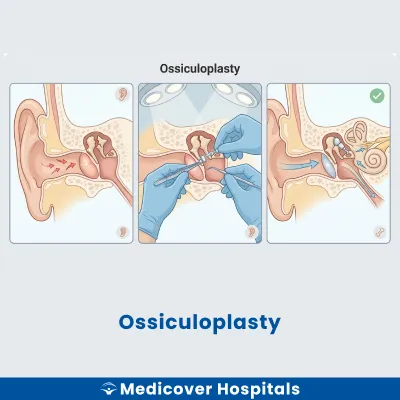
Ossiculoplasty is a surgical procedure aimed at repairing or reconstructing the ossicles, which are tiny bones in the middle ear. These bones - the malleus, incus, and stapes - play a crucial role in hearing by transmitting sound vibrations from the eardrum to the inner ear. During the procedure, damaged or missing ossicles are replaced or reshaped to restore proper hearing function.
This surgery is often needed when there is hearing loss due to ossicular chain damage. Conditions like chronic ear infections, trauma, or congenital abnormalities can lead to such damage. Without treatment, hearing impairment can worsen, affecting communication and quality of life. Modern surgical approaches for ossiculoplasty include endoscopic and microscopic techniques, which allow for precise repair and reconstruction.
Ossiculoplasty Surgery Doctors Near You
Discover skilled ENT specialists for ossiculoplasty at Medicover Hospitals across India. Choose your city and book a consultation to explore effective treatment options tailored to your needs.
Why Choose Medicover Hospitals for Ossiculoplasty?
Get a second opinion from trusted experts and makeconfident, informed decisions.
 Get Second Opinion
Complete Guide To Ossiculoplasty
Everything you need to know about the procedure, preparation, and recovery
Ossiculoplasty Surgery Indications
Doctors recommend ossiculoplasty when there is damage to the small bones in the middle ear, affecting hearing. This procedure aims to repair or replace these bones to restore hearing function.
Conductive Hearing Loss
Patients experience reduced hearing ability, often noticing muffled sounds. Examination reveals damage or discontinuity in the ossicular chain. When hearing aids or medical therapy do not improve hearing, surgery is considered.
Chronic Otitis Media
Persistent ear infections lead to hearing loss, ear discharge, and discomfort. Doctors find inflammation and ossicular erosion during examination. If antibiotics and drainage fail, ossiculoplasty may be necessary.
Ossicular Discontinuity
Patients report sudden hearing loss, often after trauma or infection. Imaging shows a break in the ossicular chain. When non-surgical interventions do not restore hearing, surgery is advised.
Otosclerosis
Gradual hearing loss and tinnitus are common symptoms. Examination reveals abnormal bone growth around the ossicles. If hearing aids are ineffective, ossiculoplasty can help restore hearing.
Congenital Ossicular Abnormalities
Children may have hearing difficulties from birth. Tests show malformed ossicles. When hearing aids do not suffice, surgical intervention is recommended to improve auditory function.
Please contact the hospital for current details as insurance panels may change.
How to Prepare for Ossiculoplasty?
Proper preparation is crucial for a successful ossiculoplasty. It helps ensure a smooth procedure and recovery. Following the guidelines will aid in minimizing risks and complications.
- Medication Review: Discuss all medications with your doctor. Stop NSAIDs, anticoagulants, and herbal supplements as advised.
- Fasting Instructions: Fast for at least 6-8 hours before the surgery if general anaesthesia is used. Follow specific instructions given by your healthcare provider.
- Avoid Smoking: Refrain from smoking for a few weeks before the surgery to promote better healing and reduce complications.
- Clothing: Wear loose, comfortable clothing on the day of surgery. It makes changing easier and reduces discomfort.
- Transport Arrangement: Arrange for someone to drive you home post-surgery, as you may feel drowsy from the anaesthesia.
- Medication List: Bring a list of all medications you are taking, including dosages, to the hospital.
- Ear Care: Follow any specific ear care instructions provided by your doctor, such as using prescribed ear drops.
- Pre-Surgery Hygiene: Bathe or shower the night before or the morning of the surgery to reduce infection risk.
Ossiculoplasty Surgery (Step-by-Step)
Ossiculoplasty is performed by ENT specialists. The surgery typically lasts 1-2 hours and is usually done under general anaesthesia.
- Preparation: The patient is given general anaesthesia to ensure they are asleep and pain-free during the procedure.
- Incision: A small incision, about 1-2 cm, is made behind the ear to access the middle ear. The surgeon uses a curette to carefully remove any obstructing tissue.
- Examination: The surgeon examines the ossicles using a microscope to assess damage. A harmonic scalpel may be used to gently separate the ossicles from surrounding tissue.
- Reconstruction: Damaged ossicles are repaired or replaced with prosthetic materials. This may involve reshaping or repositioning the ossicles using a bipolar cautery for precision.
- Closure: The incision is closed with sutures. The area is cleaned, and a sterile dressing is applied to protect the site.
- Recovery: The patient is moved to a recovery room. They gradually wake up from anaesthesia and are monitored for any immediate post-operative concerns.
Who Performs Ossiculoplasty Surgery?
Ossiculoplasty is performed by ENT specialists, also known as otolaryngologists. These surgeons have expertise in ear surgeries and are skilled in handling delicate structures within the ear.
Recovery After Ossiculoplasty Surgery
Recovery from ossiculoplasty surgery involves gradual healing and adaptation. It's important to follow your doctor's advice for a smooth recovery. Here's what you can expect during the recovery period.
Day 1-3:
- Rest is crucial. Avoid any strenuous activities.
- Keep your head elevated to reduce swelling.
- Stick to a soft diet. Include foods like curd, dal-rice, and soups.
- Avoid blowing your nose to prevent pressure changes in the ear.
Day 4-7:
- Continue with light activities but avoid bending or lifting heavy objects.
- Introduce more solid foods like khichdi and moong dal.
- Monitor for any signs of infection such as increased pain or discharge.
Day 8-14:
- Gradually resume normal activities, but still avoid strenuous exercise.
- You may start returning to work or school if you feel comfortable.
- Ensure follow-up appointments are attended for proper assessment.
Phase 3 (Week 3-4):
- Most daily activities can be resumed.
- Continue to avoid swimming and any activities that may cause ear trauma.
- Maintain a balanced diet to support healing.
When to Seek Urgent Help:
- Severe or persistent ear pain.
- Fever or chills indicating possible infection.
- Sudden hearing loss or dizziness.
- Any unusual discharge from the ear.
Benefits of Ossiculoplasty Surgery
Ossiculoplasty is a surgical procedure aimed at improving hearing by repairing or reconstructing the small bones in the middle ear.
- Improved Hearing: Restores the transmission of sound waves, enhancing hearing ability.
- Quality of Life: Better hearing can lead to improved communication and social interactions.
- Long-term Solution: Provides a durable improvement in hearing for many patients.
- Minimally Invasive: Typically involves a small incision, leading to quicker recovery.
Risks and Complications of Ossiculoplasty Surgery
While ossiculoplasty can be beneficial, it carries certain risks and potential complications, as with any surgical procedure.
- Hearing Loss: There is a possibility of no improvement or further hearing loss.
- Infection: Post-surgical infections can occur, requiring further treatment.
- Tinnitus: Some patients may experience ringing in the ears post-surgery.
- Dizziness: Temporary dizziness or balance issues may arise.
- Facial Nerve Injury: Damage to the facial nerve is a potential risk, though uncommon.
What is the Cost of Ossiculoplasty Surgery?
The cost of Ossiculoplasty surgery at Medicover Hospitals ranges from Rs. 75,000 to Rs. 2,32,000. The price varies based on the ward category chosen, such as outpatient, day care, general, and deluxe options. We offer transparent pricing to ensure clarity for our patients.
Insurance and TPA support are available, including CGHS, ESI, and major TPAs, with a cashless facility option. Please contact the hospital for the latest insurance panel details as these may change periodically.
Frequently Asked Questions
1. How much does Ossiculoplasty surgery cost?
The cost of Ossiculoplasty surgery at Medicover Hospitals ranges from Rs. 75,000 to Rs. 2,32,000, depending on the type of accommodation.
2. Is Ossiculoplasty surgery covered under insurance?
Ossiculoplasty surgery may be covered under CGHS, ESI, and major TPAs with cashless options. Please contact the hospital for current panel details.
3. Will I hear better immediately after surgery?
Hearing improvement may not be immediate after Ossiculoplasty. It can take several weeks for the hearing to stabilize post-surgery.
4. Can I swim after Ossiculoplasty?
Swimming should be avoided for at least six weeks after Ossiculoplasty. Water exposure can affect the healing of the middle ear.
5. Will I experience dizziness post-surgery?
Dizziness is a common temporary side effect after Ossiculoplasty. It usually resolves within a few days as your body adjusts.
6. What foods should I avoid post-Ossiculoplasty?
Avoid spicy and oily foods after Ossiculoplasty to prevent ear discomfort. Opt for soft foods like dal-rice and khichdi during recovery.
7. Can Ossiculoplasty affect my balance?
Temporary balance issues can occur after Ossiculoplasty. These usually improve as the ear heals and stabilizes over time.


