 Call
Call Patient Reports
Best Hospital for Orthopedic Surgery with Safe Treatment
At Medicover Hospitals, our orthopaedic surgeons, with qualifications such as MS and DNB, specialise in robotic and open surgeries for joint replacements, sports injuries, and spine disorders. These advanced techniques often result in smaller incisions and shorter hospital stays for patients across India.
Expert Surgeons
Yearly Surgeries
Patient Satisfaction
What is Orthopedic Surgery?
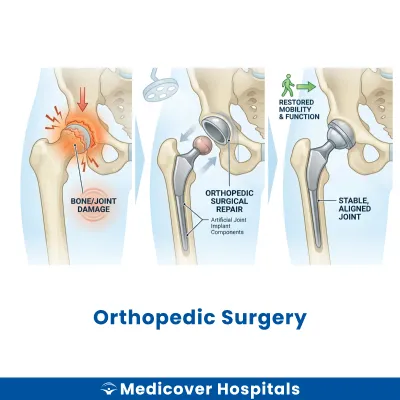
Orthopedic surgery is a branch of medicine focused on the musculoskeletal system. This includes bones, joints, ligaments, tendons, and muscles. It addresses issues like fractures, dislocations, and degenerative diseases. Surgeons use techniques to restore function and relieve pain. Common procedures include joint replacements and arthroscopy (minimally invasive surgery using a camera).
This surgery is needed for conditions like arthritis, sports injuries, and congenital deformities. If left untreated, these can lead to chronic pain and mobility issues. Modern surgical approaches include minimally invasive techniques and robotic-assisted surgery. These methods aim to reduce recovery time and improve outcomes. Early intervention can prevent complications and enhance quality of life.
Orthopedic Surgery Doctors Near You
Discover skilled orthopedics at Medicover Hospitals across India. Choose your city and book a consultation to address your bone and joint health needs. Start your journey to better mobility today.
Why Choose Medicover Hospitals for Orthopedic Surgery?
Get a second opinion from trusted experts and makeconfident, informed decisions.
 Get Second Opinion
Complete Guide To Orthopedic Surgery
Everything you need to know about the procedure, preparation, and recovery
Orthopedic Surgery Indications
Doctors recommend orthopedic surgery when non-surgical treatments do not relieve symptoms or improve function. It is often considered for conditions that impair daily activities or cause significant pain.
Severe Osteoarthritis
Patients experience persistent joint pain and stiffness, often worsening with activity. X-rays may show joint space narrowing and bone spurs. When medications and physical therapy fail, surgery is considered.
Fractures
Patients may have intense pain, swelling, and inability to move the affected limb. X-rays reveal broken bones. Surgery is needed if the fracture is complex or does not heal with casting.
Spinal Disc Herniation
Symptoms include back pain, numbness, or weakness in limbs. MRI scans show disc protrusion pressing on nerves. Surgery is suggested if conservative treatments like physiotherapy do not relieve symptoms.
Ligament Tears
Patients often report joint instability and pain after an injury. MRI can confirm ligament damage. Surgery is recommended when bracing and rehabilitation do not restore stability.
Chronic Tendonitis
Patients suffer from persistent pain and swelling in tendons. Ultrasound may show thickening or tears. Surgery is an option when rest and anti-inflammatory treatments are ineffective.
Bone Tumours
Patients might notice swelling or pain in a specific area. Imaging tests can reveal abnormal growths. Surgery is necessary to remove the tumour and prevent complications.
How to Prepare for Orthopedic Surgery?
Proper preparation is crucial for a smooth Orthopedic surgery experience. It helps minimise risks and ensures a quicker recovery.
- Medication Review: Stop NSAIDs, anticoagulants, and herbal supplements as advised by your doctor.
- Fasting Guidelines: Follow a fasting period of 8 hours before surgery if general anaesthesia is used.
- Pre-Surgery Exercises: Perform any recommended exercises to strengthen muscles around the surgical area.
- Clothing: Wear loose, comfortable clothing on the day of surgery for easy dressing post-operation.
- Transportation: Arrange for someone to drive you home after the procedure.
- Medication List: Bring a list of your current medications, including dosages, to the hospital.
- Home Preparation: Prepare your home for easy navigation post-surgery, removing obstacles and ensuring safety.
- Insurance Check: Confirm insurance coverage. Contact the hospital for current details as insurance panels may change.
Orthopedic Surgery (Step-by-Step)
Orthopedic surgery is performed by orthopedic surgeons. The duration varies depending on the procedure, typically ranging from 1 to 3 hours. It is usually done under general or regional anaesthesia.
- Preparation: The patient is positioned on the operating table. Anaesthesia is administered, ensuring the patient is comfortable and pain-free.
- Incision: A small incision, usually 1-2 cm, is made at the surgical site. This allows access to the affected area.
- Access and Repair: Instruments like curettes or harmonic scalpels are used to access and repair bones or joints. The surgeon may use a trocar for precise entry.
- Stabilization: Metal plates, screws, or rods may be inserted to stabilize bones. This ensures proper alignment and healing.
- Closure: The incision is closed with sutures or staples. A sterile dressing is applied to protect the wound.
- Recovery: The patient is moved to a recovery room. Vital signs are monitored as the anaesthesia wears off.
- Post-Operative Care: Pain management and physical therapy instructions are provided. The patient is advised on follow-up visits.
Who Performs Orthopedic Surgery?
Orthopedic surgeries are performed by orthopedic surgeons. These specialists are trained in diagnosing and treating musculoskeletal issues. They use various surgical instruments to repair and restore function to bones and joints.
Recovery After Orthopedic Surgery
Recovering from orthopedic surgery requires patience and adherence to your doctor's instructions. You may experience some discomfort and swelling, but these usually subside with time. It's important to follow a structured recovery plan to regain mobility and strength.
Day 1-3:
- Rest and keep the operated area elevated to reduce swelling.
- Begin with a soft diet, including moong dal soup and khichdi, to aid digestion.
- Use prescribed pain medication as directed.
- Start gentle movements as advised by your physiotherapist.
Day 4-7:
- Gradually increase activity levels, but avoid strenuous tasks.
- Incorporate curd and dal-rice into your meals for protein and probiotics.
- Continue physiotherapy exercises to improve mobility.
- Monitor the surgical site for any signs of infection.
Week 2-4:
- Resume light activities and short walks to enhance circulation.
- Introduce a balanced diet with plenty of fruits, vegetables, and lean proteins.
- Follow up with your doctor to assess healing progress.
- Return to work or school may be possible, depending on your job and recovery.
Week 5-8:
- Engage in more vigorous exercises as tolerated, under guidance.
- Ensure a diet rich in calcium and vitamin D for bone health.
- Continue regular physiotherapy sessions.
- Consult your doctor before resuming sports or heavy lifting.
When to Seek Urgent Help
- Severe pain unrelieved by medication.
- Excessive swelling or redness around the surgical site.
- Fever or chills indicating possible infection.
- Sudden difficulty in breathing or chest pain.
Benefits of Orthopedic Surgery
Orthopedic surgery can significantly improve quality of life by addressing musculoskeletal issues. Here are some benefits:
- Pain Relief: Helps alleviate chronic pain caused by joint or bone conditions.
- Improved Mobility: Restores movement and flexibility, enhancing daily activities.
- Enhanced Functionality: Corrects deformities and improves the function of affected areas.
- Increased Independence: Allows patients to perform tasks without assistance, boosting self-reliance.
- Better Quality of Life: Overall improvement in physical health and well-being.
Risks and Complications of Orthopedic Surgery Procedure
While orthopedic surgery can be beneficial, it carries certain risks. Understanding these helps in making informed decisions.
- Infection : Risk of infection at the surgical site.
- Blood Clots : Potential for clots forming in veins, particularly in the legs.
- Nerve Damage : Possibility of nerve injury during surgery.
- Implant Failure : Risk of prosthetic components failing over time.
- Allergic Reactions : Reaction to materials used in implants or medications.
- Chronic Pain : Persistent pain even after surgery.
- Bleeding : Risk of excessive bleeding during or after the procedure.
Cost of Orthopedic Surgery Procedure
The cost for the correction of humpback deformity and internal fixation with headless screws and bone grafting ranges from Rs. 1,50,000 to Rs. 2,40,000 across Medicover Hospitals. The price varies depending on the ward category chosen, such as day care, general, or deluxe suite.
We offer transparent pricing with support for insurance and TPA, including CGHS, ESI, and major TPAs. Cashless facility is available for your convenience. Please contact the hospital for the latest insurance panel details as these may change periodically.
Frequently Asked Questions
1. How much does Orthopedic surgery cost?
The cost for correcting a humpback deformity ranges from Rs. 150000 to Rs. 240000 at Medicover Hospitals, depending on the room type.
2. Is Orthopedic surgery covered under insurance?
Orthopedic surgery may be covered by CGHS, ESI, and major TPAs, offering cashless options. Please contact the hospital for current panel details.
3. Will I need physical therapy after surgery?
Yes, physical therapy is often necessary to regain strength and mobility after orthopedic surgery. It helps in faster recovery and better outcomes.
4. Can I drive after orthopedic surgery?
Driving is usually not advised for at least 6 weeks post-surgery. Consult your doctor for a personalised timeline based on your recovery.
5. What foods aid recovery after orthopedic surgery?
Consuming protein-rich foods like dal-rice, curd, and green vegetables aids recovery. These foods help in tissue repair and bone healing.
6. Will I need a brace after orthopedic surgery?
A brace may be required to support the spine and aid healing post-surgery. Your doctor will guide you on the duration of its use.
7. Can I return to sports after surgery?
Returning to sports is possible but should be gradual and guided by your doctor. Full participation is typically allowed after 6-12 months.


