 Call
Call Patient Reports
ORIF of Radius Fracture Surgery Hospital by Expert Orthopedics
At Medicover Hospitals, our orthopaedic team, with qualifications like MS and DNB, performs open ORIF (Open Reduction and Internal Fixation) for radius fractures. This approach helps in precise alignment and stabilization of the bone. Patients often experience shorter hospital stays due to effective surgical techniques.
Expert Surgeons
Yearly Surgeries
Patient Satisfaction
What is Orif of Radius Fracture?
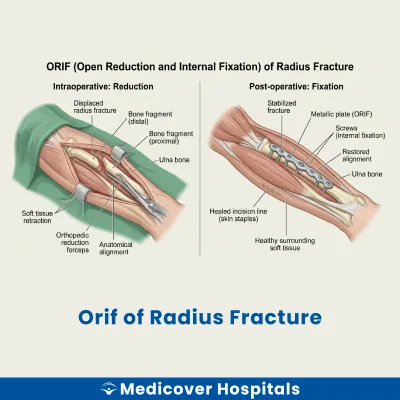
Open Reduction and Internal Fixation (ORIF) of a radius fracture is a surgical procedure to repair a broken radius bone. The radius is one of the two long bones in the forearm. In this procedure, the bone fragments are repositioned (open reduction) and held together with hardware like plates and screws (internal fixation) to ensure proper healing.
This surgery is necessary when the radius fracture is severe or displaced. Conditions like high-impact injuries, falls, or accidents can lead to such fractures. If left untreated, it can result in improper healing, leading to limited arm function or deformity. Modern surgical approaches for ORIF include minimally invasive techniques that aim to reduce recovery time and improve outcomes.
Orif of Radius Fracture Doctors Near You
Discover skilled orthopedics for ORIF of radius fracture at Medicover Hospitals across India. Choose your city and book a consultation to receive expert care tailored to your needs.
Why Choose Medicover Hospitals for Orif of Radius Fracture?
Get a second opinion from trusted experts and makeconfident, informed decisions.
 Get Second Opinion
Complete Guide To Orif Of Radius Fracture
Everything you need to know about the procedure, preparation, and recovery
ORIF of Radius Fracture Surgery Indications
Doctors recommend ORIF (Open Reduction and Internal Fixation) of a radius fracture when non-surgical methods are unlikely to heal the bone properly. This procedure is often suggested for fractures that are unstable or have not aligned correctly.
Severe Displacement
Patients may experience intense pain and visible deformity in the wrist area. X-rays show significant misalignment of the fractured bone. When manual realignment does not hold, surgery is necessary to stabilize the bone.
Open Fracture
There is a break in the skin over the fracture site, often accompanied by bleeding and risk of infection. Immediate imaging confirms the fracture and its severity. Surgery is required to clean the wound and fix the bone.
Comminuted Fracture
Patients report severe pain and swelling, with limited wrist movement. Imaging reveals the bone is shattered into multiple pieces. Non-surgical methods are ineffective, making ORIF essential to reconstruct the bone.
Joint Involvement
Patients experience joint pain and instability. Imaging shows the fracture extends into the wrist joint. When joint function is compromised, surgery helps restore alignment and function.
Failed Conservative Treatment
Initial treatments like casting do not relieve symptoms or improve fracture alignment. Follow-up X-rays show no healing progress. Surgery becomes necessary to ensure proper healing and function.
How to Prepare for ORIF of Radius Fracture?
Proper preparation for ORIF (Open Reduction and Internal Fixation) of a radius fracture is crucial for a smooth surgery and recovery. It helps minimise complications and ensures the best possible outcome.
- Medication Review: Stop NSAIDs, anticoagulants, and herbal supplements as advised by your doctor.
- Fasting Guidelines: Fast for at least 8 hours before the procedure if general anaesthesia is used.
- Pre-Surgery Hygiene: Bathe with an antiseptic soap the night before and morning of the surgery.
- Comfortable Clothing: Wear loose, easy-to-remove clothing on the day of the surgery.
- Transportation: Arrange for someone to drive you home post-surgery as you won't be able to drive yourself.
- Medication List: Bring a list of your current medications, including dosages, to the hospital.
- Pre-Op Instructions: Follow any additional instructions given by your healthcare provider.
- Rest and Relaxation: Get a good night's sleep before the surgery to help your body prepare.
ORIF of Radius Fracture Surgery (Step-by-Step)
Overview: This procedure is performed by orthopedic surgeons. It typically lasts 1-2 hours. General or regional anaesthesia is used to ensure patient comfort.
- Preparation: The patient is positioned on the operating table. The surgical area is sterilised to prevent infection.
- Incision: A 1-2 cm incision is made over the fracture site. This allows access to the broken radius bone.
- Fracture Exposure: The surgeon uses retractors to gently move tissues aside. This exposes the fracture for better visibility.
- Bone Alignment: The fractured bone is realigned using reduction tools. This step ensures the bone is in its correct position.
- Fixation: Metal plates and screws are used to secure the bone. Instruments like drills and screwdrivers are employed for this task.
- Closure: The incision is closed with sutures or staples. A sterile dressing is applied to protect the wound.
- Post-Procedure: The patient is moved to recovery. Monitoring continues until the effects of anaesthesia wear off.
Who Performs ORIF of Radius Fracture Surgery?
Orthopaedic surgeons perform this procedure. They specialise in diagnosing and treating musculoskeletal injuries. Their expertise ensures proper bone healing and function restoration.
Recovery After ORIF of Radius Fracture Surgery
Recovering from an ORIF (Open Reduction and Internal Fixation) of a radius fracture involves a gradual process of healing and regaining strength. Patients can expect some swelling and discomfort initially, which will reduce over time. Following the surgeon's advice is crucial for a smooth recovery.
Day 1-3:
- Rest and keep the arm elevated to reduce swelling.
- Apply ice packs as advised to manage pain and swelling.
- Stick to a soft diet like curd, dal-rice, and soups to maintain nutrition.
Day 4-7:
- Begin gentle finger and wrist movements as recommended by your doctor.
- Continue with a balanced diet including khichdi and moong dal for protein.
- Avoid lifting heavy objects or strenuous activities.
Day 8-14:
- Gradually increase hand and wrist exercises under guidance.
- Introduce more solid foods while maintaining a nutritious diet.
- Most patients can resume light activities but avoid heavy lifting.
Phase 3-6 Weeks:
- Engage in physiotherapy to improve strength and flexibility.
- Return to work or school may be possible, depending on the nature of the job.
- Continue to avoid activities that strain the wrist.
When to Seek Urgent Help:
- Severe pain unrelieved by medication.
- Signs of infection like fever, redness, or pus at the incision site.
- Numbness or tingling in the fingers.
Always consult your healthcare provider for personalized advice and follow-up appointments. Please contact the hospital for current details as insurance panels may change.
Benefits of ORIF of Radius Fracture Surgery
Open Reduction and Internal Fixation (ORIF) is a surgical procedure used to treat radius fractures. It offers several benefits for patients.
- Improved Alignment: ORIF helps in restoring the normal alignment of the radius bone.
- Stability: The procedure provides stability to the fractured bone, promoting better healing.
- Faster Recovery: Patients often experience quicker recovery times compared to non-surgical treatments.
- Reduced Pain: Proper fixation can lead to a significant reduction in pain post-surgery.
Risks and Complications of ORIF of Radius Fracture Surgery
While ORIF is generally safe, it carries certain risks and potential complications. Patients should be aware of these before undergoing the procedure.
- Common: Infection at the surgical site can occur, requiring further treatment.
- Common: Nerve damage may result in temporary or permanent numbness.
- Common: Stiffness in the wrist or forearm is possible, affecting movement.
- Rare: Non-union, where the bone fails to heal properly, may necessitate additional surgery.
- Rare: Hardware irritation can occur, sometimes requiring removal of the implants.
Cost of ORIF of Radius Fracture Surgery
The cost of ORIF of Radius Fracture Surgery at Medicover Hospitals ranges from Rs. 90,000 to Rs. 144,000. The price varies based on the ward category chosen, such as general, twin sharing, private, and deluxe options.
We offer transparent pricing and support for insurance and TPA, including CGHS, ESI, and major TPAs. A cashless facility is also available for your convenience. Please contact the hospital for the latest insurance panel details as these may change periodically.
Frequently Asked Questions
1. How much does ORIF of Radius Fracture surgery cost at Medicover Hospitals?
The cost for ORIF of Radius Fracture surgery at Medicover Hospitals ranges from Rs. 90,000 to Rs. 144,000, depending on the type of room chosen.
2. Is ORIF of Radius Fracture surgery covered under health insurance at Medicover?
ORIF of Radius Fracture surgery is often covered by CGHS, ESI, and major TPAs, offering cashless options. Please contact the hospital for current panel details.
3. Will I regain full wrist movement after ORIF?
Post-ORIF, regaining full wrist movement may take several weeks of physiotherapy. Consistent exercises are crucial for optimal recovery.
4. Can I drive immediately after ORIF of Radius Fracture?
Driving is usually not recommended until 6-8 weeks post-surgery. It's essential to ensure full wrist control before resuming driving.
5. What foods aid recovery after ORIF of Radius Fracture?
Include protein-rich foods like dal-rice and curd for recovery. These help in bone healing and muscle strength post-surgery.
6. Is there a risk of nerve damage with ORIF?
Nerve damage is a rare complication of ORIF of Radius Fracture. Prompt medical attention can address any unusual sensations or weakness.
7. When can I return to sports after ORIF?
Returning to sports is typically advised after 3-6 months post-ORIF. Consult your doctor to ensure your wrist has healed adequately.


