 Call
Call Patient Reports
ORIF of Left Femur with Proximal Femoral Nail Surgery by Expert Orthopedics
At Medicover Hospitals, the ORIF of Left Femur with Proximal Femoral Nail is performed using an open surgical approach. Our orthopaedic team, with qualifications like MS and DNB, ensures precise treatment. This approach often results in reduced blood loss, aiding quicker recovery.
Expert Surgeons
Yearly Surgeries
Patient Satisfaction
What is Orif of Left Femur With Proximal Femoral Nail?
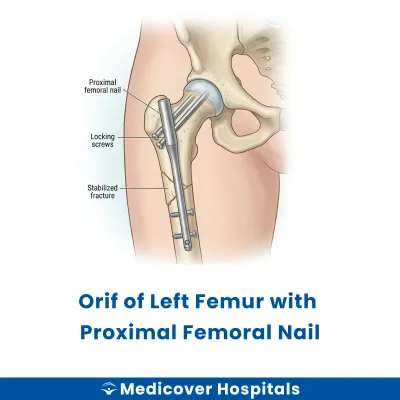
ORIF of the Left Femur with Proximal Femoral Nail is a surgical procedure. ORIF stands for Open Reduction and Internal Fixation. It involves realigning and stabilising a fractured femur (thigh bone) using a metal rod called a proximal femoral nail. This rod is inserted into the bone to hold it in place and allow proper healing. The procedure is focused on the left femur, which is the thigh bone on the left side of the body.
This surgery is essential for treating severe fractures of the femur. Such fractures can result from trauma or accidents. If left untreated, they can lead to complications like improper healing or mobility issues. Modern surgical approaches for this procedure include minimally invasive techniques. These techniques aim to reduce recovery time and improve outcomes. Proper treatment ensures the bone heals correctly, restoring function and mobility.
Orif of Left Femur With Proximal Femoral Nail Doctors Near You
Find experienced orthopedics for ORIF of the left femur with proximal femoral nail at Medicover Hospitals across India. Choose your city and book a consultation to discuss your treatment options.
Why Choose Medicover Hospitals for Orif of Left Femur With Proximal Femoral Nail?
Get a second opinion from trusted experts and makeconfident, informed decisions.
 Get Second Opinion
Complete Guide To Orif Of Left Femur With Proximal Femoral Nail
Everything you need to know about the procedure, preparation, and recovery
ORIF of Left Femur with Proximal Femoral Nail Surgery Indications
Doctors recommend ORIF of the left femur with proximal femoral nail when non-surgical treatments fail to heal fractures. This procedure stabilises the bone, promoting proper healing and restoring mobility.
Severe Femoral Shaft Fracture
Patients experience intense pain and inability to bear weight on the affected leg. X-rays or CT scans reveal a displaced fracture. Surgery is advised when conservative methods like casting are insufficient.
Comminuted Fracture
Patients report severe pain and swelling. Imaging shows the femur broken into multiple pieces. When non-surgical treatments cannot align the fragments, surgery is necessary.
Pathological Fracture
Patients may have sudden pain after minor trauma. Imaging may show a fracture with underlying bone weakness due to conditions like osteoporosis. Surgery is considered when the fracture does not heal with conservative care.
Non-Union of Femur Fracture
Patients experience persistent pain and instability months after initial treatment. X-rays show a lack of healing. Surgery is needed when the fracture fails to unite with non-surgical methods.
Malunion of Femur Fracture
Patients may have deformity and functional impairment. Imaging shows improper alignment of the healed bone. Surgery is recommended when the malunion affects mobility and daily activities.
How to Prepare for ORIF of Left Femur with Proximal Femoral Nail?
Proper preparation for ORIF of the left femur with a proximal femoral nail is crucial for a smooth surgery and recovery. It helps minimise complications and ensures the best outcomes.
- Medication Review: Stop NSAIDs, anticoagulants, and herbal supplements as advised by your doctor.
- Fasting: Do not eat or drink anything for at least 8 hours before the surgery due to general anaesthesia.
- Pre-Surgery Tests: Complete all required blood tests, X-rays, or other imaging studies as instructed.
- Clothing: Wear loose, comfortable clothing on the day of the surgery for ease of movement.
- Transport: Arrange for someone to drive you home after the procedure, as you will not be able to drive yourself.
- Medication List: Bring a list of all medications you are currently taking, including dosages, to the hospital.
- Home Preparation: Set up a comfortable recovery area at home with necessary supplies within easy reach.
- Smoking and Alcohol: Avoid smoking and alcohol consumption for a few days before and after the surgery.
ORIF of Left Femur with Proximal Femoral Nail Surgery (Step-by-Step)
Overview: This procedure is performed by orthopedic surgeons. It typically lasts 2-3 hours. General or regional anaesthesia is used.
- Preparation: The patient is positioned on the operating table. Anaesthesia is administered to ensure comfort and pain relief.
- Incision: A 5-10 cm incision is made near the hip area. This allows access to the fractured femur.
- Reduction: The fracture is aligned using traction. Instruments like a bone clamp may be used to hold the bone in place.
- Nail Insertion: A guide wire is inserted through the femur. A reamer enlarges the canal. The proximal femoral nail is then inserted over the guide wire.
- Screw Placement: Screws are placed through the nail to secure it. Instruments like a drill and screwdriver are used for this step.
- Closure: The incision is closed with sutures or staples. A dressing is applied to protect the wound.
- Recovery: The patient is moved to the recovery area. Vital signs are monitored as anaesthesia wears off.
Who Performs ORIF of Left Femur with Proximal Femoral Nail Surgery?
This surgery is performed by orthopaedic surgeons. They specialise in treating bone and joint conditions. Their expertise ensures proper alignment and fixation of the femur.
Recovery After ORIF of Left Femur with Proximal Femoral Nail Surgery
Recovery from ORIF of the left femur with proximal femoral nail surgery involves gradual healing and rehabilitation. Patients can expect a structured recovery plan, focusing on pain management, mobility, and strengthening exercises.
Day 1-3:
- Hospital stay for monitoring and pain management.
- Begin with light physiotherapy exercises as advised by the physiotherapist.
- Start with a liquid diet, gradually moving to soft foods like soups and khichdi.
Day 4-7:
- Continue physiotherapy to improve mobility.
- Introduce semi-solid foods like dal-rice and moong dal.
- Use crutches or a walker for support while walking.
Week 2-4:
- Increase physiotherapy intensity to enhance strength and flexibility.
- Incorporate more solid foods, including curd and vegetables, for balanced nutrition.
- Gradually increase walking distance with support.
Phase 1 (Month 1-2):
- Focus on regaining full range of motion and strength.
- Continue a balanced diet with protein-rich foods for bone healing.
- Most patients can resume desk work or school by the end of this phase.
Phase 2 (Month 3-6):
- Engage in more vigorous physical activities as advised by the doctor.
- Ensure a nutritious diet to support ongoing recovery.
- Full return to normal activities, including sports, may be possible.
When to Seek Urgent Help:
- Severe pain unrelieved by medication.
- Signs of infection such as fever, redness, or swelling at the incision site.
- Sudden inability to move the leg or bear weight.
Benefits of ORIF of Left Femur with Proximal Femoral Nail Surgery
ORIF (Open Reduction and Internal Fixation) with a proximal femoral nail is a surgical procedure aimed at stabilising fractures of the femur. It offers several benefits:
- Stability: Provides strong support to the fractured bone, promoting proper alignment and healing.
- Early Mobilisation: Enables patients to begin weight-bearing activities sooner, aiding in faster recovery.
- Reduced Pain: Helps alleviate pain by stabilising the fracture site.
- Minimally Invasive: Involves smaller incisions, which may lead to quicker recovery and less scarring.
Risks and Complications of ORIF of Left Femur with Proximal Femoral Nail Surgery
While ORIF with a proximal femoral nail is generally safe, it carries some risks and complications:
- Common: Infection at the surgical site, which may require antibiotics or further treatment.
- Common: Blood clots, which can occur post-surgery and may need medical intervention.
- Rare: Nerve or blood vessel damage, potentially affecting limb function.
- Rare: Implant failure or breakage, necessitating additional surgery.
- Rare: Non-union or delayed healing of the fracture, which might require further treatment.
Cost of ORIF of Left Femur with Proximal Femoral Nail Surgery
The cost for ORIF of the left femur with proximal femoral nail surgery at Medicover Hospitals varies depending on the ward category. Prices range from Rs.12,299 to Rs.39,589 across different ward types. The cost structure is transparent, and we offer insurance and TPA support, including CGHS, ESI, and major TPAs. Cashless facilities are available for your convenience. Please contact the hospital for the latest insurance panel details as these may change periodically.
Frequently Asked Questions
1. How much does ORIF of Left Femur with Proximal Femoral Nail surgery cost at Medicover Hospitals?
The cost of ORIF of Left Femur with Proximal Femoral Nail surgery at Medicover Hospitals ranges from Rs. 12,299 to Rs. 39,589, depending on the facility and services.
2. Is ORIF of Left Femur with Proximal Femoral Nail surgery covered under health insurance at Medicover?
Yes, the surgery is often covered by CGHS, ESI, and major TPAs with cashless options. Please contact the hospital for current panel details.
3. Will I need crutches after femur surgery?
Yes, crutches are typically needed for 6-8 weeks post-surgery to aid mobility and ensure proper healing of the femur.
4. Can I drive after femur nail surgery?
Driving is usually not recommended for at least 6 weeks post-surgery, as it requires full leg strength and control for safety.
5. Will my leg length change after surgery?
In rare cases, leg length discrepancy can occur, but surgeons aim to minimise this risk during the procedure.
6. Can I climb stairs after femur surgery?
Climbing stairs should be avoided initially but can be gradually resumed with physiotherapy support after a few weeks.
7. What foods help recovery after femur surgery?
Include protein-rich foods like dal, curd, and khichdi in your diet to support bone healing and recovery.


