 Call
Call Patient Reports
Best Hospital for ORIF of Foot and Ankle Fractures with Advanced Orthopedic Care
At Medicover Hospitals, the Open Reduction and Internal Fixation (ORIF) of foot and ankle fractures is performed using open surgical techniques. Our Orthopedic Surgeons, holding qualifications like MS and MCh, ensure precise alignment and stabilization. This approach often results in shorter hospital stays.
Expert Surgeons
Yearly Surgeries
Patient Satisfaction
What is Orif of Foot and Ankle Fractures?
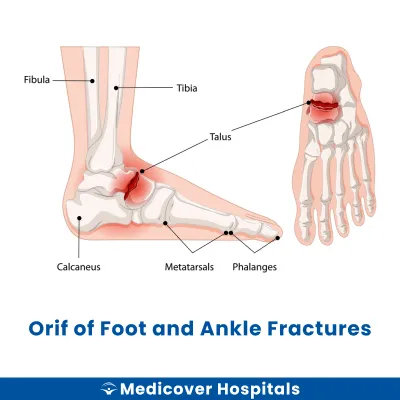
Open Reduction and Internal Fixation (ORIF) of Foot and Ankle Fractures is a surgical procedure to repair broken bones in the foot and ankle. It involves repositioning the fractured bones (open reduction) and securing them with hardware like screws and plates (internal fixation). This helps restore the normal anatomy and function of the foot and ankle.
This surgery is needed for severe fractures that cannot heal properly on their own. Conditions like complex fractures, dislocations, or unstable fractures often require ORIF. If left untreated, these can lead to chronic pain, deformity, or impaired mobility. Modern surgical approaches for ORIF include minimally invasive techniques and advanced imaging for precise alignment. These methods aim to promote faster recovery and better outcomes.
Orif of Foot and Ankle Fractures Doctors Near You
Find experienced Orthopedic Surgeons for ORIF of foot and ankle fractures at Medicover locations across India. Choose your city and book a consultation for expert care and guidance.
Why Choose Medicover Hospitals for Orif of Foot and Ankle Fractures?
Get a second opinion from trusted experts and makeconfident, informed decisions.
 Get Second Opinion
Complete Guide To Orif Of Foot And Ankle Fractures
Everything you need to know about the procedure, preparation, and recovery
ORIF of Foot and Ankle Fractures Surgery Indications
Doctors recommend ORIF (Open Reduction and Internal Fixation) for foot and ankle fractures when the bones are misaligned or unstable. This procedure is often necessary when conservative treatments, like casting or splinting, do not provide adequate healing.
Severe Displacement
Patients may experience intense pain and swelling, with visible deformity in the foot or ankle. X-rays or CT scans show significant misalignment of the fractured bones. When manual realignment fails, ORIF is considered to restore proper bone positioning.
Open Fractures
Open fractures involve bone piercing through the skin, causing severe pain and bleeding. Immediate medical imaging reveals exposed bone and tissue damage. ORIF is needed to clean the wound and stabilize the fracture to prevent infection.
Joint Involvement
Fractures extending into the joint cause joint instability and severe pain during movement. Imaging shows fracture lines crossing the joint surface. Surgery is recommended when joint function is compromised and conservative methods are ineffective.
Multiple Fractures
Patients with multiple fractures in the foot or ankle experience severe pain and inability to bear weight. X-rays reveal several fracture lines. ORIF is necessary when multiple fractures prevent proper healing with non-surgical methods.
Failed Conservative Treatment
Persistent pain and instability after weeks of immobilization indicate failed conservative treatment. Follow-up imaging shows incomplete healing or persistent misalignment. ORIF is advised to ensure proper bone healing and function restoration.
How to Prepare for ORIF of Foot and Ankle Fractures?
Proper preparation for ORIF (Open Reduction and Internal Fixation) of foot and ankle fractures is crucial for a smooth surgery and recovery. Following these steps can help minimise complications and ensure a successful outcome.
- Medication Review: Stop NSAIDs, anticoagulants, and herbal supplements as advised by your doctor.
- Fasting Guidelines: Do not eat or drink anything for at least 8 hours before the surgery.
- Pre-Surgery Hygiene: Bathe with an antiseptic soap the night before and the morning of the surgery.
- Clothing: Wear loose, comfortable clothing to the hospital for easy dressing post-surgery.
- Transportation: Arrange for someone to drive you home after the procedure, as you will not be able to drive.
- Medication List: Bring a list of all medications you take, including dosages, to the hospital.
- Smoking and Alcohol: Avoid smoking and alcohol for at least 24 hours before the surgery.
- Home Preparation: Prepare your home for easy access and comfort during recovery, such as clearing pathways and setting up a rest area.
ORIF of Foot and Ankle Fractures Surgery (Step-by-Step)
Open Reduction and Internal Fixation (ORIF) of foot and ankle fractures is performed by orthopaedic surgeons. The procedure typically lasts 2 to 3 hours and is usually done under general anaesthesia.
- Preparation: The patient is positioned on the operating table. Anaesthesia is administered to ensure comfort and pain-free surgery.
- Incision: A 1-2 cm incision is made over the fracture site. The surgeon carefully exposes the fractured bone.
- Reduction: The surgeon uses instruments like a bone clamp to realign the fractured bone fragments to their normal position.
- Fixation: Metal plates, screws, or pins are used to secure the bone fragments. A drill and screwdriver may be employed to place these fixation devices accurately.
- Closure: The incision is closed with sutures or staples. A sterile dressing is applied to protect the wound.
- Recovery: The patient is moved to the recovery room. Monitoring continues as the anaesthesia wears off.
- Post-Operative Care: Pain management and instructions for mobility aids are provided. Follow-up appointments are scheduled.
Who Performs ORIF of Foot and Ankle Fractures Surgery?
Orthopedic surgeons, who specialise in the musculoskeletal system, perform ORIF of foot and ankle fractures. They have expertise in treating bone injuries and are skilled in using surgical instruments to repair fractures effectively.
Recovery After ORIF of Foot and Ankle Fractures Surgery
Recovery from ORIF (Open Reduction and Internal Fixation) of foot and ankle fractures involves several stages. It is essential to follow your surgeon's advice for a smooth recovery. Expect some discomfort and swelling initially, which will gradually improve.
Day 1-3:
- Rest and elevate the foot to reduce swelling.
- Apply ice packs as advised.
- Begin with a liquid diet, gradually moving to soft foods like khichdi and soups.
Day 4-7:
- Continue elevation and icing.
- Start gentle toe movements to prevent stiffness.
- Include protein-rich foods like dal-rice and curd in your diet.
Day 8-14:
- Attend follow-up appointments for wound inspection.
- Begin partial weight-bearing as advised by your doctor.
- Consume foods rich in calcium and vitamins, such as moong dal and leafy greens.
Phase 3-6 Weeks:
- Gradually increase weight-bearing activities with guidance.
- Physical therapy may start to improve mobility.
- Return to work or school may be possible, depending on the nature of your activities.
Phase 6-12 Weeks:
- Focus on strengthening exercises.
- Resume normal activities as tolerated.
- Continue a balanced diet to support bone healing.
When to Seek Urgent Help:
- Severe pain unrelieved by medication.
- Signs of infection: redness, warmth, or pus at the incision site.
- Sudden swelling or inability to move toes.
Benefits of ORIF of Foot and Ankle Fractures Surgery
Open Reduction and Internal Fixation (ORIF) is a surgical procedure used to treat fractures of the foot and ankle. It offers several benefits.
- Improved Alignment: ORIF helps in restoring the natural alignment of bones, which is crucial for proper function.
- Stability: The procedure provides stability to the fractured bones, aiding in quicker recovery.
- Reduced Pain: By fixing the fracture, ORIF can significantly reduce pain and discomfort.
- Faster Recovery: Patients may experience a quicker return to daily activities compared to non-surgical treatments.
Risks and Complications of ORIF of Foot and Ankle Fractures Surgery
While ORIF is generally safe, like any surgery, it carries certain risks and potential complications.
- Infection: There is a risk of infection at the surgical site.
- Nerve Damage: Surgery may occasionally result in nerve injury, affecting sensation.
- Blood Clots: There is a risk of developing blood clots in the legs.
- Hardware Issues: The metal plates or screws used may cause irritation or require removal.
- Delayed Healing: Some patients may experience slower bone healing.
- Joint Stiffness: Stiffness in the foot or ankle may occur post-surgery.
What is the Cost of ORIF of Foot and Ankle Fractures Surgery?
The cost of ORIF (Open Reduction and Internal Fixation) for foot and ankle fractures at Medicover Hospitals ranges from Rs. 56,500 to Rs. 1,45,000, based on the surgical approach, duration of hospital stay, room category, diagnostics, and post-operative care.
At Medicover Hospitals, we ensure transparent pricing. We offer insurance and TPA support, accepting CGHS, ESI, and major TPAs. A cashless facility is available for your convenience. Please contact the hospital for the latest insurance panel details as these may change periodically.
Frequently Asked Questions
1. How much does ORIF of Foot and Ankle Fractures surgery cost at Medicover Hospitals?
The cost of ORIF of Foot and Ankle Fractures ranges from Rs. 56,500 to Rs. 1,45,
2. Please contact Medicover Hospitals for detailed pricing information. 2. Is ORIF of Foot and Ankle Fractures surgery covered under health insurance at Medicover?
ORIF surgery may be covered by CGHS, ESI, and major TPAs. Please contact the hospital for current panel details.
3. Will I need crutches after ORIF of foot fractures?
Yes, crutches are often needed to avoid weight-bearing. Your doctor will guide you on when to start walking without them.
4. Can I drive after ORIF of ankle fractures?
Driving is usually not recommended until full recovery. This may take several weeks, depending on your healing progress.
5. Will I have metal implants after ORIF?
Yes, metal plates or screws are typically used to stabilize fractures. They may remain permanently unless complications arise.
6. How soon can I return to sports post-ORIF?
Returning to sports usually takes several months. Your doctor will assess your recovery and advise when it's safe to resume activities.
7. What complications can occur after ORIF of foot fractures?
Possible complications include infection or implant issues. Regular follow-ups help monitor healing and address any concerns promptly.


