 Call
Call Patient Reports
Optical Coherence Tomography Procedure at Medicover Hospitals
Optical Coherence Tomography (OCT) at Medicover Hospitals is performed using advanced endoscopic techniques by skilled Ophthalmologists with qualifications like DM and DNB. This minimally invasive approach allows for precise imaging of coronary arteries, leading to shorter hospital stays and quicker recovery for patients across India.
Expert Specialists
Yearly Procedures
Patient Satisfaction
What is Optical Coherence Tomography?
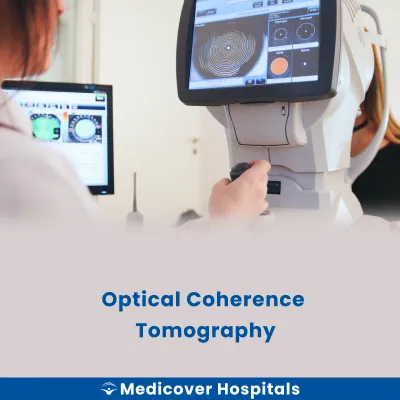
Optical Coherence Tomography (OCT) is a non-invasive imaging test. It uses light waves to take cross-section pictures of the retina, the light-sensitive tissue at the back of the eye. This test helps in examining the retina's layers, allowing doctors to map and measure their thickness. It is crucial for diagnosing and monitoring eye conditions.
OCT is essential for detecting conditions like macular degeneration, diabetic retinopathy, and glaucoma. These conditions can lead to vision loss if untreated. Early detection through OCT can prevent severe complications. Modern approaches such as Spectral Domain OCT and Swept Source OCT offer detailed images. These technologies aid in precise diagnosis and effective treatment planning.
Optical Coherence Tomography Doctors Near You
Discover Ophthalmologists skilled in Optical Coherence Tomography at Medicover Hospitals across India. Choose your city and book a consultation to explore advanced cardiac care options near you.
Why Choose Medicover Hospitals for Optical Coherence Tomography?
Get a second opinion from trusted experts and makeconfident, informed decisions.
 Get Second Opinion
Complete Guide To Optical Coherence Tomography
Everything you need to know about the procedure, preparation, and recovery
Optical Coherence Tomography procedure Indications
Doctors recommend Optical Coherence Tomography (OCT) when detailed imaging of the coronary arteries is needed. This procedure helps in assessing the condition of the arteries and planning further treatment.
Unexplained Chest Pain
Patients may experience persistent chest pain not relieved by medication. Initial tests might show unclear results. OCT is used to get a detailed view of the coronary arteries to identify any blockages or abnormalities.
Abnormal Angiography Results
During an angiography, if the images suggest unclear or ambiguous blockages, OCT can provide high-resolution images. This helps in understanding the extent and nature of the blockage more clearly.
Assessment of Stent Placement
After stent placement, some patients might experience recurrent symptoms. OCT helps in examining the stent's position and the artery's response. It is used when symptoms persist despite initial successful stent placement.
Evaluation of Plaque Characteristics
Patients with high cholesterol might have unstable plaques. If imaging shows potential risk factors, OCT helps in assessing plaque composition. This is crucial when symptoms worsen despite medication.
Inconclusive Stress Test Results
When stress tests show inconclusive results, patients may still experience symptoms like shortness of breath. OCT is used to provide a clearer picture of the coronary arteries to guide further treatment.
How to Prepare for Optical Coherence Tomography?
Proper preparation for Optical Coherence Tomography (OCT) ensures accurate results and a smooth procedure. Following these steps can help you get ready effectively.
- Medication Review: Discuss with your doctor if you need to stop NSAIDs, anticoagulants, or herbal supplements before the test.
- Fasting Guidelines: OCT usually doesn't require fasting. Confirm with your healthcare provider if any specific instructions apply.
- Eye Drops: You may need to use prescribed eye drops before the procedure. Follow your doctor's instructions carefully.
- Clothing: Wear loose, comfortable clothing to the appointment for ease during the procedure.
- Transport Arrangement: Arrange for someone to drive you home post-procedure, as your vision might be temporarily affected.
- Medication List: Bring a list of your current medications, including dosages, to share with your healthcare provider.
- Avoid Makeup: Do not wear eye makeup on the day of the test to prevent interference with the imaging.
- Contact Lenses: Remove contact lenses before the procedure, as advised by your doctor.
Optical Coherence Tomography procedure (Step-by-Step)
Overview: Optical Coherence Tomography (OCT) is performed by cardiologists. The procedure typically lasts 30-60 minutes. It is usually done under local anaesthesia.
- Preparation: The patient is positioned comfortably. A local anaesthetic is applied to numb the area where the catheter will be inserted.
- Catheter Insertion: A small incision, about 1-2 cm, is made to access a blood vessel. A catheter is gently inserted into the vessel and guided towards the heart.
- Positioning the OCT Probe: The OCT probe, which is attached to the catheter, is carefully positioned at the target area within the coronary artery.
- Image Acquisition: The OCT system is activated. It uses light waves to capture detailed images of the artery walls. The patient may feel slight pressure but no pain.
- Data Analysis: The cardiologist reviews the images in real-time. This helps in assessing the condition of the arteries and planning further treatment if needed.
- Catheter Removal: Once imaging is complete, the catheter and OCT probe are carefully withdrawn. The incision site is then cleaned and bandaged.
- Post-Procedure Care: The patient is monitored for a short period. Instructions are given for care at home. Normal activities can usually be resumed shortly after.
Who Performs Optical Coherence Tomography procedure?
OCT is performed by Ophthalmology doctor who specialise in imaging techniques. They have expertise in using advanced imaging tools to assess certain conditions. Their skills ensure precise and safe execution of the procedure.
Recovery After Optical Coherence Tomography procedure
Optical Coherence Tomography (OCT) is a non-invasive imaging test, and recovery is usually swift. Most patients can resume normal activities soon after the procedure. However, it's important to follow specific guidelines to ensure optimal recovery.
Day 1:
- Rest your eyes and avoid straining them. Limit screen time and reading.
- Consume light meals. Opt for easily digestible foods like curd, dal-rice, or khichdi.
- Avoid driving immediately after the procedure as your vision may be temporarily affected.
Day 2-3:
- Gradually resume normal activities, but continue to avoid heavy lifting or strenuous exercise.
- Maintain a balanced diet. Include moong dal and vegetable soups to support overall health.
- Wear sunglasses when outdoors to protect your eyes from bright light.
Day 4-7:
- Most patients can return to work or school, provided it does not involve heavy physical activity.
- Continue to monitor your vision and avoid activities that may cause eye strain.
- Stay hydrated and maintain a diet rich in nutrients to aid recovery.
When to Seek Urgent Help:
- Sudden vision loss or significant changes in vision.
- Severe eye pain or discomfort.
- Persistent redness or swelling in the eyes.
If you experience any of these symptoms, contact your healthcare provider immediately.
Benefits of Optical Coherence Tomography procedure
Optical Coherence Tomography (OCT) is a non-invasive imaging test that provides detailed images of the retina. It is widely used in eye care.
- Non-Invasive: OCT does not require any incisions or injections.
- Quick and Painless: The procedure is completed in a few minutes without discomfort.
- High-Resolution Images: Provides detailed images of the retina, aiding in accurate diagnosis.
- Early Detection: Helps in identifying eye conditions at an early stage.
Risks and Complications of Optical Coherence Tomography procedure
OCT is generally safe, but like any procedure, it has some risks. Understanding these can help in making informed decisions.
- Common: Mild discomfort from the bright light during the scan.
Rare Risks
- Allergic reaction to dilating eye drops, if used.
- Temporary blurred vision post-procedure.
- Eye strain or headache from prolonged focus.
- In very rare cases, incorrect diagnosis due to image artifacts.
Cost of Optical Coherence Tomography procedure
The cost of the Optical Coherence Tomography (OCT) procedure at Medicover Hospitals ranges from ₹1,500 to ₹5,000 per eye. The price varies based on the ward category chosen, such as day care, general, or private rooms. We offer transparent pricing and support for insurance and TPA services, including CGHS, ESI, and major TPAs. A cashless facility is also available for your convenience. Please contact the hospital for the latest insurance panel details as these may change periodically.
Frequently Asked Questions
1. How much does Optical Coherence Tomography procedure cost at Medicover Hospitals?
The cost for an Optical Coherence Tomography procedure ranges from ₹1,500 to ₹5,000 per eye across Medicover Hospitals.
2. Is Optical Coherence Tomography procedure covered under health insurance at Medicover?
Optical Coherence Tomography may be covered by CGHS, ESI, and major TPAs. Please contact the hospital for current panel details.
3. Can Optical Coherence Tomography detect retinal issues?
Yes, Optical Coherence Tomography is used to identify retinal conditions like macular degeneration and diabetic retinopathy.
4. Will my vision be blurry after Optical Coherence Tomography?
Some patients may experience temporary blurry vision post-procedure. This usually resolves within a few hours.
5. Can I drive immediately after Optical Coherence Tomography?
It is advisable not to drive immediately after the procedure due to possible temporary vision changes.
6. Are there any dietary restrictions after Optical Coherence Tomography?
No specific dietary restrictions are needed. You can resume your regular diet, including curd, dal-rice, and khichdi.
7. Can Optical Coherence Tomography detect glaucoma?
Yes, Optical Coherence Tomography can help in diagnosing glaucoma by assessing the optic nerve and retinal nerve fibre layer.


