 Call
Call Patient Reports
Open Retroperitoneal Lymph Node Dissection Surgery Hospital by Expert Oncologists
Open retroperitoneal lymph node dissection at Medicover Hospitals is performed by skilled oncologists with qualifications like MS, DNB, and MCh. This open surgical approach is crucial for managing specific cancers. Patients benefit from precise removal of lymph nodes, leading to improved clinical outcomes.
Expert Surgeons
Yearly Surgeries
Patient Satisfaction
What is Open Retroperitoneal Lymph Node Dissection?
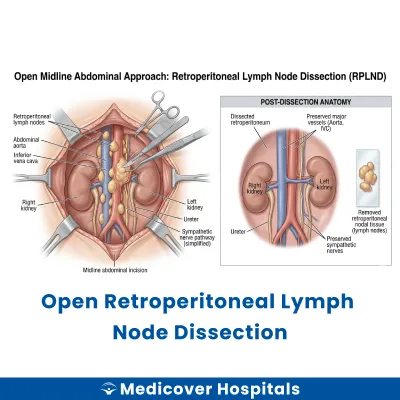
Open retroperitoneal lymph node dissection is a surgical procedure involving the removal of lymph nodes from the retroperitoneal space. This space is located at the back of the abdominal cavity. The surgery is performed through an open incision, allowing direct access to the lymph nodes. It is often used to treat certain cancers, particularly testicular cancer, by removing potentially cancerous lymph nodes.
This surgery is necessary when cancer has spread to the lymph nodes. It helps prevent further spread and complications. If left untreated, the condition can lead to more severe health issues. Modern surgical approaches for this procedure include laparoscopic and robotic-assisted techniques. These methods aim to reduce recovery time and improve outcomes. However, the open approach remains vital in certain cases.
Open Retroperitoneal Lymph Node Dissection Doctors Near You
Discover skilled oncologists for open retroperitoneal lymph node dissection at Medicover Hospitals across India. Choose your city and book a consultation to discuss your treatment options today.
Why Choose Medicover Hospitals for Open Retroperitoneal Lymph Node Dissection?
Get a second opinion from trusted experts and makeconfident, informed decisions.
 Get Second Opinion
Complete Guide To Open Retroperitoneal Lymph Node Dissection
Everything you need to know about the procedure, preparation, and recovery
Open Retroperitoneal Lymph Node Dissection Surgery Indications
Doctors recommend open retroperitoneal lymph node dissection when certain conditions affect the lymph nodes in the retroperitoneal space. This procedure is often considered when other treatments have not been effective.
Testicular Cancer with Lymph Node Involvement
Patients may experience abdominal pain or a noticeable mass. Imaging tests like CT scans reveal enlarged lymph nodes. Surgery is advised when chemotherapy does not fully resolve the lymph node involvement.
Residual Tumor Post-Chemotherapy
After chemotherapy, some patients may still have masses in the retroperitoneal area. These are detected through imaging. Surgery is considered when these masses do not shrink further with additional medical treatment.
Non-Seminomatous Germ Cell Tumors
Patients might present with back pain or swelling. Scans show abnormal lymph node enlargement. When these tumors do not respond adequately to chemotherapy, surgical removal is necessary.
Retroperitoneal Sarcoma
Symptoms include unexplained weight loss and abdominal discomfort. Imaging reveals a tumor in the retroperitoneal space. Surgery is indicated when the tumor is resectable, and other treatments are ineffective.
Persistent Lymphadenopathy
Patients may experience persistent abdominal swelling and discomfort. Diagnostic tests show enlarged lymph nodes without a clear cause. Surgery is recommended when biopsy and other treatments fail to provide relief or diagnosis.
How to Prepare for Open retroperitoneal lymph node dissection?
Proper preparation is crucial for a successful open retroperitoneal lymph node dissection. It helps reduce risks and ensures a smoother recovery process.
- Medication Review: Stop NSAIDs, anticoagulants, and herbal supplements at least 7 days before surgery.
- Fasting Guidelines: Do not eat or drink anything for at least 8 hours before the procedure to ensure safety during anaesthesia.
- Bowel Preparation: Follow any specific bowel prep instructions given by your doctor to clear the intestines.
- Comfortable Clothing: Wear loose, comfortable clothing on the day of surgery for ease of movement post-procedure.
- Transport Arrangement: Arrange for someone to drive you home after the surgery as you may feel groggy.
- Medication List: Bring a list of your current medications with dosages for hospital records.
- Pre-Surgery Tests: Complete any required blood tests or imaging studies as instructed by your healthcare provider.
- Smoking and Alcohol: Avoid smoking and alcohol at least 24 hours before the surgery to aid in recovery.
Open retroperitoneal lymph node dissection Surgery (Step-by-Step)
Overview: This surgery is performed by oncologists. It typically lasts between 3 to 5 hours. General anaesthesia is used to ensure the patient is asleep and pain-free during the procedure.
- Preparation: The patient is positioned on the operating table. An intravenous line is set up for fluids and medications.
- Incision: A large incision, usually 10-15 cm, is made in the abdomen to access the retroperitoneal space.
- Exposure: The surgeon uses retractors to hold back tissues and organs, providing a clear view of the lymph nodes.
- Dissection: Using instruments like scalpels and bipolar cautery, the surgeon carefully removes the affected lymph nodes. Precision is crucial to avoid damage to surrounding tissues.
- Inspection: The area is thoroughly checked to ensure all targeted lymph nodes are removed. Any bleeding is controlled using cautery.
- Closure: The incision is closed in layers with sutures or staples. A drain may be placed to prevent fluid accumulation.
- Recovery: The patient is moved to the recovery room. Vital signs are monitored as they wake up from anaesthesia.
Who Performs Open retroperitoneal lymph node dissection Surgery?
This surgery is performed by oncologists who specialise in surgical oncology. They have expertise in removing cancerous tissues and managing complex surgical procedures. Their training ensures they can handle the intricacies of lymph node dissection safely and effectively.
Recovery After Open Retroperitoneal Lymph Node Dissection Surgery
Recovery from open retroperitoneal lymph node dissection surgery requires careful attention to your body's healing process. It's important to follow your doctor's advice to ensure a smooth recovery.
Day 1-3:
- Hospital stay is common. Pain management and monitoring are priorities.
- Start with a liquid diet, gradually introducing soft foods like curd and soups.
- Minimal movement is encouraged to prevent complications.
Day 4-7:
- Gradual increase in activity. Short walks are encouraged.
- Introduce light meals such as dal-rice, khichdi, and moong dal.
- Continue to avoid heavy lifting and strenuous activities.
Week 2-4:
- Resume light household activities. Avoid bending or lifting heavy objects.
- Return to a normal diet, focusing on balanced meals with plenty of vegetables and proteins.
- Consult your doctor before resuming work or school.
Week 5-8:
- Gradual return to normal activities. Follow your doctor's advice on exercise.
- Monitor your body's response to increased activity levels.
- Regular follow-up appointments to track recovery progress.
When to Seek Urgent Help
- Fever or chills.
- Severe abdominal pain or swelling.
- Persistent nausea or vomiting.
- Signs of infection at the incision site, such as redness or discharge.
- Difficulty urinating or changes in bowel habits.
Benefits of Open Retroperitoneal Lymph Node Dissection Surgery
Open retroperitoneal lymph node dissection is a surgical procedure often used to manage certain cancers. It offers several benefits:
- Effective Cancer Control: Helps in removing cancerous lymph nodes, reducing the spread of cancer.
- Accurate Staging: Provides precise information about the extent of cancer, aiding in treatment planning.
- Potential Cure: In some cases, it can be curative, especially if cancer is localized.
- Improved Survival Rates: May enhance long-term survival by removing affected nodes.
Risks and Complications of Open retroperitoneal lymph node dissection Surgery
While this surgery can be beneficial, it also carries certain risks and complications. Patients should be aware of these potential issues:
- Bleeding (Common): There is a risk of significant blood loss during the procedure.
- Infection (Common): Post-surgical infections can occur, requiring further treatment.
- Nerve Damage (Rare): May lead to numbness or weakness in the legs.
- Bowel Obstruction (Rare): Scar tissue can lead to blockages in the intestines.
- Fertility Issues (Rare): In men, it may affect fertility due to nerve involvement.
- Lymphocele Formation (Rare): Fluid accumulation can occur, needing drainage.
Cost of Open retroperitoneal lymph node dissection Surgery
The cost of Open retroperitoneal lymph node dissection surgery at Medicover Hospitals ranges from Rs. 215,000 to Rs. 344,000. The price varies based on the ward category chosen, such as general, twin sharing, or private. We offer transparent pricing to ensure clarity for our patients. Insurance and TPA support are available, with CGHS, ESI, and major TPAs accepted. Cashless facility is also available for your convenience. Please contact the hospital for the latest insurance panel details as these may change periodically.
Frequently Asked Questions
1. How much does Open retroperitoneal lymph node dissection surgery cost at Medicover Hospitals?
The cost ranges from Rs.215,000 to Rs.344,000 across Medicover Hospitals, depending on the type of room and care required.
2. Is Open retroperitoneal lymph node dissection surgery covered under health insurance at Medicover?
Yes, it is covered by CGHS, ESI, and major TPAs with cashless options. Please contact the hospital for current panel details.
3. Will I experience changes in kidney function post-surgery?
Some patients may experience temporary changes in kidney function. Regular follow-up with your doctor is essential to monitor kidney health.
4. Can I resume normal activities immediately after surgery?
You should avoid strenuous activities for at least 6 weeks post-surgery. Gradual return to daily activities is advised under medical guidance.
5. Will I need dietary changes after the surgery?
A balanced diet with foods like curd, dal-rice, and khichdi is recommended. Avoid spicy and oily foods for a smoother recovery.
6. Is there a risk of infection after this surgery?
There is a risk of infection, as with any surgery. Follow your doctor's advice on wound care and hygiene to minimise this risk.
7. Will I have any long-term complications after the surgery?
Long-term complications are rare but may include lymphatic fluid buildup. Regular check-ups are important to manage any potential issues.


