 Call
Call Patient Reports
Open Reduction of Joint Dislocation Surgery by Expert Orthopedics
Open Reduction of Joint Dislocation at Medicover Hospitals is performed using the open surgical approach. Our team includes specialists with qualifications like MS, DNB, and fellowships in orthopaedics. This procedure typically results in reduced recovery time and improved joint function.
Expert Surgeons
Yearly Surgeries
Patient Satisfaction
What is Open Reduction of Joint Dislocation?
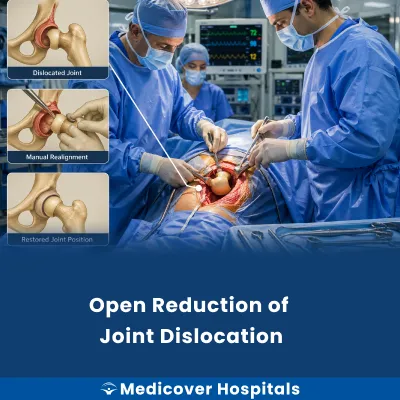
Open Reduction of Joint Dislocation is a surgical procedure to correct a dislocated joint. It involves the hip, shoulder, elbow, or knee. In this procedure, the surgeon makes an incision to access the joint and manually realigns the bones. This is necessary when a joint dislocation (bones out of place) cannot be corrected with non-surgical methods.
This surgery is needed when a dislocation is severe or recurrent. Conditions like trauma, sports injuries, or congenital abnormalities may lead to this. If left untreated, it can cause pain, instability, or arthritis. Modern surgical approaches include arthroscopy (minimally invasive surgery) and open surgery. These methods help restore joint function and relieve symptoms.
Open Reduction of Joint Dislocation Doctors Near You
Discover skilled orthopedics for open reduction of joint dislocation at Medicover Hospitals. Choose your city and book a consultation to receive expert care across major locations in India.
Why Choose Medicover Hospitals for Open Reduction of Joint Dislocation?
Get a second opinion from trusted experts and makeconfident, informed decisions.
 Get Second Opinion
Complete Guide To Open Reduction Of Joint Dislocation
Everything you need to know about the procedure, preparation, and recovery
Open Reduction of Joint Dislocation Surgery Indications
Doctors recommend open reduction of joint dislocation surgery when a joint cannot be realigned through non-surgical methods. This procedure is often necessary when dislocations are severe, involve fractures, or when there is a risk of long-term joint damage.
Severe Pain and Swelling
Patients experience intense pain and swelling at the joint site, making movement difficult. On examination, the joint appears visibly out of place. When pain and swelling do not improve with rest, ice, or medication, surgery may be needed.
Joint Instability
Patients report a feeling of looseness or instability in the joint, often accompanied by repeated dislocations. Imaging tests show misalignment that cannot be corrected with closed reduction. Surgery is considered when instability persists despite physical therapy.
Associated Fractures
Severe dislocations may be accompanied by fractures, causing sharp pain and deformity. X-rays reveal broken bones around the joint. When fractures prevent successful closed reduction, open reduction is necessary.
Nerve or Blood Vessel Damage
Patients may experience numbness, tingling, or loss of pulse near the joint. Examination reveals compromised circulation or nerve function. Surgery is urgent if these symptoms do not resolve quickly with other treatments.
Failed Closed Reduction
Despite attempts at manual realignment, the joint remains dislocated. Imaging confirms persistent misalignment. When multiple closed reduction attempts fail, surgery becomes the recommended option.
How to Prepare for Open Reduction of Joint Dislocation?
Proper preparation is crucial for a successful open reduction of joint dislocation. It helps minimise complications and ensures a smoother recovery process.
- Medication Review: Stop NSAIDs, anticoagulants, and herbal supplements as advised by your doctor.
- Fasting Guidelines: Fast for at least 8 hours before the procedure if general anaesthesia is used.
- Pre-Surgery Hygiene: Take a shower with antibacterial soap the night before surgery.
- Comfortable Clothing: Wear loose, comfortable clothing on the day of surgery for ease of changing.
- Transportation: Arrange for someone to drive you home post-surgery as you may feel drowsy.
- Medication List: Bring a list of all medications with dosages to the hospital for reference.
- Pre-Op Instructions: Follow any specific instructions given by your healthcare provider.
- Personal Items: Leave valuables at home and bring only essentials to the hospital.
Open Reduction of Joint Dislocation Surgery (Step-by-Step)
Overview: This procedure is performed by orthopaedic surgeons. It typically lasts between 1 to 3 hours. General anaesthesia is commonly used to ensure the patient is asleep and pain-free during the surgery.
- Preparation: The patient is positioned to provide the best access to the dislocated joint. The surgical area is cleaned and sterilised.
- Incision: A precise incision, usually 1-2 cm, is made over the dislocated joint. This allows the surgeon to access the affected area.
- Exposure: Surgical instruments like retractors are used to gently move tissues aside. This exposes the dislocated joint for better visibility.
- Reduction: The surgeon uses instruments such as a curette to manipulate and realign the bones into their correct position. This step is crucial for restoring joint function.
- Stabilisation: Once the joint is realigned, internal fixation devices like screws or pins may be used to hold the bones in place. This ensures stability during healing.
- Closure: The incision is closed with sutures or staples. A sterile bandage is applied to protect the site and promote healing.
- Recovery: The patient is moved to a recovery area. They are monitored as they wake up from anaesthesia. Pain management and post-operative care instructions are provided.
Who Performs Open Reduction of Joint Dislocation Surgery?
Orthopaedic surgeons perform this surgery. They specialise in diagnosing and treating musculoskeletal issues. Their expertise ensures proper joint alignment and recovery.
Recovery After Open Reduction of Joint Dislocation Surgery
Recovery from open reduction of joint dislocation surgery involves careful management to ensure proper healing. Patients can expect a gradual return to normal activities, with specific guidelines to follow during each phase of recovery.
Day 1-3:
- Rest is crucial. Keep the affected joint elevated to reduce swelling.
- Pain and swelling are common. Follow prescribed medication schedules.
- Start with a soft diet. Include curd, dal-rice, and soups to maintain nutrition.
Day 4-7:
- Begin gentle movements as advised by your doctor to prevent stiffness.
- Continue with a balanced diet. Add khichdi and moong dal for protein and energy.
- Monitor the incision site for any signs of infection.
Week 2-4:
- Gradually increase physical activity. Avoid strenuous tasks.
- Physiotherapy may be recommended to improve joint mobility.
- Return to work or school may be possible, depending on the nature of activities involved.
Month 1-3:
- Continue physiotherapy exercises to strengthen the joint.
- Regular follow-ups with your doctor to monitor recovery progress.
- Resume normal activities as per medical advice.
When to Seek Urgent Help:
- Severe pain not relieved by medication.
- Signs of infection: redness, warmth, or discharge at the incision site.
- Sudden swelling or inability to move the joint.
Benefits of Open Reduction of Joint Dislocation Surgery
Open reduction surgery helps restore joint function and alleviate pain when non-surgical methods fail.
- Improved Joint Alignment: Corrects misalignment, enhancing joint stability.
- Pain Relief: Reduces discomfort associated with dislocation.
- Enhanced Mobility: Restores range of motion, improving daily activities.
- Prevention of Further Damage: Minimises risk of additional joint injury.
Risks and Complications of Open Reduction of Joint Dislocation Surgery
While generally safe, open reduction surgery carries potential risks. It's important to be aware of them.
Common Risks
- Infection: Risk of infection at the surgical site.
- Bleeding: Possibility of excessive bleeding during or after surgery.
- Joint Stiffness: Reduced flexibility post-surgery.
Rare Risks
- Nerve Damage:Potential for nerve injury leading to numbness or weakness.
- Blood Clots:Risk of clot formation, which can be serious.
- Recurrent Dislocation:Chance of the joint dislocating again.
Cost of Open Reduction of Joint Dislocation Surgery
The cost for Open Reduction of Joint Dislocation Surgery at Medicover Hospitals ranges from ₹50,000 to ₹1,70,000. The price varies based on the ward category chosen, ensuring options to suit different preferences and needs.
Medicover Hospitals offers transparent pricing with support for insurance and TPA, including CGHS, ESI, and major TPAs. A cashless facility is available for added convenience. Please contact the hospital for the latest insurance panel details as these may change periodically.
Frequently Asked Questions
1. How much does Open Reduction of Joint Dislocation surgery cost at Medicover Hospitals?
The cost ranges from ₹50,000 to ₹1,70,000 across Medicover Hospitals. Prices vary based on room type and care level.
2. Is Open Reduction of Joint Dislocation surgery covered under health insurance at Medicover?
Coverage may be available under CGHS, ESI, and major TPAs for cashless treatment. Please contact the hospital for current panel details.
3. Will I regain full joint mobility after surgery?
Most patients regain full mobility with proper rehabilitation. Follow your physiotherapist's guidance for best results.
4. Can joint dislocation recur after surgery?
Recurrent dislocation is possible but less likely with proper care. Adhering to post-surgery guidelines reduces this risk.
5. What activities should I avoid post-surgery?
Avoid high-impact activities like running or jumping for at least six weeks. Consult your doctor for a tailored activity plan.
6. Will I need physiotherapy after surgery?
Physiotherapy is crucial for restoring joint function and strength. Your doctor will recommend a suitable physiotherapy regimen.
7. Can I drive immediately after surgery?
Driving is not advised immediately post-surgery due to mobility limitations. Wait for your doctor's approval before resuming driving.


