 Call
Call Patient Reports
Best Hospital for Open Reduction and Internal Fixation of Facial Bone Fractures Surgery with Advanced Surgical Care
Open Reduction and Internal Fixation (ORIF) of Facial Bone Fractures at Medicover Hospitals is performed using the open surgical approach. Our team includes MS and DNB-qualified orthopaedic surgeons. This procedure often results in shorter hospital stays and effective recovery.
Expert Surgeons
Yearly Surgeries
Patient Satisfaction
What is Open Reduction and Internal Fixation of Facial Bone Fractures Surgery?
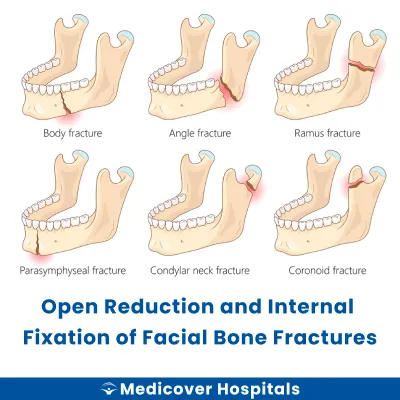
Open Reduction and Internal Fixation (ORIF) of Facial Bone Fractures is a surgical procedure to repair broken bones in the face. This involves repositioning the fractured bones (open reduction) and securing them with plates, screws, or wires (internal fixation). The facial bones include the jaw, cheekbones, and eye sockets. This procedure helps restore the normal structure and function of the face.
This surgery is needed when facial bones are fractured due to trauma, accidents, or sports injuries. If left untreated, it can lead to deformities, impaired function, and chronic pain. ORIF ensures proper alignment and healing of the bones. Modern surgical approaches include minimally invasive techniques and advanced imaging for precise repair. These methods help in quicker recovery and reduced scarring.
Open Reduction and Internal Fixation of Facial Bone Fractures Doctors Near You
Discover skilled orthopedics for open reduction and internal fixation of facial bone fractures at Medicover Hospitals. Choose your city and book a consultation to receive expert care across India.
Why Choose Medicover Hospitals for Open Reduction and Internal Fixation of Facial Bone Fractures Surgery?
Get a second opinion from trusted experts and makeconfident, informed decisions.
 Get Second Opinion
Complete Guide To Open Reduction And Internal Fixation Of Facial Bone Fractures
Everything you need to know about the procedure, preparation, and recovery
Open Reduction and Internal Fixation of Facial Bone Fractures Surgery Indications
Doctors recommend Open Reduction and Internal Fixation (ORIF) for facial bone fractures when non-surgical methods are insufficient. This procedure is often necessary to restore function and appearance after significant trauma.
Severe Facial Trauma
Patients may experience intense pain, swelling, and visible deformity. Imaging often reveals displaced fractures. When conservative treatment like immobilization fails, ORIF becomes essential to realign bones.
Complex Fractures
Patients with multiple fractures may have difficulty breathing or speaking. CT scans show complex fracture patterns. Surgery is needed when simple fixation cannot stabilize the bones.
Non-Union of Fractures
Persistent pain and mobility issues may indicate non-union. X-rays show lack of healing over time. ORIF is recommended when fractures do not heal with rest and immobilization.
Open Fractures
Open wounds with exposed bone and bleeding are common signs. Immediate imaging confirms fracture type. Surgery is crucial to prevent infection and ensure proper healing.
Malocclusion
Patients may have difficulty chewing or jaw misalignment. Dental exams and imaging reveal improper bite due to fractures. ORIF is advised when alignment cannot be corrected non-surgically.
Orbital Fractures
Vision problems and eye movement restrictions are symptoms. CT scans show fractures around the eye socket. Surgery is necessary when vision is at risk or cosmetic concerns are significant.
How to Prepare for Open Reduction and Internal Fixation of Facial Bone Fractures?
Proper preparation for open reduction and internal fixation of facial bone fractures is crucial for a smooth surgery and recovery. It helps minimise risks and ensures optimal outcomes.
- Medication Review: Stop NSAIDs, anticoagulants, and herbal supplements at least a week before surgery.
- Fasting Guidelines: Fast for at least 8 hours before the procedure if general anaesthesia is planned.
- Pre-Surgery Instructions: Follow any specific instructions given by your surgeon regarding facial hygiene or nasal sprays.
- Clothing: Wear loose, comfortable clothing on the day of surgery for easy changing and comfort.
- Transportation: Arrange for someone to drive you home post-surgery as you may feel drowsy.
- Medication List: Bring a list of current medications with dosages for the medical team.
- Smoking and Alcohol: Avoid smoking and alcohol for at least 24 hours before the surgery to aid recovery.
- Rest and Relaxation: Ensure you get a good night's sleep before the procedure to help your body prepare.
Open Reduction and Internal Fixation of Facial Bone Fractures Surgery (Step-by-Step)
This procedure is performed by orthopaedic surgeons. It typically lasts 2 to 4 hours. General anaesthesia is commonly used to ensure the patient is asleep and pain-free.
- Preparation: The patient is positioned on the operating table. The surgical area is cleaned and sterilised. Anaesthesia is administered.
- Incision: A small incision, usually 1-2 cm, is made near the fracture site. This allows access to the broken bones.
- Reduction: The surgeon uses instruments like curettes to realign the fractured bones to their normal position.
- Fixation: Plates and screws are used to hold the bones in place. A harmonic scalpel may be used to minimise tissue damage during this step.
- Closure: The incision is closed with sutures or staples. A coblation wand might be used to control bleeding and ensure proper healing.
- Recovery: The patient is moved to a recovery room. Vital signs are monitored as they wake up from anaesthesia.
Who Performs Open Reduction and Internal Fixation of Facial Bone Fractures Surgery?
This surgery is performed by orthopedic surgeons. They specialise in treating bone fractures and injuries. Their expertise ensures the bones heal properly and function is restored.
Recovery After Open Reduction and Internal Fixation of Facial Bone Fractures Surgery
Recovery from Open Reduction and Internal Fixation of facial bone fractures involves gradual healing and adjustment. Patients can expect some swelling and discomfort initially, which will improve over time. Following the surgeon's instructions is crucial for a smooth recovery.
Day 1-3:
- Rest is essential. Keep your head elevated to reduce swelling.
- Consume soft foods like curd, dal-rice, and soups to avoid strain on facial muscles.
- Avoid strenuous activities and follow prescribed pain management.
Day 4-7:
- Swelling and bruising should start to subside.
- Continue with a soft diet. Include khichdi and moong dal for nutrition.
- Gentle facial movements may be encouraged by your doctor.
Day 8-14:
- Gradually resume light activities, but avoid heavy lifting or intense exercise.
- Most patients can return to work or school, depending on comfort and doctor's advice.
- Maintain good oral hygiene to prevent infection.
Phase 3 (Week 3-6):
- Normal activities can be resumed, but avoid contact sports or activities that risk facial injury.
- Regular follow-up appointments are necessary to monitor healing.
When to Seek Urgent Help
- Severe pain not relieved by medication.
- Signs of infection like fever, redness, or pus at the incision site.
- Sudden vision changes or difficulty breathing.
Benefits of Open Reduction and Internal Fixation of Facial Bone Fractures Surgery
Open Reduction and Internal Fixation (ORIF) is a surgical procedure used to treat facial bone fractures. It offers several benefits for patients.
- Restoration of Facial Structure: ORIF helps in accurately aligning and stabilising fractured bones, restoring the natural facial contour.
- Improved Functionality: The procedure can improve the function of the jaw and other facial structures, aiding in speech and eating.
- Reduced Healing Time: By stabilising the fracture, ORIF can promote faster healing compared to non-surgical methods.
- Minimised Scarring: Surgeons often use incisions in less visible areas, reducing noticeable scarring.
Risks and Complications of Open Reduction and Internal Fixation of Facial Bone Fractures Surgery
While ORIF is generally safe, it does carry some risks and potential complications. Patients should be aware of these before undergoing the procedure.
- Infection at the surgical site can occur, requiring further treatment.
- Swelling and bruising are typical post-surgery and usually subside with time.
- Nerve damage may result in temporary or permanent numbness or weakness.
- Malunion or improper healing of bones might necessitate additional surgery.
- Hardware complications, such as loosening or irritation, may occur and require intervention.
What is the Cost of Open Reduction and Internal Fixation of Facial Bone Fractures Surgery?
The cost for Open Reduction and Internal Fixation of Facial Bone Fractures Surgery at Medicover Hospitals varies depending on the ward category chosen. Prices range from Rs.50,000 to Rs.3,00,000. This ensures transparency in pricing across different ward types.
We offer support for insurance and TPA, including CGHS, ESI, and major TPAs, with a cashless facility available. Please contact the hospital for the latest insurance panel details as these may change periodically.
Frequently Asked Questions
1. How much does Open Reduction and Internal Fixation of Facial Bone Fractures surgery cost at Medicover Hospitals?
The cost ranges from Rs. 50,000 to Rs. 3,00,000 across Medicover Hospitals. Prices vary based on room type and other factors.
2. Is Open Reduction and Internal Fixation of Facial Bone Fractures surgery covered under health insurance at Medicover?
Yes, it is often covered under health insurance, including CGHS, ESI, and major TPAs. Please contact the hospital for current panel details.
3. Will I have facial swelling after surgery?
Facial swelling is common after the procedure and may last for several days. It usually subsides as the healing process progresses.
4. Can I eat solid foods immediately after surgery?
Soft foods like dal-rice and khichdi are recommended initially. Solid foods can be gradually reintroduced as advised by your doctor.
5. Will my facial appearance change permanently?
The surgery aims to restore your facial structure to its original form. Some temporary changes may occur but usually resolve with healing.
6. Can I experience numbness in my face post-surgery?
Temporary numbness is a common side effect due to nerve involvement. Sensation typically returns as the nerves heal over time.
7. When can I resume physical activities after surgery?
Light activities can usually be resumed after a few weeks. Strenuous activities should be avoided until your doctor gives the go-ahead.


