 Call
Call Patient Reports
Open or Laparoscopic Hepatic Resection Procedure by Expert Gastroenterologists Medical
At Medicover Hospitals, our skilled gastroenterologists, with qualifications like MS, DNB, and DM, perform open or laparoscopic hepatic resection. This procedure involves removing liver tissue using advanced surgical techniques. Laparoscopic approach often results in smaller incisions and reduced blood loss, enhancing recovery.
Expert Surgeons
Yearly Surgeries
Patient Satisfaction
What is Open or Laparoscopic Hepatic Resection?
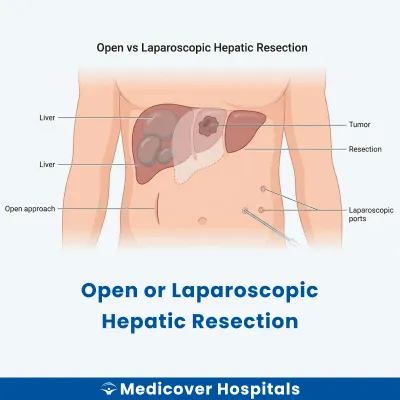
Open or Laparoscopic Hepatic Resection is a surgical procedure involving the removal of a portion of the liver (hepatic tissue). The liver is a vital organ responsible for detoxifying the blood, producing bile, and storing energy. In an open resection, a larger incision is made, while laparoscopic resection uses smaller incisions and a camera for guidance.
This surgery is needed to treat liver conditions like tumours, cysts, or severe liver damage. Conditions such as liver cancer, benign liver growths, or severe cirrhosis may require this procedure. If untreated, these conditions can lead to liver failure or spread of cancer. Modern surgical approaches include minimally invasive techniques like laparoscopic and robotic-assisted surgeries. These methods aim to reduce recovery time and complications.
Open or Laparoscopic Hepatic Resection Doctors Near You
Discover skilled surgical gastroenterologists for open or laparoscopic hepatic resection at Medicover Hospitals across India. Choose your city and book a consultation to explore your treatment options.
Why Choose Medicover Hospitals for Open or Laparoscopic Hepatic Resection?
Get a second opinion from trusted experts and makeconfident, informed decisions.
 Get Second Opinion
Complete Guide To Open Or Laparoscopic Hepatic Resection
Everything you need to know about the procedure, preparation, and recovery
Open or Laparoscopic Hepatic Resection Procedure Indications
Doctors recommend open or laparoscopic hepatic resection when liver lesions or diseases cannot be managed with medication or other non-surgical methods. This procedure is often considered when there is a need to remove part of the liver due to various conditions.
Liver Tumours
Patients may experience abdominal pain or unexplained weight loss. Imaging tests like CT or MRI scans reveal liver masses. When tumours are malignant or large, and not responsive to chemotherapy, surgery is advised.
Metastatic Liver Disease
Symptoms include fatigue, jaundice, or loss of appetite. Doctors find secondary cancer deposits in the liver through imaging. Surgery is considered when the primary cancer is controlled and metastases are limited.
Benign Liver Lesions
Patients might have no symptoms or mild discomfort. Ultrasound or CT scans show non-cancerous growths. Surgery is an option when lesions grow or cause symptoms, and other treatments are ineffective.
Liver Cysts
Patients may experience bloating or pain. Imaging reveals cysts in the liver. When cysts are large, symptomatic, or risk rupture, surgical removal is recommended.
Hepatic Trauma
Symptoms include severe abdominal pain and internal bleeding. CT scans confirm liver injury. Surgery is necessary when bleeding is uncontrolled by conservative measures.
How to Prepare for Open or Laparoscopic Hepatic Resection?
Proper preparation is crucial for a successful hepatic resection. It helps reduce complications and ensures a smoother recovery.
- Medication Review: Stop NSAIDs, anticoagulants, and herbal supplements as advised by your doctor.
- Fasting Guidelines: Do not eat or drink for at least 8 hours before the surgery to prepare for anaesthesia.
- Pre-Surgery Tests: Complete all required blood tests, imaging, and other evaluations as scheduled.
- Health Assessment: Inform your doctor about any recent illnesses, infections, or changes in health.
- Clothing and Comfort: Wear loose, comfortable clothing on the day of surgery for ease of movement.
- Transportation Arrangements: Arrange for someone to drive you home post-surgery, as you may feel drowsy.
- Medication List: Bring a list of all medications with dosages to the hospital for reference.
- Smoking and Alcohol: Avoid smoking and alcohol several weeks before surgery to aid in recovery.
Open or Laparoscopic Hepatic Resection Procedure (Step-by-Step)
Overview: This procedure is performed by gastroenterologists. It typically lasts between 2 to 5 hours. General anaesthesia is used to ensure the patient is asleep and pain-free.
- Preparation: The patient is positioned on the operating table. Monitoring devices are attached to track vital signs. The surgical area is cleaned and sterilised.
- Incision: For open resection, a large incision is made in the abdomen. For laparoscopic resection, several small incisions (1-2 cm) are made for inserting the laparoscope and other instruments like trocars.
- Accessing the Liver: The liver is carefully exposed. In laparoscopic surgery, a laparoscope provides a magnified view. Trocars help in inserting instruments.
- Resection: The surgeon uses tools like a harmonic scalpel or bipolar cautery to remove the diseased liver section. Precision is crucial to avoid damaging healthy tissue.
- Bleeding Control: Blood vessels are sealed using techniques like bipolar cautery. This helps in minimising blood loss during the procedure.
- Closure: After resection, the incisions are closed. In open surgery, stitches or staples are used. In laparoscopic surgery, small incisions are closed with sutures or surgical glue.
- Recovery: The patient is moved to a recovery room. Vital signs are monitored as the patient wakes from anaesthesia. Pain management is provided as needed.
Who Performs Open or Laparoscopic Hepatic Resection Procedure?
This procedure is performed by experienced surgical gastroenterologists. They specialise in diagnosing and treating conditions of the liver and digestive system. Their expertise ensures safe and effective surgical outcomes.
Recovery After Open or Laparoscopic Hepatic Resection Procedure
Recovery from hepatic resection varies depending on whether the procedure was open or laparoscopic. Patients can expect a gradual return to normal activities, with careful attention to diet and activity levels.
Day 1-3:
- Hospital stay is common. Pain management and monitoring are priorities.
- Begin with a liquid diet, progressing to soft foods like soups and dal-rice.
Day 4-7:
- Gradual increase in physical activity, such as short walks.
- Introduce light, easily digestible foods like khichdi and moong dal.
- Focus on hydration and small, frequent meals.
Day 8-14:
- Continue with light activities. Avoid heavy lifting and strenuous exercise.
- Return to a balanced diet, incorporating curd and other soft foods.
- Most patients can resume work or school towards the end of this period, depending on their recovery.
Phase 3 (Week 3-6):
- Gradual return to normal activities. Follow-up appointments to monitor recovery.
- Continue with a nutritious diet, including a variety of Indian foods.
- Consult your doctor before resuming any vigorous activities or exercises.
When to Seek Urgent Help:
- Fever or signs of infection at the incision site.
- Severe abdominal pain or persistent nausea.
- Yellowing of the skin or eyes (jaundice).
- Uncontrolled bleeding or swelling.
Benefits of Open or Laparoscopic Hepatic Resection Procedure
Hepatic resection is a surgical procedure to remove a portion of the liver. It can be performed using open surgery or minimally invasive laparoscopic techniques.
- Effective Tumour Removal: Helps in removing liver tumours, potentially improving survival rates.
- Minimally Invasive Option: Laparoscopic approach offers smaller incisions and faster recovery.
- Preservation of Liver Function: Allows for the removal of diseased tissue while preserving healthy liver.
- Reduced Pain: Laparoscopic surgery typically results in less postoperative pain compared to open surgery.
Risks and Complications of Open or Laparoscopic Hepatic Resection Procedure
While generally safe, hepatic resection carries certain risks. Patients should be aware of potential complications.
Common Risks
- Bleeding during or after surgery.
- Infection at the surgical site.
Rare Risks
- Bile leakage from the liver.
- Liver failure, especially if liver function is already compromised.
- Blood clots forming in the legs or lungs.
- Reaction to anaesthesia.
Cost of Open or Laparoscopic Hepatic Resection Procedure
The cost of an open or laparoscopic hepatic resection procedure can vary from₹2,00,000 to ₹12,00,000, based on the surgical approach, duration of hospital stay, room category, diagnostics, and post-operative care.
At Medicover Hospitals, we ensure transparent pricing for all procedures. We offer support for insurance and TPA, including CGHS, ESI, and major TPAs, with a cashless facility available. Please contact the hospital for the latest insurance panel details as these may change periodically.
Frequently Asked Questions
1. How much does Open or Laparoscopic Hepatic Resection procedure cost at Medicover Hospitals?
The cost varies from ₹2,00,000 to ₹12,00,000, based on the procedure type and patient needs. Please contact Medicover Hospitals for detailed pricing information.
2. Is Open or Laparoscopic Hepatic Resection procedure covered under health insurance at Medicover?
This procedure may be covered by CGHS, ESI, and major TPAs. Please contact the hospital for current panel details.
3. Can liver function be normal after resection?
Post-surgery, liver function can improve as the liver regenerates. Regular follow-ups are essential to monitor recovery.
4. What foods aid recovery after hepatic resection?
Consume easily digestible foods like curd, dal-rice, and khichdi. These help maintain energy levels and support healing.
5. Will I experience jaundice after liver resection?
Jaundice can occur if bile flow is disrupted post-surgery. Immediate medical attention is required if symptoms appear.
6. How soon can I return to work post-surgery?
Typically, patients can return to work after 4-6 weeks. This depends on individual recovery and job nature.
7. Are there long-term lifestyle changes post-resection?
Yes, maintaining a healthy diet and avoiding alcohol is crucial. Regular medical check-ups are also recommended to monitor liver health.


