 Call
Call Patient Reports
Nonunion Fracture Repair with Internal Fixation and Bone Grafting Surgery Hospital by Expert Orthopedics
At Medicover Hospitals, nonunion fracture repair with internal fixation and bone grafting is performed using open surgical techniques. Our team of MS and DNB-qualified orthopaedic surgeons specialise in complex bone repairs. This approach often results in reduced recovery time for patients across India.
Expert Surgeons
Yearly Surgeries
Patient Satisfaction
What is Nonunion Fracture Repair With Internal Fixation and Bone Grafting?
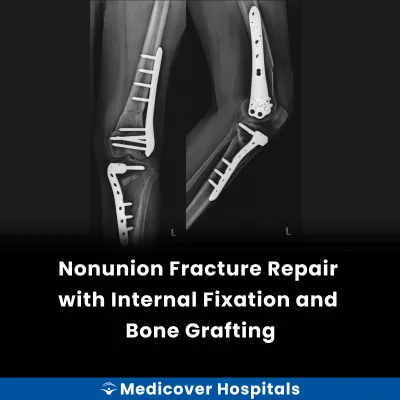
Nonunion Fracture Repair with Internal Fixation and Bone Grafting is a surgical procedure to treat fractures that fail to heal naturally. It involves the bones, often in the limbs. Internal fixation uses metal rods, plates, or screws to stabilize the bone. Bone grafting adds new bone material to promote healing. This combination helps the bone heal properly by providing support and stimulating new bone growth.
This surgery is needed when a fracture does not heal on its own, leading to a nonunion. Conditions like inadequate blood supply, infection, or unstable fractures can cause nonunion. If untreated, it can result in chronic pain and disability. Modern surgical approaches include minimally invasive techniques and advanced imaging for precise placement of fixation devices and grafts.
Nonunion Fracture Repair With Internal Fixation and Bone Grafting Doctors Near You
Discover skilled orthopedics for nonunion fracture repair with internal fixation and bone grafting at Medicover Hospitals. Choose your city and book a consultation to start your recovery journey today.
Why Choose Medicover Hospitals for Nonunion Fracture Repair With Internal Fixation and Bone Grafting?
Get a second opinion from trusted experts and makeconfident, informed decisions.
 Get Second Opinion
Complete Guide To Nonunion Fracture Repair With Internal Fixation And Bone Grafting
Everything you need to know about the procedure, preparation, and recovery
Nonunion Fracture Repair with Internal Fixation and Bone Grafting Surgery Indications
Doctors recommend nonunion fracture repair with internal fixation and bone grafting when a fracture fails to heal naturally over time. This procedure is considered when conservative treatments like immobilization and medication do not result in bone healing.
Persistent Pain and Swelling
Patients often experience ongoing pain and swelling at the fracture site. Despite rest and medication, the discomfort persists. X-rays or CT scans show no signs of bone healing, indicating the need for surgical intervention.
Instability at Fracture Site
Patients may feel instability or abnormal movement at the fracture site. Physical examination reveals a lack of bone union. When immobilization fails to stabilize the fracture, surgery becomes necessary.
Delayed Healing on Imaging
Imaging tests like X-rays show delayed healing, with gaps between bone fragments. Despite months of conservative treatment, there is no progress. This diagnostic finding prompts the need for surgical repair.
Functional Impairment
Patients struggle with daily activities due to limited function in the affected limb. Clinical evaluation shows no improvement in mobility. When physiotherapy and other non-surgical methods fail, surgery is advised.
Infection at Fracture Site
Signs of infection, such as redness, warmth, and discharge, may occur. Lab tests confirm infection, complicating healing. When antibiotics and wound care do not resolve the issue, surgical intervention is required.
How to Prepare for Nonunion Fracture Repair with Internal Fixation and Bone Grafting?
Proper preparation is crucial for a successful nonunion fracture repair. It helps reduce complications and ensures a smoother recovery.
- Stop Certain Medications: Discontinue NSAIDs, anticoagulants, and herbal supplements at least a week before surgery.
- Fasting Guidelines: Fast for at least 8 hours before the procedure if general anaesthesia is used.
- Pre-Surgery Health Check: Complete any required blood tests or imaging studies as advised by your doctor.
- Medication List: Bring a list of your current medications, including dosages, to the hospital.
- Clothing: Wear loose, comfortable clothing on the day of surgery for easy dressing post-procedure.
- Transport Arrangements: Arrange for someone to drive you home after the surgery.
- Smoking and Alcohol: Avoid smoking and alcohol consumption for at least 48 hours before the surgery.
- Pre-Op Instructions: Follow any specific instructions given by your healthcare provider, such as skin cleansing or other preparations.
Nonunion Fracture Repair with Internal Fixation and Bone Grafting Surgery (Step-by-Step)
Overview: This procedure is performed by orthopedic surgeons. It typically lasts 2-4 hours and is done under general anaesthesia.
- Incision: A 1-2 cm incision is made over the fracture site. The surgeon uses a scalpel to access the bone.
- Debridement: The surgeon removes any dead or damaged tissue using a curette. This prepares the area for healing.
- Internal Fixation: Metal plates, screws, or rods are placed to stabilise the bone. This helps align the fracture for proper healing.
- Bone Grafting: Bone graft material is placed at the fracture site. This may be taken from the patient's own body or a donor.
- Securing the Graft: The graft is secured in place using screws or other fixation devices. This ensures stability.
- Closure: The incision is closed with sutures or staples. A sterile dressing is applied to protect the area.
- Recovery: The patient is moved to a recovery room. They are monitored as the anaesthesia wears off.
Who Performs Nonunion Fracture Repair with Internal Fixation and Bone Grafting Surgery?
Orthopaedic surgeons perform this surgery. They specialise in treating bone and joint conditions. Their expertise ensures proper alignment and healing of fractures.
Recovery After Nonunion Fracture Repair with Internal Fixation and Bone Grafting Surgery
Recovery from nonunion fracture repair with internal fixation and bone grafting involves several stages. It's crucial to follow your doctor's advice for a smooth healing process. Expect some discomfort initially, but it will gradually improve.
Day 1-3:
- Rest is essential. Keep the affected limb elevated to reduce swelling.
- Pain management with prescribed medications is important.
- Start with a liquid diet and gradually introduce soft foods like soups and khichdi.
Day 4-7:
- Continue to rest and limit movement of the affected area.
- Introduce light, nutritious meals such as dal-rice and moong dal.
- Attend follow-up appointments for dressing changes and check-ups.
Week 2-4:
- Begin gentle physiotherapy as advised by your doctor.
- Maintain a balanced diet with curd and green vegetables to aid healing.
- Gradually increase activity levels, but avoid strenuous tasks.
Month 1-3:
- Continue physiotherapy to regain strength and mobility.
- Return to work or school may be possible, depending on your progress and doctor's advice.
- Regular follow-ups to monitor bone healing.
When to Seek Urgent Help
- Severe pain not relieved by medication.
- Signs of infection like fever, redness, or pus at the surgical site.
- Numbness or loss of function in the affected limb.
If you experience any of these symptoms, contact your healthcare provider immediately.
Benefits of Nonunion Fracture Repair with Internal Fixation and Bone Grafting Surgery
This procedure aims to heal fractures that have not united naturally, restoring function and alleviating pain.
- Enhanced Stability: Internal fixation provides strong support to the fractured bone.
- Improved Healing: Bone grafting promotes new bone growth at the fracture site.
- Reduced Pain: Successful repair can significantly decrease discomfort associated with nonunion fractures.
- Restored Functionality: Patients often regain improved mobility and use of the affected limb.
Risks and Complications of Nonunion Fracture Repair with Internal Fixation and Bone Grafting Surgery
While this surgery is generally safe, it carries certain risks and potential complications.
- Common: Infection at the surgical site may occur, requiring further treatment.
- Common: Blood clots can develop post-surgery, necessitating medical intervention.
- Rare: Nerve damage might happen, leading to temporary or permanent issues.
- Rare: Nonunion may persist, requiring additional procedures.
- Rare: Allergic reactions to materials used in fixation could occur.
Cost of Nonunion Fracture Repair with Internal Fixation and Bone Grafting Surgery
The cost for Nonunion Fracture Repair with Internal Fixation and Bone Grafting Surgery at Medicover Hospitals ranges from Rs.39,589 to Rs.240,000. The price varies based on the ward category chosen, such as outpatient, day care, general, and private options.
We offer transparent pricing and support for insurance and TPA, including CGHS, ESI, and major TPAs. A cashless facility is also available for your convenience. Please contact the hospital for the latest insurance panel details as these may change periodically.
Frequently Asked Questions
1. How much does Nonunion Fracture Repair with Internal Fixation and Bone Grafting surgery cost at Medicover Hospitals?
The cost ranges from Rs. 39,589 to Rs. 240,000 across Medicover Hospitals, depending on the type of room and care required.
2. Is Nonunion Fracture Repair with Internal Fixation and Bone Grafting surgery covered under health insurance at Medicover?
Coverage may be available under CGHS, ESI, and major TPAs for cashless treatment. Please contact the hospital for current panel details.
3. Will I need physiotherapy after this surgery?
Yes, physiotherapy is often necessary to regain full function and strength in the affected limb after surgery.
4. Can I drive after Nonunion Fracture Repair surgery?
Driving is usually not recommended until at least 6 weeks post-surgery, and only after consulting your doctor.
5. What are the signs of infection post-surgery?
Signs include increased redness, swelling, or discharge at the surgical site, and fever. Contact your doctor immediately if these occur.
6. Can I eat spicy food after the surgery?
It's best to avoid spicy foods initially. Focus on a balanced diet with soft foods like dal-rice, khichdi, and curd for the first week.
7. Will I have metal implants permanently?
Metal implants may remain permanently unless they cause discomfort or complications. Your doctor will advise if removal is necessary.


