 Call
Call Patient Reports
Best Hospital for Nerve Repair with Grafting Surgery
Nerve repair with grafting at Medicover Hospitals is performed by plastic surgeons with qualifications such as MS, MCh, and DNB. This open surgical procedure involves using grafts to restore nerve function. Patients benefit from improved outcomes, including shorter recovery times and enhanced nerve regeneration.
Expert Surgeons
Yearly Surgeries
Patient Satisfaction
What is Nerve Repair With Grafting?
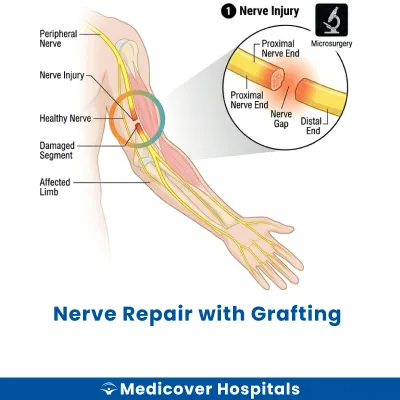
Nerve repair with grafting is a surgical procedure to restore function in damaged nerves. It involves the use of a nerve graft (a piece of nerve tissue) to bridge a gap in the injured nerve. This procedure is often performed on peripheral nerves, which are the nerves outside the brain and spinal cord. The graft helps regenerate the nerve fibers, promoting recovery of sensation and movement.
This surgery is needed when nerves are severely damaged due to injury, trauma, or surgical complications. Conditions like nerve lacerations or avulsions may require grafting. Without treatment, patients may experience loss of sensation, muscle weakness, or paralysis. Modern surgical approaches include autografts (using the patient's own nerve tissue) and allografts (using donor tissue). These methods aim to improve nerve function and quality of life.
Nerve Repair With Grafting Doctors Near You
Find skilled plastic-surgeons for nerve repair with grafting at Medicover Hospitals across India. Choose your city and book a consultation to explore treatment options tailored to your needs.
Why Choose Medicover Hospitals for Nerve Repair With Grafting?
Get a second opinion from trusted experts and makeconfident, informed decisions.
 Get Second Opinion
Complete Guide To Nerve Repair With Grafting
Everything you need to know about the procedure, preparation, and recovery
Nerve Repair with Grafting Surgery Indications
Nerve repair with grafting is recommended when nerve damage is severe and cannot heal on its own. This procedure helps restore function and sensation by bridging gaps in damaged nerves.
Severe Nerve Injury
Patients may experience loss of sensation or muscle weakness. Doctors find nerve discontinuity on imaging. Surgery is advised when physical therapy and medications do not improve function.
Traumatic Nerve Damage
Patients often report numbness or paralysis after an accident. Examination reveals nerve disruption. When conservative treatments fail to restore nerve function, surgery is considered.
Post-Surgical Nerve Defects
Some patients experience numbness or tingling after surgery. Tests show nerve gaps. If symptoms persist despite rehabilitation, nerve grafting is recommended.
Chronic Nerve Compression
Symptoms include persistent pain or weakness. Imaging shows nerve compression and damage. Surgery is an option when decompression therapies do not relieve symptoms.
Birth-Related Nerve Injuries
Infants may show weakness or lack of movement in limbs. Doctors find nerve damage through clinical assessment. Surgery is suggested when physical therapy does not improve function.
How to Prepare for Nerve Repair with Grafting?
Proper preparation is crucial for a successful nerve repair with grafting. It ensures a smooth procedure and aids in recovery. Follow these steps to get ready for your surgery.
- Medication Review: Stop NSAIDs, anticoagulants, and herbal supplements 7-10 days before surgery.
- Fasting Guidelines: Do not eat or drink anything for at least 8 hours before the procedure.
- Pre-Surgery Hygiene: Bathe with antibacterial soap the night before and the morning of your surgery.
- Comfortable Clothing: Wear loose, comfortable clothing on the day of the surgery for easy changing.
- Transportation: Arrange for someone to drive you home post-surgery as you will not be able to drive yourself.
- Medication List: Bring a list of all medications you are currently taking, including dosages.
- Smoking and Alcohol: Avoid smoking and alcohol for at least 24 hours before the surgery.
- Pre-Op Instructions: Follow any additional instructions provided by your healthcare team.
Nerve Repair with Grafting Surgery (Step-by-Step)
Nerve repair with grafting is performed by plastic surgeons. It typically lasts 2-4 hours. The procedure is usually done under general anaesthesia.
- Preparation: The patient is given general anaesthesia. This ensures they are asleep and pain-free during the surgery.
- Incision: A small incision, about 1-2 cm, is made near the site of the nerve injury. This allows access to the damaged nerve.
- Exposure: Surgical instruments like retractors are used to expose the damaged nerve. The surgeon carefully isolates the nerve from surrounding tissues.
- Harvesting Graft: A suitable nerve graft is selected, often from the patient's own body. Instruments like a scalpel are used to harvest the graft.
- Grafting: The damaged section of the nerve is removed using a scalpel. The harvested graft is then carefully sutured in place using fine sutures.
- Closure: The incision is closed with sutures or staples. The area is then bandaged to protect the site and promote healing.
- Recovery: The patient is moved to a recovery area. They are monitored as they wake up from anaesthesia. Pain management and instructions for care are provided.
Who Performs Nerve Repair with Grafting Surgery?
Nerve repair with grafting is performed by plastic surgeons. These specialists have expertise in microsurgery and nerve reconstruction. They use precise techniques to restore nerve function and improve patient outcomes.
Recovery After Nerve Repair with Grafting Surgery
Recovery from nerve repair with grafting surgery involves gradual healing and regaining function. It's important to follow your doctor's advice for a smooth recovery process.
Day 1-3:
- Rest is crucial. Keep the affected area elevated to reduce swelling.
- Pain and discomfort are common. Follow prescribed pain management.
- Stick to a soft diet. Include curd, dal-rice, and soups to aid digestion.
Day 4-7:
- Begin gentle movements as advised by your doctor to prevent stiffness.
- Continue with a nutritious diet. Moong dal and khichdi are good options.
- Monitor the surgical site for any signs of infection.
Week 2-4:
- Gradually increase activity levels. Avoid heavy lifting or strenuous activities.
- Physical therapy may start to aid in regaining strength and mobility.
- Return to work or school may be possible, depending on your progress and type of work.
Month 1-3:
- Continue with physical therapy exercises to improve nerve function.
- Regular follow-ups with your doctor to track recovery progress.
- Most daily activities can be resumed, but avoid high-impact activities.
When to Seek Urgent Help
- Severe pain not relieved by medication.
- Signs of infection: redness, swelling, or pus at the surgical site.
- Numbness or tingling that worsens.
- Fever or chills.
Benefits of Nerve Repair with Grafting Surgery
Nerve repair with grafting is a procedure aimed at restoring function and sensation in damaged nerves.
- Improved Functionality: Helps restore movement and strength in the affected area.
- Enhanced Sensation: Aids in regaining sensation in areas that may have been numb.
- Reduced Pain: Can alleviate pain associated with nerve damage.
- Prevention of Muscle Atrophy: Supports muscle health by restoring nerve supply.
Risks and Complications of Nerve Repair with Grafting Surgery
While nerve repair with grafting can be beneficial, it carries certain risks and potential complications.
- Infection at the surgical site.
- Scarring which may affect nerve function.
- Graft rejection, leading to failure of nerve repair.
- Neuroma formation, causing pain or discomfort.
- Blood clots in the surgical area.
- Allergic reaction to anaesthesia.
Cost of Nerve Repair with Grafting Surgery
The cost of nerve repair with grafting surgery at Medicover Hospitals ranges from Rs. 50,000 to Rs. 3,00,000. The price varies based on the ward category chosen, such as day care, general, private, and deluxe options. We offer transparent pricing to ensure clarity for our patients.
Insurance and TPA support are available, with acceptance of CGHS, ESI, and major TPAs. A cashless facility is also offered for convenience. Please contact the hospital for the latest insurance panel details as these may change periodically.
Frequently Asked Questions
1. How much does Nerve repair with grafting surgery cost at Medicover Hospitals?
The cost for Nerve repair with grafting surgery at Medicover Hospitals ranges from Rs. 50,000 to Rs. 3,00,000, depending on the type of accommodation.
2. Is Nerve repair with grafting surgery covered under health insurance at Medicover?
Yes, it is covered under CGHS, ESI, and major TPAs with cashless options. Please contact the hospital for current panel details.
3. Will I regain full sensation after nerve grafting?
Full sensation recovery can vary, and some patients may experience partial sensation restoration. Nerve healing is a gradual process and may take several months.
4. Can I drive after nerve repair surgery?
Driving is not recommended immediately after surgery due to potential weakness or numbness. Consult your doctor for specific guidance based on your recovery.
5. Will I need physiotherapy post nerve grafting?
Physiotherapy is often recommended to enhance recovery and regain function. It helps in strengthening muscles and improving nerve function over time.
6. Can nerve repair with grafting affect hand strength?
Temporary weakness in hand strength is possible after surgery. Regular exercises and physiotherapy can aid in regaining strength and functionality.
7. What foods aid recovery after nerve grafting?
A balanced diet with protein-rich foods like dal, curd, and leafy greens is beneficial. These foods support nerve healing and overall recovery.


