 Call
Call Patient Reports
Best Neck Exploration for Trauma Surgery Hospital With Expert Care
Neck Exploration for Trauma at Medicover Hospitals is performed using an open surgical approach. Our team of ENT specialists, with qualifications like MS and DNB, manage complex cases effectively. This method often results in reduced blood loss, ensuring a safer recovery for patients across India.
Expert Surgeons
Yearly Surgeries
Patient Satisfaction
What is Neck Exploration for Trauma?
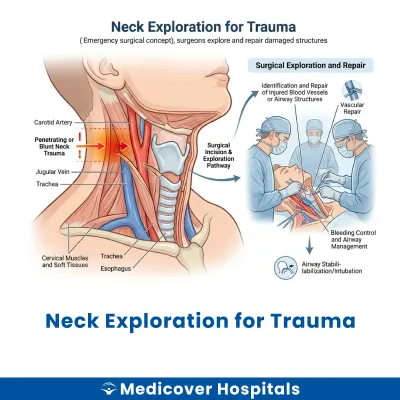
Neck Exploration for Trauma is a surgical procedure to assess and treat injuries in the neck area. It involves examining the cervical region (the neck) to identify and manage damage to vital structures such as blood vessels, nerves, and the trachea (windpipe). This procedure helps in diagnosing and addressing life-threatening conditions caused by traumatic incidents.
This surgery is essential when there is penetrating or blunt trauma to the neck. Such injuries can result from accidents, falls, or violence. If left untreated, they can lead to severe complications like bleeding, airway obstruction, or nerve damage. Modern surgical approaches include open surgery and minimally invasive techniques, which allow for precise intervention and quicker recovery. Early intervention is crucial for preventing serious outcomes.
Neck Exploration for Trauma Doctors Near You
Find experienced ENT specialists for neck exploration after trauma at Medicover Hospitals across India. Choose your city and book a consultation to receive expert care tailored to your needs.
Why Choose Medicover Hospitals for Neck Exploration for Trauma?
Get a second opinion from trusted experts and makeconfident, informed decisions.
 Get Second Opinion
Complete Guide To Neck Exploration For Trauma
Everything you need to know about the procedure, preparation, and recovery
Neck Exploration for Trauma Surgery Indications
Doctors recommend neck exploration for trauma when there are signs of serious injury that may not be visible externally. This procedure helps assess and treat damage to vital structures in the neck.
Severe Neck Bleeding
Patients may experience profuse bleeding from the neck after trauma. On examination, doctors may find active bleeding or expanding hematomas. When bleeding does not stop with pressure, surgery is necessary.
Airway Compromise
Difficulty breathing or noisy breathing can indicate airway obstruction. Imaging may show tracheal deviation or compression. If breathing cannot be stabilized with non-surgical methods, exploration is needed.
Vascular Injury
Signs include a weak pulse or a bruit heard over the neck. Imaging might reveal vessel tears or occlusions. When blood flow is compromised and not improved with conservative measures, surgery is required.
Neurological Deficits
Patients may report numbness or weakness in limbs. Examination might show nerve damage or spinal cord involvement. If symptoms worsen or do not improve with non-invasive treatments, surgical intervention is indicated.
Esophageal Injury
Symptoms include difficulty swallowing or coughing up blood. Tests may reveal leaks or tears in the esophagus. When conservative management fails, surgery is necessary to repair the damage.
How to Prepare for Neck Exploration for Trauma?
Proper preparation is crucial for neck exploration surgery to ensure safety and effectiveness. It helps in reducing complications and aids in a smoother recovery.
- Medication Management: Stop NSAIDs, anticoagulants, and herbal supplements at least a week before surgery.
- Fasting Guidelines: Do not eat or drink anything for at least 8 hours before the procedure.
- Pre-Surgical Tests: Complete all required blood tests and imaging studies as advised by your doctor.
- Clothing: Wear loose, comfortable clothing on the day of the surgery for ease of movement post-procedure.
- Transportation: Arrange for someone to drive you home after the surgery as you may feel drowsy from anaesthesia.
- Medication List: Bring a list of all medications you are currently taking, including dosages, to the hospital.
- Smoking and Alcohol: Avoid smoking and consuming alcohol at least 24 hours before the surgery.
- Personal Items: Leave valuables at home and bring only essential items to the hospital.
Neck Exploration for Trauma Surgery (Step-by-Step)
Neck exploration for trauma is performed by ENT specialists. The typical duration ranges from 2 to 4 hours. It is usually done under general anaesthesia.
- Preparation: The patient is placed under general anaesthesia. The neck area is cleaned and sterilised to prevent infection.
- Incision: A horizontal incision of about 5-7 cm is made on the neck. This provides access to the affected area.
- Exploration: Using surgical instruments like retractors and forceps, the surgeon carefully examines the neck structures. The aim is to identify any injuries to blood vessels, nerves, or other tissues.
- Repair: If injuries are found, they are repaired using sutures or other techniques. Bipolar cautery may be used to control bleeding.
- Closure: The incision is closed with sutures or staples. A drain may be placed to prevent fluid accumulation.
- Recovery: The patient is moved to the recovery area. Vital signs are monitored as the anaesthesia wears off.
Who Performs Neck Exploration for Trauma Surgery?
Neck exploration for trauma is performed by ENT specialists. These surgeons are trained to handle complex neck injuries. They use precise techniques to ensure effective treatment. Please contact the hospital for current details as insurance panels may change.
Recovery After Neck Exploration for Trauma Surgery
Recovery from neck exploration for trauma surgery involves careful monitoring and gradual return to normal activities. Patients can expect some discomfort and need to follow specific guidelines to ensure proper healing.
Day 1-3:
- Rest is crucial. Limit head and neck movements.
- Consume soft foods like curd, dal-rice, and soups to avoid strain while swallowing.
- Keep the surgical area clean and dry. Follow wound care instructions.
Day 4-7:
- Gradually increase activity but avoid strenuous tasks.
- Continue with a soft diet. Include moong dal and khichdi for nutrition.
- Attend follow-up appointments for wound assessment.
Day 8-14:
- Light activities can be resumed. Avoid lifting heavy objects.
- Introduce more variety in diet but maintain softness. Avoid spicy foods.
- Monitor for any signs of infection or complications.
Phase 3 (Week 3-4):
- Most patients can return to work or school, depending on recovery progress.
- Gradually reintroduce regular foods, ensuring they are easy to chew and swallow.
- Continue to avoid high-impact activities.
When to Seek Urgent Help
- Increased swelling or redness around the incision.
- Fever or chills indicating possible infection.
- Difficulty breathing or swallowing.
- Severe pain not relieved by prescribed medications.
Benefits of Neck Exploration for Trauma Surgery
Neck exploration for trauma is a critical surgical procedure aimed at addressing injuries in the neck region. It offers several benefits:
- Injury Assessment: Allows for a thorough evaluation of neck injuries, ensuring accurate diagnosis.
- Bleeding Control: Helps in identifying and controlling sources of bleeding, reducing the risk of further complications.
- Airway Management: Facilitates the management of airway obstructions, crucial for patient survival.
- Nerve Protection: Aids in identifying and preserving vital nerves, preventing long-term damage.
- Foreign Body Removal: Enables the removal of foreign objects lodged in the neck, reducing infection risk.
Risks and Complications of Neck Exploration for Trauma Surgery
While neck exploration for trauma is essential, it carries certain risks and complications:
- Common: Infection at the surgical site, which may require antibiotics.
- Common: Bleeding during or after the procedure, necessitating further intervention.
- Rare: Damage to nerves, potentially leading to temporary or permanent dysfunction.
- Rare: Airway complications, which may require additional procedures.
- Rare: Adverse reactions to anaesthesia, affecting overall recovery.
- Rare: Scarring, which may affect neck mobility or appearance.
Cost of Neck Exploration for Trauma Surgery
The cost of neck exploration for trauma surgery at Medicover Hospitals ranges from Rs. 52,500 to Rs. 261,000. The price varies depending on the ward category chosen, such as day care, general, or deluxe options. We offer transparent pricing to ensure clarity for our patients.
Insurance and TPA support are available, with acceptance of CGHS, ESI, and major TPAs. A cashless facility is also offered for convenience. Please contact the hospital for the latest insurance panel details as these may change periodically.
Frequently Asked Questions
1. How much does Neck Exploration for Trauma surgery cost at Medicover Hospitals?
The cost ranges from Rs. 52,500 to Rs. 261,000 across Medicover Hospitals. Prices vary based on the type of room and care required.
2. Is Neck Exploration for Trauma surgery covered under health insurance at Medicover?
It is often covered by CGHS, ESI, and major TPAs, offering cashless options. Please contact the hospital for current panel details.
3. Will my voice change after neck exploration?
Voice changes can occur if the vocal cords are affected. It's important to discuss potential risks with your surgeon before the procedure.
4. Can I eat solid foods immediately after neck surgery?
Post-surgery, soft foods like curd and dal-rice are recommended initially. Solid foods can usually be reintroduced in a week, based on recovery.
5. Will I have difficulty swallowing post-surgery?
Swallowing difficulties may arise due to swelling or nerve involvement. These issues typically improve with time and appropriate therapy.
6. Is neck stiffness common after surgery?
Yes, neck stiffness is a common post-operative symptom. Regular physiotherapy and exercises can help alleviate stiffness over time.
7. Can neck exploration lead to nerve damage?
There is a risk of nerve damage, potentially affecting movement or sensation. Discuss these risks with your surgeon to understand preventive measures.


