 Call
Call Patient Reports
Nasal Fracture Reduction Procedure Hospital at Medicover Hospitals
At Medicover Hospitals, our skilled ENT surgeons, with qualifications like MS and DNB, perform nasal fracture reduction using the open surgical approach. This method ensures precise realignment of nasal bones. Patients benefit from reduced recovery time and improved breathing function post-surgery.
Expert Surgeons
Yearly Surgeries
Patient Satisfaction
What is Nasal Fracture Reduction?
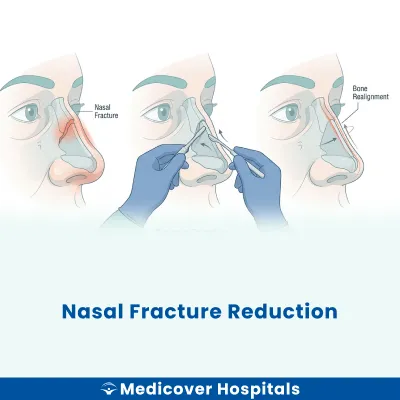
Nasal Fracture Reduction is a medical procedure to realign and set the nasal bones (bones of the nose) after a fracture. This process involves repositioning the displaced bone fragments to restore the nose's original shape and function. It is typically performed by an ENT specialist or a plastic surgeon.
This surgery is needed when the nose is broken due to trauma, such as a fall, sports injury, or accident. If left untreated, a nasal fracture can lead to breathing difficulties, persistent pain, and cosmetic deformities. Modern surgical approaches for Nasal Fracture Reduction include closed reduction, where no incisions are made, and open reduction, which involves surgical incisions for more complex fractures.
Nasal Fracture Reduction Doctors Near You
Find experienced ENT specialists for nasal fracture reduction at Medicover Hospitals across India. Choose your city and book a consultation to receive expert care for your nasal injury.
Why Choose Medicover Hospitals for Nasal Fracture Reduction?
Get a second opinion from trusted experts and makeconfident, informed decisions.
 Get Second Opinion
Complete Guide To Nasal Fracture Reduction
Everything you need to know about the procedure, preparation, and recovery
Nasal Fracture Reduction Procedure Indications
Nasal fracture reduction is recommended when a nasal bone fracture affects breathing, appearance, or causes significant discomfort. This procedure helps restore the nose's structure and function when conservative treatments are insufficient.
Severe Nasal Deformity
Patients may notice a visible deformity or crookedness in the nose after an injury. Doctors confirm this through physical examination and imaging. If the deformity affects appearance or function, reduction is advised.
Difficulty Breathing
Breathing problems through the nose can occur due to swelling or misalignment. Doctors assess airflow obstruction during examination. When breathing is significantly impaired, reduction becomes necessary.
Persistent Nasal Bleeding
Continuous nosebleeds after a fracture can be distressing. Examination may reveal internal damage or misalignment. If bleeding doesn't stop with conservative measures, reduction is considered.
Severe Pain and Swelling
Intense pain and swelling are common after a nasal injury. Doctors evaluate the extent of injury through physical examination. If pain persists despite medication, reduction may be required.
Obstruction on Imaging
Imaging tests like X-rays or CT scans can show bone displacement or obstruction. When such findings correlate with symptoms, and conservative treatments fail, reduction is recommended.
Failure of Initial Treatment
Sometimes, initial treatments like ice packs or nasal splints don't resolve the issue. Persistent symptoms or deformity after conservative management indicate the need for reduction.
How to Prepare for Nasal Fracture Reduction?
Proper preparation is crucial for a successful nasal fracture reduction. It helps minimize risks and ensures a smoother recovery.
- Medication Review: Inform your doctor about all medications. Stop NSAIDs, anticoagulants, and herbal supplements as advised.
- Fasting Guidelines: If general anaesthesia is used, fast for at least 6-8 hours before the procedure.
- Nasal Care: Use prescribed nasal sprays to reduce swelling and ease breathing before the procedure.
- Clothing: Wear loose, comfortable clothing on the day of the procedure for easy movement post-surgery.
- Transportation: Arrange for someone to drive you home after the procedure, as you may feel groggy.
- Medication List: Bring a list of your current medications, including dosages, for the medical team.
- Smoking and Alcohol: Avoid smoking and alcohol for at least 24 hours before the procedure to aid recovery.
- Rest and Relaxation: Ensure you get a good night's sleep before the procedure to help your body cope better.
Nasal Fracture Reduction procedure (Step-by-Step)
Overview: Nasal fracture reduction is performed by an ENT specialist. The procedure typically lasts 30-60 minutes. It can be done under local or general anaesthesia, depending on the complexity of the fracture and patient preference.
- Assessment: The ENT specialist examines the nose to assess the fracture. Imaging tests like X-rays may be used to understand the extent of the injury.
- Anaesthesia: Anaesthesia is administered. If local anaesthesia is used, the patient remains awake but will not feel pain in the nose. With general anaesthesia, the patient is asleep.
- Reduction: The specialist uses instruments like a nasal speculum and Asch forceps to realign the nasal bones. The patient may feel pressure but should not experience pain.
- Stabilisation: Once the bones are repositioned, internal splints or packing may be placed to maintain alignment. External splints may also be applied to support the nose.
- Closure: If any incisions were made, they are closed using sutures. Incisions are typically small, around 1-2 cm, and heal quickly.
- Recovery: The patient is monitored as they recover from anaesthesia. Instructions on care and follow-up appointments are provided before discharge.
Who Performs Nasal Fracture Reduction procedure?
An ENT specialist, also known as an otolaryngologist, performs nasal fracture reduction. They have expertise in managing conditions related to the ear, nose, and throat. Their training allows them to handle delicate structures and ensure proper healing.
Recovery After Nasal Fracture Reduction Procedure
Recovering from a nasal fracture reduction involves managing swelling and ensuring proper healing. Patients can expect some discomfort and nasal congestion initially. Following the doctor's instructions is crucial for a smooth recovery.
Day 1-3:
- Rest is essential. Keep your head elevated to reduce swelling.
- Avoid blowing your nose to prevent displacement of the nasal bones.
- Consume soft foods like curd, dal-rice, and khichdi to avoid pressure on the face.
Day 4-7:
- Swelling and bruising may persist but should gradually decrease.
- Continue with a soft diet, including moong dal and soups, to facilitate healing.
- Limit physical activities. Avoid bending over or lifting heavy objects.
Day 8-14:
- Most patients can resume light work or school activities, depending on comfort.
- Continue to avoid strenuous activities and contact sports.
- Follow up with your doctor to assess healing progress.
Phase 3 (Week 3-4):
- Gradually return to normal activities, but still avoid contact sports.
- Monitor for any unusual symptoms and maintain follow-up appointments.
When to Seek Urgent Help:
- Persistent or worsening pain not relieved by medication.
- Excessive bleeding or discharge from the nose.
- Fever or signs of infection, such as redness or swelling.
- Difficulty breathing through the nose.
Benefits of Nasal Fracture Reduction procedure
Nasal fracture reduction is a procedure aimed at realigning broken nasal bones for improved function and appearance.
- Restored Appearance: Helps in regaining the natural shape of the nose.
- Improved Breathing: Corrects nasal passages, enhancing airflow.
- Pain Relief: Reduces discomfort associated with a fractured nose.
- Prevention of Complications: Minimises the risk of long-term issues like nasal obstruction.
Risks and Complications of Nasal Fracture Reduction procedure
While nasal fracture reduction is generally safe, it carries certain risks and complications.
- Common: Swelling and bruising around the nose and eyes.
- Common: Bleeding from the nose post-procedure.
- Rare: Infection at the site of the fracture.
- Rare: Changes in nasal shape or asymmetry.
- Rare: Persistent nasal obstruction or breathing difficulties.
Cost of Nasal Fracture Reduction procedure
The cost of a Nasal Fracture Reduction procedure at Medicover Hospitals ranges from Rs. 34,000 to Rs. 175,000, depending on the ward category chosen. Prices vary based on the type of accommodation and services required.
We offer transparent pricing with support for insurance and TPA, including CGHS, ESI, and major TPAs. Cashless facilities are also available for a hassle-free experience. Please contact the hospital for the latest insurance panel details as these may change periodically.
Frequently Asked Questions
1. How much does Nasal Fracture Reduction cost?
The Nasal Fracture Reduction procedure costs between Rs. 34,000 and Rs. 175,000 at Medicover Hospitals, depending on the room type and care level.
2. Is Nasal Fracture Reduction covered by insurance?
Nasal Fracture Reduction may be covered by CGHS, ESI, and major TPAs, with cashless options. Please contact the hospital for current panel details.
3. Will my breathing improve after nasal fracture?
Yes, Nasal Fracture Reduction can improve breathing by realigning nasal structures. Recovery may take a few weeks for optimal results.
4. Can I wear glasses after nasal fracture reduction?
Avoid wearing glasses directly on your nose for a few weeks post-surgery. Use a special frame or tape to avoid pressure on the healing nose.
5. Will my nose look different after the procedure?
The procedure aims to restore your nose to its pre-injury appearance. Some swelling and bruising are normal but will subside over time.
6. Can I blow my nose after nasal fracture reduction?
Avoid blowing your nose for at least two weeks post-surgery. This helps prevent complications and supports proper healing.
7. What should I eat after nasal fracture reduction?
Consume soft foods like dal-rice, curd, and khichdi for a few days post-surgery. Avoid hard or crunchy foods to reduce strain on the nose.


