 Call
Call Patient Reports
Best Hospital for Myringoplasty Surgery with Advanced ENT Care
Myringoplasty at Medicover Hospitals is performed using advanced endoscopic techniques by our skilled ENT surgeons with qualifications like MS and DNB. This approach results in smaller incisions and reduced blood loss, ensuring a quicker recovery for patients across India.
Expert Surgeons
Yearly Surgeries
Patient Satisfaction
What is Myringoplasty?
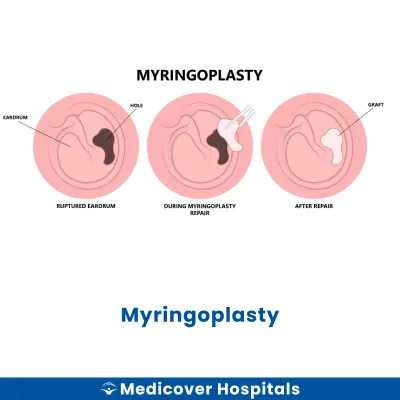
Myringoplasty is a surgical procedure to repair a perforated tympanic membrane (eardrum). The eardrum is a thin tissue that separates the outer ear from the middle ear. It plays a crucial role in hearing by vibrating in response to sound waves. A perforation can disrupt this process, leading to hearing loss and other complications.
This surgery is needed when the eardrum is damaged due to infections, trauma, or chronic ear conditions. If left untreated, a perforated eardrum can lead to persistent infections and hearing impairment. Modern surgical approaches for Myringoplasty include endoscopic and microscopic techniques. These methods help in precise repair and faster recovery. Early intervention can prevent complications and restore hearing function effectively.
Myringoplasty Doctors Near You
Find skilled ENT specialists for myringoplasty at Medicover Hospitals across India. Choose your city and book a consultation to address your ear health needs effectively.
Why Choose Medicover Hospitals for Myringoplasty Surgery ?
Get a second opinion from trusted experts and makeconfident, informed decisions.
 Get Second Opinion
Complete Guide To Myringoplasty
Everything you need to know about the procedure, preparation, and recovery
Myringoplasty Surgery Indications
Myringoplasty is recommended when there is a need to repair a perforated eardrum. This procedure helps restore hearing and prevent recurrent ear infections.
Chronic Ear Infections
Patients often experience frequent ear discharge and discomfort. Doctors find persistent perforation in the eardrum despite medication. When antibiotics and ear drops fail to resolve the issue, surgery is advised.
Hearing Loss
Individuals may notice reduced hearing ability. Audiometry tests reveal conductive hearing loss due to eardrum perforation. When hearing aids are ineffective, myringoplasty is considered.
Recurrent Ear Discharge
Patients report continuous or repeated ear discharge. Examination shows a non-healing hole in the eardrum. If topical treatments do not stop the discharge, surgical intervention is needed.
Traumatic Eardrum Perforation
Trauma leads to sudden ear pain and hearing loss. Doctors observe a visible tear in the eardrum. If the perforation does not heal naturally over time, myringoplasty is required.
Barotrauma
Patients experience ear pain and pressure changes, often during flights or diving. Examination reveals eardrum damage. When symptoms persist despite pressure equalization techniques, surgery is recommended.
How to Prepare for Myringoplasty?
Proper preparation is crucial for a successful myringoplasty. It helps minimise risks and ensures a smooth recovery. Here are key steps to prepare for the surgery.
- Medication Review: Stop NSAIDs, anticoagulants, and herbal supplements 1 week before surgery.
- Fasting Guidelines: Fast for at least 6 hours before the procedure to prepare for general anaesthesia.
- Ear Cleaning: Your doctor may advise cleaning the ear canal to prevent infection.
- Health Assessment: Complete any recommended blood tests or imaging studies as advised by your doctor.
- Clothing: Wear loose, comfortable clothing on the day of the surgery for ease of movement.
- Transportation: Arrange for someone to drive you home post-surgery due to the effects of anaesthesia.
- Medication List: Bring a list of current medications with dosages for the medical team.
- Smoking and Alcohol: Avoid smoking and alcohol for at least 24 hours before the surgery.
Myringoplasty Surgery (Step-by-Step)
Myringoplasty is performed by an ENT specialist. The procedure typically lasts 1-2 hours. It is usually done under general anaesthesia to ensure the patient is comfortable and pain-free.
- Preparation: The patient is positioned comfortably. Anaesthesia is administered to induce sleep and prevent pain.
- Incision: A small incision, about 1-2 cm, is made in the ear canal or behind the ear to access the eardrum. The patient remains asleep and unaware during this stage.
- Graft Harvesting: A small piece of tissue, often from the tragus or the area above the ear, is taken to use as a graft. The patient does not feel any discomfort.
- Cleaning: The ear canal is cleaned using a curette to remove any debris or infection. This ensures a clear view and clean area for the graft placement.
- Graft Placement: The harvested tissue is carefully placed over the perforation in the eardrum. Instruments like a micro hook or forceps are used for precision.
- Securing the Graft: The graft is secured in place, sometimes using a gel foam or similar material to hold it steady. The patient remains under anaesthesia and does not experience any sensation.
- Closure: The incision is closed with sutures if necessary. The ear is packed with a sterile dressing. The patient gradually wakes up as the anaesthesia wears off.
Who Performs Myringoplasty Surgery?
An ENT (Ear, Nose, and Throat) specialist, also known as an otolaryngologist, performs Myringoplasty. They are trained to handle ear-related conditions and surgeries, ensuring the procedure is done safely and effectively.
Recovery After Myringoplasty Surgery
Recovery from myringoplasty surgery involves gradual healing of the eardrum. Patients can expect some discomfort and a gradual return to normal activities. Following the doctor's instructions is crucial for a smooth recovery.
Day 1-3:
- Rest is essential. Avoid any strenuous activities.
- Keep the ear dry. Use a cotton ball while showering to prevent water from entering the ear.
- Diet should be light and easy to digest. Opt for curd, dal-rice, and soups.
- Some mild pain and discomfort are normal. Take prescribed medications as directed.
Day 4-7:
- Continue to avoid heavy lifting and bending over.
- Introduce soft foods like khichdi and moong dal to your diet.
- Monitor for any signs of infection such as increased pain or discharge from the ear.
- Most patients can resume light activities but should avoid crowded places to prevent infections.
Day 8-14:
- Gradually return to normal activities. However, avoid swimming and flying until cleared by the doctor.
- Students may return to school, and adults can resume work if it does not involve physical exertion.
- Continue to eat a balanced diet to support healing.
Phase: 2-4 Weeks:
- Follow-up with the doctor to assess healing.
- Most restrictions are lifted, but continue to protect the ear from water and loud noises.
When to Seek Urgent Help:
- Severe pain or swelling around the ear.
- Fever or chills.
- Persistent or foul-smelling discharge from the ear.
- Hearing loss or dizziness.
Benefits of Myringoplasty Surgery
Myringoplasty is a surgical procedure aimed at repairing a perforated eardrum. It offers several benefits for patients experiencing ear issues.
- Improved Hearing: Helps restore hearing by closing the perforation in the eardrum.
- Reduced Infections: Decreases the frequency of ear infections by creating a barrier against bacteria.
- Prevention of Ear Discharge: Stops persistent ear discharge, improving ear hygiene.
- Enhanced Quality of Life: Alleviates discomfort and improves overall ear function.
Risks and Complications of Myringoplasty Surgery
While myringoplasty is generally safe, like any surgery, it carries potential risks and complications. It's important to be aware of these before proceeding.
- Temporary dizziness or imbalance may occur post-surgery.
- Mild pain or discomfort in the ear is possible during recovery.
- Infection at the surgical site, requiring further treatment.
- Hearing loss if the surgery does not succeed as planned.
- Tinnitus or ringing in the ear may develop post-surgery.
- Allergic reaction to anaesthesia or other medications used.
What is the Cost of Myringoplasty Surgery?
The cost of Myringoplasty surgery at Medicover Hospitals ranges from Rs. 20,900 to Rs. 37,130, depending on the ward category selected. Prices vary based on the type of accommodation, such as outpatient, day care, general, and more. We offer transparent pricing and support for insurance and TPA, including CGHS, ESI, and major TPAs. Cashless facility is available for your convenience. Please contact the hospital for the latest insurance panel details as these may change periodically.
Frequently Asked Questions
1. How much does Myringoplasty surgery cost?
Myringoplasty surgery at Medicover Hospitals costs between Rs. 20,900 to Rs. 37,130 depending on the type of accommodation chosen.
2. Is Myringoplasty surgery covered under insurance?
Myringoplasty is often covered by CGHS, ESI, and major TPAs. Please contact the hospital for current panel details.
3. Will Myringoplasty improve my hearing?
Myringoplasty can improve hearing if the eardrum damage is the cause. Consult your doctor for a detailed evaluation.
4. Can I swim after Myringoplasty surgery?
Swimming should be avoided for at least 6 weeks post-surgery. Water exposure can affect the healing of the eardrum.
5. Will I experience ear pain after Myringoplasty?
Mild ear pain is common after Myringoplasty. It usually subsides within a few days with prescribed medication.
6. Can I fly after Myringoplasty surgery?
Flying should be avoided for at least 4 weeks post-surgery. Changes in air pressure can impact the healing eardrum.
7. What foods should I avoid post-Myringoplasty?
Avoid hard and crunchy foods like nuts and chips. Opt for soft foods like curd, dal-rice, and khichdi for comfort.


