 Call
Call Patient Reports
Myocutaneous Flap Reconstruction Surgery by Expert Oncologists
Myocutaneous Flap Reconstruction at Medicover Hospitals involves an open surgical approach for reconstructing tissue defects, often post-cancer surgery. Our plastic surgeons, with qualifications like MS, DNB, and MCh, perform these procedures. This approach typically results in shorter hospital stays due to effective healing.
Expert Surgeons
Yearly Surgeries
Patient Satisfaction
What is Myocutaneous Flap Reconstruction?
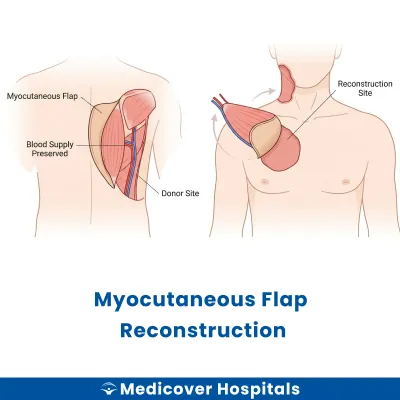
Myocutaneous Flap Reconstruction is a surgical procedure used to repair or reconstruct areas of the body using a flap of muscle and skin. This technique is often applied to areas such as the head, neck, breast, or limbs. The "flap" consists of muscle (myo-) and skin (cutaneous), which is moved from a donor site to the area needing reconstruction.
This surgery is often necessary after trauma, cancer removal, or chronic wounds. Conditions like head and neck cancers, breast cancer, or severe injuries may require this procedure. If untreated, these conditions can lead to significant functional and aesthetic issues. Modern surgical approaches include free flap and pedicled flap techniques, which offer flexibility in reconstruction. These methods help restore appearance and function effectively.
Myocutaneous Flap Reconstruction Doctors Near You
Discover skilled plastic surgeons for myocutaneous flap reconstruction at Medicover Hospitals across India. Choose your city and book a consultation to explore personalised treatment options.
Why Choose Medicover Hospitals for Myocutaneous Flap Reconstruction?
Get a second opinion from trusted experts and makeconfident, informed decisions.
 Get Second Opinion
Complete Guide To Myocutaneous Flap Reconstruction
Everything you need to know about the procedure, preparation, and recovery
Myocutaneous Flap Reconstruction Surgery Indications
Doctors recommend myocutaneous flap reconstruction when there is a need to cover large tissue defects. This procedure is often considered when other treatments are insufficient to restore function or appearance.
Extensive Tissue Loss
Patients may experience significant tissue loss due to trauma or surgery. Symptoms include exposed bones or tendons. Imaging may show large defects. When wound healing is not possible with simple closure, reconstruction is necessary.
Post-Oncological Surgery Defects
After cancer removal, patients might have large defects. They may notice changes in appearance or function. Pathology reports confirm the extent of tissue removal. When primary closure is not feasible, flap reconstruction is advised.
Chronic Non-Healing Wounds
Patients with chronic wounds may experience persistent pain and drainage. Examination reveals non-healing ulcers. When conservative treatments like dressings and medications fail, surgery is considered.
Pressure Ulcers
Patients with pressure ulcers often report pain and skin breakdown. Clinical examination shows deep sores. When repositioning and wound care do not lead to healing, surgical intervention is needed.
Radiation-Induced Tissue Damage
Patients may suffer from skin changes and ulceration after radiation therapy. Symptoms include pain and tissue breakdown. Imaging may reveal underlying damage. When topical treatments are ineffective, reconstruction is required.
How to Prepare for Myocutaneous Flap Reconstruction?
Proper preparation is crucial for a successful Myocutaneous Flap Reconstruction. It helps minimise risks and ensures a smoother recovery. Follow these steps to get ready for your surgery.
- Medication Review: Stop NSAIDs, anticoagulants, and herbal supplements as advised by your doctor.
- Fasting: Fast for at least 8 hours before the procedure if general anaesthesia is used.
- Pre-Surgery Hygiene: Follow any specific instructions given for cleansing the surgical site.
- Comfortable Clothing: Wear loose clothing on the day of surgery to avoid discomfort post-procedure.
- Transportation: Arrange for someone to drive you home after the surgery.
- Medication List: Bring a list of all medications you take, including dosages, to the hospital.
- Smoking Cessation: Stop smoking at least two weeks before surgery to promote healing.
- Pre-Op Consultation: Attend all pre-operative appointments to discuss any concerns with your surgeon.
Myocutaneous Flap Reconstruction Surgery (Step-by-Step)
Overview: Myocutaneous flap reconstruction is performed by plastic surgeons. The surgery typically lasts 4-6 hours and is done under general anaesthesia.
- Preparation: The patient is placed under general anaesthesia. The surgical area is cleaned and sterilised.
- Incision: A 1-2 cm incision is made at the donor site. The location depends on the tissue needed for reconstruction.
- Tissue Harvesting: The surgeon uses a harmonic scalpel to carefully separate the muscle and skin flap from the donor site. Blood vessels are preserved for reattachment.
- Flap Transfer: The harvested flap is moved to the reconstruction site. The surgeon ensures proper alignment and positioning.
- Vascular Connection: Using a bipolar cautery, the surgeon connects blood vessels from the flap to those at the recipient site. This ensures blood flow to the transplanted tissue.
- Closure: The incision at both donor and recipient sites is closed with sutures. The area is then bandaged to protect the site and aid healing.
- Recovery: The patient is monitored in the recovery room. Pain management and antibiotics are administered as needed.
Who Performs Myocutaneous Flap Reconstruction Surgery?
Myocutaneous flap reconstruction is performed by plastic surgeons. These specialists have expertise in reconstructive procedures. They work to restore form and function using tissue from other parts of the body.
Recovery After Myocutaneous Flap Reconstruction Surgery
Recovery from Myocutaneous Flap Reconstruction Surgery involves several stages. It's essential to follow your surgeon's advice to ensure proper healing. Expect some discomfort and swelling initially, which will gradually decrease.
Day 1-3:
- Rest is crucial. Avoid any strenuous activities.
- Maintain a soft diet. Include foods like curd, dal-rice, and khichdi.
- Keep the surgical area clean and dry.
Day 4-7:
- Continue with light activities. Avoid lifting heavy objects.
- Introduce moong dal and soups to your diet for added nutrition.
- Attend follow-up appointments for wound assessment.
Week 2-4:
- Gradually increase physical activities as advised by your doctor.
- Return to work or school may be possible, depending on your recovery.
- Focus on a balanced diet to support healing.
Month 1-3:
- Resume normal activities, but continue to avoid heavy lifting.
- Regular exercise can be reintroduced with guidance from your healthcare provider.
- Monitor the surgical site for any changes.
When to Seek Urgent Help:
- Increased redness, swelling, or warmth around the surgical site.
- Fever or chills indicating possible infection.
- Severe pain not relieved by prescribed medication.
- Unusual discharge or bleeding from the wound.
Benefits of Myocutaneous Flap Reconstruction Surgery
Myocutaneous flap reconstruction is a surgical technique used to repair and reconstruct tissue defects. It offers several benefits for patients undergoing this procedure.
- Enhanced Healing: The procedure promotes better wound healing by providing a robust blood supply.
- Improved Functionality: It helps restore the function of the affected area, improving quality of life.
- Natural Appearance: The use of the patient's own tissue ensures a more natural look and feel.
- Versatility: Suitable for various parts of the body, making it adaptable to different reconstruction needs.
Risks and Complications of Myocutaneous Flap Reconstruction Surgery
While myocutaneous flap reconstruction can be beneficial, it is important to be aware of potential risks and complications associated with the surgery.
Common Risks
- Infection: There is a risk of infection at the surgical site.
- Bleeding: Some bleeding during or after surgery is possible.
Rare Risks
- Flap Failure: In some cases, the flap may not survive, requiring additional procedures.
- Nerve Damage: There is a small risk of nerve injury leading to sensation changes.
- Scarring: Scarring may occur, which could affect the aesthetic outcome.
Cost of Myocutaneous Flap Reconstruction Surgery
The cost of Myocutaneous Flap Reconstruction Surgery at Medicover Hospitals ranges from ₹60,000 to over ₹3,00,000. The price varies based on the ward category chosen, such as day care, general, or private suites. We offer transparent pricing to ensure clarity for our patients.
Insurance and TPA support is available, with acceptance of CGHS, ESI, and major TPAs. A cashless facility is also provided for added convenience. Please contact the hospital for the latest insurance panel details as these may change periodically.
Frequently Asked Questions
1. How much does Myocutaneous Flap Reconstruction surgery cost at Medicover Hospitals?
The cost for Myocutaneous Flap Reconstruction surgery ranges from ₹60,000 to over ₹3,00,000 across Medicover Hospitals, depending on the type of care and accommodation.
2. Is Myocutaneous Flap Reconstruction surgery covered under health insurance at Medicover?
Myocutaneous Flap Reconstruction surgery is often covered by CGHS, ESI, and major TPAs with cashless options. Please contact the hospital for current panel details.
3. Will I have difficulty swallowing after surgery?
Some patients experience difficulty swallowing post-surgery due to muscle adjustments. This typically improves over time with therapy and care.
4. Can I resume physical activities after Myocutaneous Flap Reconstruction?
Physical activities can usually be resumed after 6-8 weeks. It's important to follow your surgeon's advice for a safe recovery.
5. Is there a risk of flap failure after surgery?
Flap failure is a potential complication, though rare. Regular follow-ups and monitoring help in early detection and management.
6. What foods should I avoid after Myocutaneous Flap Reconstruction?
Avoid spicy and hard-to-chew foods initially. Soft foods like curd, dal-rice, and khichdi are recommended to aid healing.
7. Will I need speech therapy after Myocutaneous Flap Reconstruction?
Speech therapy may be needed if the surgery affects facial muscles. A therapist can help improve speech clarity and muscle function.


