 Call
Call Patient Reports
Myelomeningocele Repair Surgery Hospital by Expert Neurosurgeons
Myelomeningocele repair at Medicover Hospitals is performed using an open surgical approach. Our team of neurosurgeons, with qualifications like MS, MCh, and DNB, are skilled in managing complex spinal conditions. This procedure typically results in shorter hospital stays for patients across India.
Expert Surgeons
Yearly Surgeries
Patient Satisfaction
What is Myelomeningocele Repair?
Myelomeningocele repair is a surgical procedure to correct a birth defect involving the spine and spinal cord. In this condition, the backbone and membranes around the spinal cord do not close properly. This results in a sac-like protrusion. The surgery involves closing this opening to protect the spinal cord and nerves.
This surgery is necessary for babies born with spina bifida, a condition where the spinal column does not close all the way. If untreated, it can lead to severe complications like infections, paralysis, or bladder issues. Modern surgical approaches include prenatal surgery (performed before birth) and postnatal repair (after birth). These methods aim to reduce complications and improve outcomes.
Myelomeningocele Repair Doctors Near You
Discover expert neurosurgeons for myelomeningocele repair at Medicover Hospitals across India. Choose your city and book a consultation to explore treatment options tailored to your needs.
Why Choose Medicover Hospitals for Myelomeningocele Repair?
Get a second opinion from trusted experts and makeconfident, informed decisions.
 Get Second Opinion
Complete Guide To Myelomeningocele Repair
Everything you need to know about the procedure, preparation, and recovery
Myelomeningocele Repair Surgery Indications
Doctors recommend myelomeningocele repair surgery when there are significant neurological or physical symptoms affecting the patient's quality of life. Early intervention can prevent complications and improve outcomes.
Neurological Deficits
Patients may experience weakness or paralysis in the legs. Doctors find abnormalities in nerve function tests or imaging. When these deficits worsen or do not improve with therapy, surgery is considered.
Hydrocephalus
Symptoms include an enlarged head size or increased intracranial pressure. Imaging such as an MRI or CT scan shows fluid accumulation in the brain. Surgery is needed when shunt placement is required to relieve pressure.
Bladder and Bowel Dysfunction
Patients may have incontinence or frequent urinary tract infections. Urodynamic studies reveal poor bladder control. If medications and catheterization fail, surgical intervention is recommended.
Orthopaedic Deformities
Visible signs include foot deformities or scoliosis. X-rays and physical exams confirm these issues. Surgery is advised when braces or physical therapy do not correct the deformities.
Skin Breakdown
Patients may develop sores or ulcers on the back. Physical examination reveals skin damage over the myelomeningocele. Surgery is necessary when wound care does not heal the area.
How to Prepare for Myelomeningocele Repair?
Proper preparation for myelomeningocele repair is crucial to ensure a smooth surgical process and recovery. It helps minimise risks and complications, ensuring the best possible outcome for the patient.
- Medication Management: Stop NSAIDs, anticoagulants, and herbal supplements at least a week before surgery.
- Fasting Guidelines: Do not eat or drink anything for at least 8 hours before the procedure to ensure safety during anaesthesia.
- Pre-Surgery Tests: Complete all required blood tests, imaging, and other evaluations as advised by your healthcare provider.
- Clothing: Wear loose, comfortable clothing on the day of the surgery for ease of changing and comfort post-operation.
- Transportation: Arrange for someone to drive you home after the surgery, as you will not be able to drive yourself.
- Medication List: Bring a list of all medications you are currently taking, including dosages, to the hospital.
- Hygiene: Bathe with an antiseptic soap the night before and the morning of the surgery to reduce infection risk.
- Hospital Stay Preparation: Pack a small bag with essentials for your hospital stay, including personal items and any necessary documents.
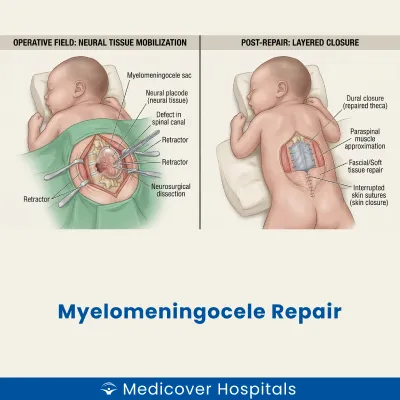
Myelomeningocele repair Surgery (Step-by-Step)
Overview: Myelomeningocele repair is performed by Neurocare specialists. The surgery typically lasts 3 to 5 hours and is done under general anaesthesia.
- Preparation: The patient is placed under general anaesthesia to ensure they are asleep and pain-free. The surgical area is cleaned and sterilized.
- Incision: A curved incision, usually 1-2 cm from the edge of the defect, is made around the myelomeningocele sac to expose the spinal cord and nerves.
- Dissection: Using instruments like a curette and bipolar cautery, the surgeon carefully separates the neural tissue from the surrounding sac to prevent damage to the nerves.
- Closure of Neural Tissue: The exposed spinal cord and nerves are repositioned and closed with sutures to protect them. This step is crucial for preventing further damage.
- Reconstruction: The dura mater, a protective membrane, is closed over the neural tissue. The surgeon may use a harmonic scalpel for precise cutting and sealing.
- Skin Closure: The skin is closed in layers using sutures or staples, ensuring a secure and clean closure to promote healing.
- Post-Operative Care: The patient is moved to a recovery area. They are monitored as they wake from anaesthesia. Pain management and wound care instructions are provided.
Who Performs Myelomeningocele repair Surgery?
Myelomeningocele repair surgery is performed by neurosurgeons. These specialists are trained in surgical procedures involving the nervous system, including the brain and spinal cord. They use their expertise to carefully handle delicate neural tissues during the repair process.
Recovery After Myelomeningocele Repair Surgery
Recovery from myelomeningocele repair surgery requires careful monitoring and gradual resumption of activities. The healing process varies for each individual, but understanding the general timeline can help set expectations.
Day 1-3:
- Hospital stay is necessary for close observation.
- Pain management and infection prevention are priorities.
- Intravenous fluids and medications are administered.
Day 4-7:
- Gradual introduction of oral fluids and soft foods like curd and soups.
- Encouragement to move gently, with assistance, to prevent stiffness.
- Monitoring for signs of infection or complications.
Week 2:
- Transition to a normal diet, including dal-rice and moong dal.
- Stitches or staples may be removed if healing is adequate.
- Light activities can be resumed, but avoid strenuous tasks.
Phase 3-6 Weeks:
- Gradual increase in physical activities as tolerated.
- Return to school or work may be possible, depending on recovery.
- Regular follow-up appointments to monitor progress.
When to Seek Urgent Help:
- Fever or signs of infection at the surgical site.
- Sudden headache, vomiting, or changes in consciousness.
- Weakness or changes in limb movement.
Consult your healthcare provider for personalised advice and follow-up care. Please contact the hospital for current details as insurance panels may change.
Benefits of Myelomeningocele repair Surgery
Myelomeningocele repair surgery aims to address the spinal defect present at birth, offering several potential benefits.
- Improved Mobility: Surgery can enhance the child's ability to move and potentially improve walking capabilities.
- Reduced Risk of Infection: Closing the spinal defect lowers the risk of infections such as meningitis.
- Prevention of Further Damage: Repairing the defect can prevent additional damage to the spinal cord and nerves.
- Enhanced Quality of Life: Early intervention can lead to better overall health outcomes and quality of life.
Risks and Complications of Myelomeningocele repair Surgery
While the surgery offers benefits, it is important to be aware of the associated risks and complications.
- Common: Infection at the surgical site can occur, requiring medical attention.
- Common: Cerebrospinal fluid leakage may happen, necessitating further treatment.
- Rare: Neurological impairment can occur, affecting motor or sensory functions.
- Rare: Development of tethered spinal cord syndrome, which may require additional surgery.
- Rare: Anaesthesia-related complications, though uncommon, can arise during the procedure.
Cost of Myelomeningocele repair Surgery
The cost of Myelomeningocele repair surgery varies based starting from ₹2,00,000 - ₹5,00,000 on the surgical approach, duration of hospital stay, room category, required diagnostics, and post-operative care.
At Medicover Hospitals, we offer transparent pricing to ensure clarity for our patients. We support insurance and TPA services, including CGHS, ESI, and major TPAs, with cashless facilities available. Please contact the hospital for the latest insurance panel details as these may change periodically.
Frequently Asked Questions
1. How much does Myelomeningocele repair surgery cost at Medicover Hospitals?
The cost of Myelomeningocele repair surgery varies starting from ₹2,00,000 - ₹5,00,000 . Please contact Medicover Hospitals for detailed pricing information.
2. Is Myelomeningocele repair surgery covered under health insurance at Medicover?
Myelomeningocele repair surgery may be covered by CGHS, ESI, and major TPAs. Please contact the hospital for current panel details.
3. Will my child need a shunt after Myelomeningocele repair?
Some children may require a shunt to manage hydrocephalus. Your doctor will assess this need based on individual conditions.
4. Can my child walk after Myelomeningocele repair?
Walking ability depends on the level of nerve involvement. Rehabilitation and physiotherapy can help improve mobility over time.
5. What foods should my child avoid after Myelomeningocele repair?
Post-surgery, avoid spicy and oily foods. Soft foods like curd, dal-rice, and khichdi are recommended for easier digestion.
6. Will my child have bladder issues after Myelomeningocele repair?
Bladder dysfunction is common and may require catheterization. Regular follow-ups are essential to manage urinary health effectively.
7. Can Myelomeningocele repair affect my child's spine?
Spinal abnormalities may persist, requiring ongoing monitoring. Regular check-ups help address any spinal issues early.


