 Call
Call Patient Reports
Best Hospital for Minor Wound Debridement and Closure Surgery
At Medicover Hospitals, our orthopaedic team, with qualifications like MS and DNB, performs Minor Wound Debridement and Closure using open surgical techniques. This approach ensures precise removal of damaged tissue and effective wound closure, leading to shorter hospital stays and faster recovery for patients.
Expert Surgeons
Yearly Surgeries
Patient Satisfaction
What is Minor Wound Debridement and Closure?
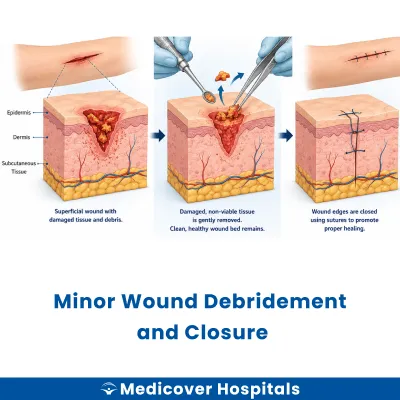
Minor Wound Debridement and Closure is a medical procedure involving the removal of dead or infected tissue (debridement) from a wound, followed by closing the wound to promote healing. It is often performed on the skin, the body's largest organ. This procedure helps prevent infection and supports the natural healing process.
This surgery is needed when a wound becomes infected or does not heal properly. Conditions like diabetic ulcers, pressure sores, or traumatic injuries may require it. If left untreated, these wounds can lead to severe infections or complications. Modern surgical approaches include sharp debridement using scalpels, laser debridement, and enzymatic debridement. These methods help ensure effective wound management and recovery.
Minor Wound Debridement and Closure Doctors Near You
Discover expert orthopedics for minor wound debridement and closure at Medicover Hospitals across India. Choose your city and book a consultation to receive quality care from our specialists.
Why Choose Medicover Hospitals for Minor Wound Debridement and Closure?
Get a second opinion from trusted experts and makeconfident, informed decisions.
 Get Second Opinion
Complete Guide To Minor Wound Debridement And Closure
Everything you need to know about the procedure, preparation, and recovery
Minor Wound Debridement and Closure procedure Indications
Doctors recommend Minor Wound Debridement and Closure when a wound fails to heal properly or is at risk of infection. This procedure helps remove dead tissue and close the wound to promote healing.
Non-Healing Wounds
Patients may experience persistent pain and discharge from a wound that does not heal over time. On examination, doctors find that the wound edges are not closing, and there may be signs of infection. When topical treatments and dressings fail to improve the condition, debridement and closure become necessary.
Infected Wounds
Symptoms include redness, swelling, and pus formation around the wound. Doctors identify bacterial infection through lab tests and physical examination. If antibiotics and cleaning do not resolve the infection, surgical intervention is required to remove infected tissue.
Foreign Body in Wound
Patients often report pain and discomfort at the wound site. Imaging or physical examination reveals foreign material embedded in the tissue. When attempts to remove it manually are unsuccessful, debridement is needed to prevent complications.
Necrotic Tissue
Signs include dark, dead tissue within the wound, accompanied by foul odour. Doctors confirm necrosis through visual inspection. When conservative methods like enzymatic debridement do not work, surgical removal is essential.
Traumatic Wounds
Patients may experience severe pain and bleeding from an injury. Examination shows irregular wound edges and possible contamination. When initial cleaning and suturing are ineffective, debridement and closure are performed to ensure proper healing.
How to Prepare for Minor Wound Debridement and Closure?
Proper preparation for minor wound debridement and closure can enhance recovery and reduce complications. Following these steps ensures a smoother procedure and healing process.
- Medication Review: Stop NSAIDs, anticoagulants, and herbal supplements 7 days prior. Consult your doctor for guidance.
- Fasting Requirements: If local anaesthesia is used, fasting is not required. Confirm with your healthcare provider.
- Hygiene: Clean the wound area gently with soap and water the night before the procedure.
- Clothing: Wear loose, comfortable clothing that allows easy access to the wound area.
- Transportation: Arrange for someone to drive you home post-procedure, as you may feel drowsy.
- Medication List: Bring a list of current medications, including dosages, to share with your healthcare team.
- Allergy Information: Inform your doctor about any known allergies to medications or materials.
- Follow Instructions: Adhere to any additional instructions provided by your healthcare provider for optimal results.
Minor Wound Debridement and Closure procedure (Step-by-Step)
This procedure is performed by orthopaedic specialists. It typically lasts 30 to 60 minutes. Local anaesthesia is commonly used to numb the area.
- Preparation: The patient is positioned comfortably. The wound area is cleaned and sterilised. Local anaesthesia is administered to numb the site.
- Initial Assessment: The orthopaedic specialist examines the wound. They assess the extent of tissue damage and decide on the debridement method.
- Debridement: Using a curette or scalpel, the specialist carefully removes dead or infected tissue. This helps promote healing and reduces infection risk.
- Wound Irrigation: The wound is flushed with a saline solution. This step helps remove debris and bacteria, ensuring a clean site for closure.
- Closure: The wound edges are brought together. Sutures or adhesive strips are used to close the wound. The incision size is typically small, around 1-2 cm.
- Dressing Application: A sterile dressing is applied over the wound. This protects the area and aids in healing.
- Post-Procedure Care: The patient receives instructions on wound care. Pain management and follow-up appointments are discussed.
Who Performs Minor Wound Debridement and Closure procedure?
This procedure is performed by orthopaedic specialists. They have expertise in handling musculoskeletal injuries and conditions. Their training ensures precise debridement and effective wound management.
Recovery After Minor Wound Debridement and Closure procedure
Recovery from a minor wound debridement and closure procedure is generally quick. You can expect some discomfort and swelling initially, but these should subside in a few days. Following your doctor's instructions will ensure a smooth recovery.
Day 1-2:
- Rest and limit movement of the affected area.
- Keep the wound clean and dry. Follow dressing change instructions.
- Consume soft, nutritious foods like curd, dal-rice, and soups to support healing.
Day 3-5:
- Swelling and discomfort should start reducing.
- Continue with a balanced diet including khichdi and moong dal for protein.
- Gradually resume light activities but avoid strenuous tasks.
Day 6-7:
- Most patients can return to work or school, depending on the wound location and job type.
- Ensure the wound is healing properly and follow up with your doctor if advised.
- Maintain a healthy diet to aid recovery.
When to Seek Urgent Help:
- Increased redness or swelling around the wound.
- Pus or unusual discharge from the wound.
- Fever or chills indicating possible infection.
- Severe pain not relieved by prescribed medication.
Benefits of Minor Wound Debridement and Closure procedure
Minor wound debridement and closure helps in effective healing by removing dead tissue and closing the wound.
- Enhanced Healing: Promotes faster recovery by cleaning the wound.
- Infection Prevention: Reduces the risk of infection by removing debris and bacteria.
- Improved Appearance: Leads to better cosmetic outcomes by closing the wound neatly.
- Pain Reduction: Decreases discomfort by addressing the wound promptly.
Risks and Complications of Minor Wound Debridement and Closure procedure
While generally safe, minor wound debridement and closure may have some risks.
- Mild bleeding during the procedure.
- Temporary pain or discomfort at the site.
- Infection despite precautions.
- Allergic reaction to local anaesthesia.
- Scarring or changes in skin texture.
- Delayed wound healing in some cases.
Common Risks:
Rare Complications:
Cost of Minor Wound Debridement and Closure procedure
The cost for Minor Wound Debridement and Closure at Medicover Hospitals ranges from Rs. 2500 to Rs. 5000. This variation depends on the ward category chosen. We ensure transparent pricing and offer support for insurance and TPA, including CGHS, ESI, and major TPAs. Cashless facility is also available for your convenience. Please contact the hospital for the latest insurance panel details as these may change periodically.
Frequently Asked Questions
1. How much does Minor Wound Debridement and Closure procedure cost at Medicover Hospitals?
The cost ranges from Rs. 2500 to Rs. 5000 across Medicover Hospitals. Prices vary based on the facility and room type.
2. Is Minor Wound Debridement and Closure procedure covered under health insurance at Medicover?
Coverage may be available under CGHS, ESI, and major TPAs. Please contact the hospital for current panel details.
3. Will my wound heal faster with debridement?
Yes, debridement removes dead tissue, promoting faster healing. It reduces infection risk, aiding quicker recovery.
4. Can I shower immediately after wound closure?
Avoid showering for 24-48 hours post-procedure to protect the wound. Follow your doctor's specific instructions for wound care.
5. Will I have a scar after wound closure?
Scarring is possible but often minimal with proper care. Using prescribed ointments can help reduce scar appearance.
6. Can I resume physical activity after debridement?
Light activities can be resumed in a few days, but avoid strenuous exercise for 1-2 weeks. Consult your doctor for personalized advice.
7. What should I eat to aid wound healing?
Consume protein-rich foods like dal-rice and curd. These support tissue repair and boost your immune system.


