 Call
Call Patient Reports
Minor Soft Tissue Excision Surgery by Expert General Surgeons
At Medicover Hospitals, our General Surgeons , with qualifications such as MS and DNB, performs minor soft tissue excisions using the open surgical approach. This procedure addresses various conditions, ensuring smaller incisions and reduced blood loss, leading to a shorter hospital stay for patients.
Expert Surgeons
Yearly Surgeries
Patient Satisfaction
What is Minor Soft Tissue Excision?
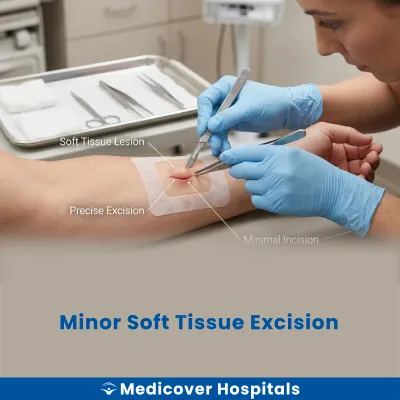
Minor Soft Tissue Excision is a surgical procedure to remove small, non-cancerous growths or lesions from soft tissues. These tissues include skin, fat, and muscles. The procedure often targets areas like the arms, legs, or back. It involves excising (cutting out) the unwanted tissue with precision to ensure minimal impact on surrounding areas.
This surgery is needed for conditions such as lipomas (benign fatty lumps), cysts, or skin tags. If left untreated, these growths can cause discomfort or become infected. Modern surgical approaches include minimally invasive techniques like laser excision and radiofrequency ablation. These methods aim to reduce recovery time and minimise scarring. Early intervention can prevent complications and improve quality of life.
Minor Soft Tissue Excision Doctors Near You
Discover skilled General Surgeons for minor soft tissue excision at Medicover Hospitals across India. Choose your city and book a consultation to address your needs with expert care.
Why Choose Medicover Hospitals for Minor Soft Tissue Excision?
Get a second opinion from trusted experts and makeconfident, informed decisions.
 Get Second Opinion
Complete Guide To Minor Soft Tissue Excision
Everything you need to know about the procedure, preparation, and recovery
Minor Soft Tissue Excision Surgery Indications
Doctors recommend minor soft tissue excision surgery when non-surgical treatments fail to relieve symptoms. This procedure is often advised for removing abnormal tissue growths that cause discomfort or functional issues.
Benign Tumours
Patients may notice a lump or swelling in the soft tissue, often painless but sometimes tender. Imaging tests like MRI or ultrasound can show a well-defined mass. Surgery is considered when the tumour grows or causes discomfort.
Cysts
Soft tissue cysts can cause visible swelling and sometimes pain. They may restrict movement if located near joints. When aspiration or medication does not resolve the cyst, excision is recommended.
Fibromas
These are firm, raised nodules that can appear on the skin or deeper tissues. Patients may experience irritation or pressure symptoms. Surgery is suggested if the fibroma is large or symptomatic.
Ganglion Cysts
Commonly found near joints, these cysts can cause pain or limit joint movement. Ultrasound or MRI can confirm the diagnosis. Surgery is advised when aspiration fails and symptoms persist.
Lipomas
Soft, movable lumps under the skin, usually painless. They can become bothersome if large or in a sensitive area. Excision is considered when they cause discomfort or cosmetic concerns.
How to Prepare for Minor Soft Tissue Excision?
Proper preparation can help ensure a smooth procedure and recovery. It reduces risks and enhances the surgical outcome.
- Medication Review: Stop NSAIDs, anticoagulants, and herbal supplements 7 days before surgery, as advised by your doctor.
- Fasting Guidelines: Do not eat or drink anything for at least 6 hours before the procedure if general anaesthesia is used.
- Clothing: Wear loose, comfortable clothing on the day of the surgery for easy access to the surgical site.
- Transportation: Arrange for someone to drive you home post-procedure, as you may feel drowsy from anaesthesia.
- Medication List: Bring a list of your current medications, including dosages, to share with the medical team.
- Pre-Surgery Bathing: Take a shower using antibacterial soap the night before or the morning of the surgery.
- Smoking and Alcohol: Avoid smoking and alcohol for at least 24 hours before the procedure to aid recovery.
- Health Changes: Inform your doctor of any changes in your health, like fever or infection, before the surgery.
Minor Soft Tissue Excision Surgery (Step-by-Step)
Overview: This procedure is performed by General Surgeons. It typically lasts between 30 minutes to 1 hour. Local anaesthesia is commonly used, though regional anaesthesia may be applied in some cases.
- Preparation: The patient is prepped and the surgical area is cleaned and sterilized. Local anaesthesia is administered to numb the area.
- Incision: A small incision, usually 1-2 cm, is made over the targeted soft tissue area. The patient may feel slight pressure but no pain.
- Excision: The surgeon uses instruments like a curette or harmonic scalpel to carefully remove the unwanted tissue. The patient remains comfortable throughout this step.
- Hemostasis: Bipolar cautery may be used to control any bleeding. This ensures the surgical site is clear and reduces the risk of complications.
- Closure: The incision is closed with sutures or surgical glue. The patient might feel some tugging but no discomfort.
- Dressing: A sterile dressing is applied to protect the incision site. The patient is advised on how to care for the wound at home.
- Recovery: The patient is monitored briefly before being discharged. They receive post-operative care instructions to ensure smooth healing.
Who Performs Minor Soft Tissue Excision Surgery?
This surgery is performed by General Surgeons. They have specialised training in handling soft tissue conditions and are skilled in using surgical instruments to ensure precise excision. Their expertise helps in achieving optimal outcomes for the patient.
Recovery After Minor Soft Tissue Excision Surgery
Recovery from minor soft tissue excision surgery is generally quick and straightforward. Most patients can expect to resume normal activities within a short period. However, it's important to follow post-operative care instructions to ensure proper healing.
Day 1-2:
- Rest is crucial. Avoid strenuous activities.
- Keep the surgical area clean and dry.
- Consume soft, easy-to-digest foods like curd, dal-rice, and soups to support recovery.
Day 3-5:
- Swelling and discomfort should start to decrease.
- Continue with a light diet including khichdi and moong dal.
- Gentle movements are encouraged, but avoid heavy lifting.
Day 6-7:
- Most patients can return to work or school, depending on comfort.
- Gradually reintroduce regular activities, but listen to your body.
- Maintain a balanced diet to aid healing.
Day 8-14:
- Healing should be well underway.
- Regular activities can be resumed, but avoid any activity that causes pain.
- Continue to monitor the surgical site for any changes.
When to Seek Urgent Help
Contact your healthcare provider if you experience:
- Severe pain not relieved by medication
- Excessive swelling or redness around the incision
- Fever or chills
- Unusual discharge or bleeding from the surgical site
Benefits of Minor Soft Tissue Excision Surgery
Minor soft tissue excision is a procedure aimed at removing unwanted or problematic tissue with minimal disruption.
- Quick Recovery: Patients often experience faster healing compared to major surgeries.
- Minimal Scarring: The procedure usually results in smaller scars due to its less invasive nature.
- Reduced Pain: Patients typically report less postoperative discomfort.
- Effective Removal: Successfully eliminates benign growths or lesions, improving comfort and appearance.
Risks and Complications of Minor Soft Tissue Excision Surgery
While generally safe, minor soft tissue excision carries some risks, as with any surgical procedure.
Common Risks
- Common: Infection at the site of excision, which may require antibiotics.
- Common: Bleeding during or after the procedure, usually manageable.
Rare Risks
- Rare:Nerve damage leading to temporary or permanent numbness.
- Rare: Allergic reactions to anaesthesia or medications used.
- Rare: Scarring that may be more noticeable than expected.
Cost of Minor Soft Tissue Excision Surgery
The cost of Minor Soft Tissue Excision Surgery at Medicover Hospitals ranges from ₹10,000 to ₹45,000, depending on the ward category chosen. Prices vary based on the type of accommodation and services required.
We offer transparent pricing and support for insurance and TPA, including CGHS, ESI, and major TPAs. Cashless facilities are available for a hassle-free experience. Please contact the hospital for the latest insurance panel details as these may change periodically.
Frequently Asked Questions
1. How much does Minor Soft Tissue Excision cost?
The cost for Minor Soft Tissue Excision at Medicover Hospitals ranges from ₹10,000 to ₹45,000, depending on the type of care and facility.
2. Is Minor Soft Tissue Excision covered by insurance?
Minor Soft Tissue Excision may be covered under CGHS, ESI, and major TPAs. Please contact the hospital for current panel details.
3. Will I have a scar after soft tissue excision?
Yes, a minor scar is possible after the surgery. It usually fades over time with proper care.
4. Can I shower immediately after the surgery?
You should avoid showering for the first 24-48 hours. Follow your doctor's instructions for wound care to prevent infection.
5. Will I need physiotherapy after soft tissue excision?
Physiotherapy is generally not required after minor soft tissue excision. However, follow-up visits are important to monitor healing.
6. Can I resume exercise after soft tissue excision?
Light activities can be resumed after a week, but avoid strenuous exercise for at least 2-4 weeks. Consult your doctor for personalized advice.
7. What foods should I avoid after soft tissue excision?
Avoid spicy and oily foods to promote healing. Opt for light meals like curd, dal-rice, or khichdi during recovery.


