 Call
Call Patient Reports
Best Minimally Invasive Hemorrhoids Procedure Hospital with Expert Care
At Medicover Hospitals, our general surgeons, with qualifications like MS, DNB, and FMAS, perform minimally invasive procedures for hemorrhoids using advanced techniques such as laser treatment. This approach results in smaller incisions and reduced blood loss, ensuring a quicker recovery and shorter hospital stay.
Expert Surgeons
Yearly Surgeries
Patient Satisfaction
What is Minimally Invasive Procedure for Hemorrhoids?
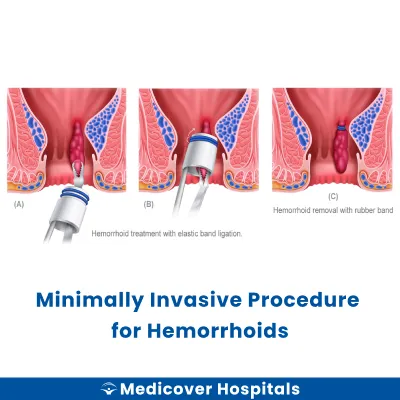
Minimally invasive procedures for hemorrhoids involve treating swollen veins in the lower rectum or anus. These veins, known as hemorrhoids, can cause discomfort, pain, and bleeding. The procedures aim to reduce or remove hemorrhoids with minimal tissue damage. Techniques like rubber band ligation, sclerotherapy, and infrared coagulation are commonly used. They are less invasive than traditional surgery and often result in quicker recovery.
This surgery is needed when hemorrhoids cause significant symptoms or complications. Conditions like chronic constipation or prolonged sitting can lead to hemorrhoids. If left untreated, they can worsen, leading to severe pain or bleeding. Modern surgical approaches include Doppler-guided hemorrhoidal artery ligation and stapled hemorrhoidopexy. These methods offer effective relief with minimal discomfort. Early intervention can prevent complications and improve quality of life.
Minimally Invasive Procedure for Hemorrhoids Doctors Near You
Find experienced general-surgeons for minimally invasive hemorrhoid procedures at Medicover Hospitals across India. Choose your city and book a consultation today for expert care and guidance.
Why Choose Medicover Hospitals for Minimally Invasive Procedure for Hemorrhoids?
Get a second opinion from trusted experts and makeconfident, informed decisions.
 Get Second Opinion
Complete Guide To Minimally Invasive Procedure For Hemorrhoids
Everything you need to know about the procedure, preparation, and recovery
Minimally Invasive Procedure for Hemorrhoids Procedure Indications
Doctors recommend minimally invasive procedures for hemorrhoids when symptoms persist despite conservative treatments. These procedures are considered when non-surgical methods fail to provide relief or when complications arise.
Persistent Pain and Discomfort
Patients often experience ongoing pain and discomfort in the anal region. This can be due to inflamed or prolapsed hemorrhoids. When pain persists despite dietary changes and topical treatments, surgery may be advised.
Chronic Bleeding
Frequent bleeding during bowel movements is a common symptom. If bleeding is significant and leads to anemia, doctors may suggest a minimally invasive procedure. This is especially true when other treatments like medications and lifestyle changes do not stop the bleeding.
Prolapsed Hemorrhoids
When hemorrhoids protrude from the anus and cannot be manually pushed back, it is termed prolapsed. Patients may report a bulging sensation and discomfort. If this condition does not improve with non-surgical methods, surgical intervention might be necessary.
Thrombosed Hemorrhoids
Thrombosed hemorrhoids occur when a blood clot forms, causing severe pain and swelling. On examination, doctors find a hard lump near the anus. If pain and swelling persist, minimally invasive surgery can provide relief.
Recurrent Hemorrhoids
Some patients experience repeated episodes of hemorrhoid symptoms despite treatment. This recurrence can lead to chronic discomfort and bleeding. Surgery becomes a consideration when conservative measures repeatedly fail.
How to Prepare for Minimally Invasive Procedure for Hemorrhoids?
Proper preparation is essential for a smooth procedure and recovery. It helps reduce risks and ensures the best outcomes.
- Medication Review: Stop NSAIDs, anticoagulants, and herbal supplements as advised by your doctor.
- Fasting: Begin fasting 6-8 hours before the procedure if general anaesthesia is used.
- Bowel Preparation: Follow any bowel prep instructions given by your healthcare provider.
- Clothing: Wear loose, comfortable clothing on the day of the procedure.
- Transportation: Arrange for someone to drive you home after the procedure.
- Medication List: Bring a list of your current medications, including dosages, to the hospital.
- Hydration: Stay well-hydrated the day before the procedure unless instructed otherwise.
- Rest: Ensure you get a good night's sleep before the procedure.
Minimally Invasive Procedure for Hemorrhoids Procedure (Step-by-Step)
This procedure is performed by general surgeons. It typically takes about 30 to 60 minutes. It is usually done under local or regional anaesthesia.
- Preparation: The patient is positioned comfortably. Local or regional anaesthesia is administered to numb the area.
- Access: A small incision, about 1-2 cm, is made near the hemorrhoid. This allows access to the affected area.
- Hemorrhoid Identification: The surgeon uses a proctoscope to view the hemorrhoid. This instrument helps in precise identification.
- Treatment: A harmonic scalpel or bipolar cautery is used to remove or shrink the hemorrhoid tissue. This minimizes bleeding and promotes faster healing.
- Closure: The incision is closed with sutures or left to heal naturally, depending on the technique used.
- Recovery: The patient is monitored for a short period. They may experience mild discomfort, which is managed with medication.
Who Performs Minimally Invasive Procedure for Hemorrhoids Procedure?
This procedure is performed by general surgeons. They have expertise in treating conditions of the digestive tract, including hemorrhoids. Their training ensures safe and effective management of the condition.
Recovery After Minimally Invasive Procedure for Hemorrhoids Procedure
Recovery from a minimally invasive procedure for hemorrhoids is generally quicker than traditional surgery. Patients can expect some discomfort, but it usually subsides within a few days. Following your doctor's advice is crucial for a smooth recovery.
Day 1-2:
- Rest at home and avoid strenuous activities.
- Consume a soft diet including curd, dal-rice, and soups to ease bowel movements.
- Stay hydrated with plenty of water.
- Take prescribed pain relief medication as needed.
Day 3-5:
- Gradually resume light activities, but avoid heavy lifting.
- Continue with a fibre-rich diet including khichdi and moong dal to prevent constipation.
- Maintain good hygiene around the surgical area.
Day 6-7:
- Most patients can return to work or school, depending on their comfort level.
- Introduce more solid foods gradually, but continue with fibre-rich meals.
- Engage in short walks to promote circulation.
Phase 2 (Week 2-4):
- Resume normal activities, but listen to your body and rest if needed.
- Continue a balanced diet to maintain regular bowel movements.
- Follow up with your doctor as advised for a check-up.
When to Seek Urgent Help:
- Severe pain not relieved by medication.
- Excessive bleeding or discharge from the surgical site.
- Fever or signs of infection.
- Difficulty in urination or bowel movements.
Benefits of Minimally Invasive Procedure for Hemorrhoids Procedure
Minimally invasive procedures for hemorrhoids offer several advantages over traditional surgery.
- Reduced Pain: Patients often experience less pain compared to conventional surgery.
- Quicker Recovery: Most individuals can return to normal activities sooner.
- Less Scarring: Smaller incisions lead to minimal scarring.
- Lower Risk of Infection: The risk of infection is generally reduced due to smaller wounds.
- Outpatient Procedure: Many minimally invasive techniques can be performed on an outpatient basis.
Risks and Complications of Minimally Invasive Procedure for Hemorrhoids Procedure
While generally safe, minimally invasive procedures for hemorrhoids carry some risks.
- Common: Bleeding may occur during or after the procedure.
- Common: Some patients may experience temporary discomfort or swelling.
- Rare: There is a small risk of infection despite the minimally invasive nature.
- Rare: Incomplete treatment may require additional procedures.
- Rare: Urinary retention can occur in some cases.
- Rare: Recurrence of hemorrhoids is possible, necessitating further treatment.
Cost of Minimally Invasive Procedure for Hemorrhoids Procedure
The cost for a minimally invasive procedure for hemorrhoids at Medicover Hospitals ranges from Rs. 4500 to Rs. 15800. The price varies depending on the ward category chosen, such as outpatient, day care, general, and private wards. We offer transparent pricing with support for insurance and TPA, including CGHS, ESI, and major TPAs. A cashless facility is also available for your convenience. Please contact the hospital for the latest insurance panel details as these may change periodically.
Frequently Asked Questions
1. How much does Minimally Invasive Procedure for Hemorrhoids cost at Medicover Hospitals?
The cost ranges from Rs. 4500 to Rs. 15800 across Medicover Hospitals. Pricing varies based on the type of care and room chosen.
2. Is Minimally Invasive Procedure for Hemorrhoids procedure covered under health insurance at Medicover?
It may be covered under CGHS, ESI, and major TPAs with cashless options. Please contact the hospital for current panel details.
3. Will I experience pain after hemorrhoid procedure?
Mild discomfort is common post-procedure, but severe pain is rare. Over-the-counter pain relievers can help manage any discomfort.
4. Can I sit comfortably after hemorrhoid procedure?
Sitting may be uncomfortable initially, but using a cushion can help. Most patients find sitting easier within a week.
5. What foods should I eat after hemorrhoid procedure?
Consume a high-fibre diet including dal-rice, khichdi, and curd. This helps prevent constipation and supports healing.
6. Will hemorrhoids recur after the procedure?
Recurrence is possible, but lifestyle changes can reduce risk. Maintaining a high-fibre diet and staying hydrated are crucial.
7. How soon can I return to work post-procedure?
Most patients resume work within a week, depending on job demands. Light activities are encouraged during recovery.
8. What is the least invasive treatment for hemorrhoids?
The least invasive treatments for hemorrhoids are non-surgical options like rubber band ligation, injections (sclerotherapy), and infrared treatment. These are quick, cause little pain, and you can go home the same day.
9. What is the newest procedure for hemorrhoids?
Newer treatments for piles include laser treatment, stapled surgery, and Doppler-guided procedures. These methods cause less pain and help you recover faster than traditional surgery.
10. Is piles surgery 100% successful?
No, piles surgery is not 100% successful, but it works well for most people. There is a small chance the problem can come back, especially if lifestyle habits are not improved.


