 Call
Call Patient Reports
Microwave Ablation of Liver Tumors Procedure Hospital with Trusted Surgical Care
Microwave Ablation of Liver Tumors at Medicover Hospitals is performed using a minimally invasive laparoscopic approach. Our team includes experts with qualifications like MD, DNB, and DM. This technique often results in smaller incisions and reduced recovery time, enhancing patient comfort and outcomes.
Expert Specialists
Yearly Treatments
Patient Satisfaction
What is Microwave Ablation of Liver Tumors?
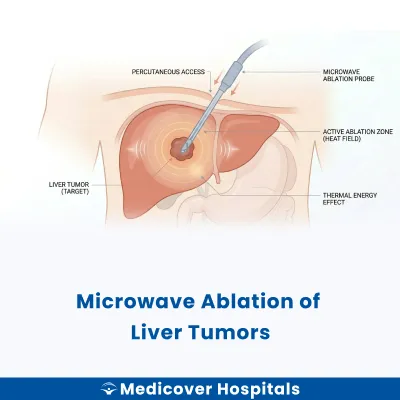
Microwave Ablation of Liver Tumors is a minimally invasive procedure used to treat liver tumors. The liver is a vital organ responsible for various functions, including detoxification and protein synthesis. In this procedure, microwave energy is used to generate heat, which destroys cancerous cells in the liver (hepatic tissue). This method targets and eliminates tumors while sparing healthy liver tissue.
This surgery is needed for patients with primary or metastatic liver cancer. It is often recommended when tumors are inoperable or when patients are not suitable for surgery. Untreated liver tumors can lead to liver failure and other complications. Modern surgical approaches for this procedure include laparoscopic and percutaneous techniques, which offer quicker recovery and fewer complications. Early intervention is crucial for better outcomes.
Microwave Ablation of Liver Tumors Doctors Near You
Explore expert interventional-radiology for microwave ablation of liver tumors at Medicover Hospitals across India. Choose your city and book a consultation to discuss your treatment options today.
Why Choose Medicover Hospitals for Microwave Ablation of Liver Tumors?
Get a second opinion from trusted experts and makeconfident, informed decisions.
 Get Second Opinion
Complete Guide To Microwave Ablation Of Liver Tumors
Everything you need to know about the procedure, preparation, and recovery
Microwave Ablation of Liver Tumors procedure Indications
Doctors recommend microwave ablation for patients with liver tumors when other treatments are not suitable. It is often chosen for those who cannot undergo surgery or have small, localized tumors.
Unresectable Liver Tumors
Patients may experience abdominal pain or jaundice. Imaging tests like CT or MRI show tumors that cannot be surgically removed. When surgery is not an option, microwave ablation offers a minimally invasive alternative.
Small Hepatocellular Carcinoma (HCC)
Symptoms include fatigue, weight loss, or abdominal swelling. Doctors find small HCCs through imaging studies. If the tumor is less than 3 cm and surgery is not feasible, microwave ablation is recommended.
Metastatic Liver Tumors
Patients may report pain or digestive issues. Scans reveal tumors spread from other body parts. When chemotherapy or surgery fails to control these, microwave ablation can target specific lesions.
Recurrent Liver Tumors
Symptoms like pain or liver dysfunction may return after initial treatment. Imaging confirms tumor recurrence. When previous treatments are exhausted, microwave ablation is a viable option.
Poor Surgical Candidates
Patients with underlying health issues may experience symptoms like weakness or liver pain. Tests show tumors, but surgery poses high risks. Microwave ablation is less invasive and suitable for such patients.
How to Prepare for Microwave Ablation of Liver Tumors?
Proper preparation is crucial for a successful microwave ablation of liver tumors. It helps reduce risks and ensures a smoother recovery.
- Medication Review: Stop NSAIDs, anticoagulants, and herbal supplements 7 days before the procedure. Consult your doctor for guidance.
- Fasting: Do not eat or drink for at least 6 hours before the procedure due to general anaesthesia requirements.
- Medical History: Bring a list of all medications you take, including dosages, to the hospital.
- Clothing: Wear loose, comfortable clothing on the day of the procedure for ease and comfort.
- Transport: Arrange for someone to drive you home after the procedure, as you may feel drowsy from the anaesthesia.
- Pre-Procedure Tests: Complete any blood tests or imaging studies as advised by your healthcare provider.
- Hydration: Ensure you are well-hydrated the day before, unless instructed otherwise by your doctor.
- Smoking and Alcohol: Avoid smoking and alcohol for at least 24 hours before the procedure to aid recovery.
Microwave Ablation of Liver Tumors procedure (Step-by-Step)
Overview: This procedure is performed by interventional radiology. It typically lasts 1 to 2 hours. General anaesthesia is used to ensure the patient is comfortable and pain-free.
- Preparation: The patient is positioned on the procedure table. Monitoring devices are attached to track vital signs. The skin over the liver is cleaned and sterilised.
- Imaging Guidance: Ultrasound or CT scan is used to locate the liver tumor. This ensures precise targeting of the tumor.
- Insertion of Microwave Antenna: A small incision, about 1-2 cm, is made in the skin. A trocar is used to guide the microwave antenna into the tumor.
- Ablation: The microwave antenna emits energy to heat and destroy the tumor cells. The patient remains under anaesthesia, feeling no discomfort during this stage.
- Monitoring: Real-time imaging ensures the tumor is adequately treated. Adjustments are made as needed to ensure effective ablation.
- Completion: The antenna is removed. The incision is closed with sutures or adhesive strips. A dressing is applied to protect the site.
- Recovery: The patient is moved to a recovery area. Vital signs are monitored as the anaesthesia wears off. Instructions are given for post-procedure care.
Who Performs Microwave Ablation of Liver Tumors procedure?
This procedure is performed by an interventional radiologist. These specialists are trained in using imaging techniques to guide minimally invasive procedures. They ensure precision in targeting and treating tumors.
Recovery After Microwave Ablation of Liver Tumors procedure
Recovery after microwave ablation of liver tumors varies for each person. Most patients experience mild discomfort, which gradually improves. It's important to follow your doctor's advice for a smooth recovery.
Day 1-2:
- Rest is crucial. Avoid strenuous activities.
- Expect some soreness at the site of the procedure.
- Stick to a light diet. Opt for easily digestible foods like curd, dal-rice, and soups.
Day 3-5:
- Gradually increase activity levels. Short walks can help.
- Continue with a soft diet. Include khichdi and moong dal for nutrition.
- Monitor the site for any signs of infection.
Day 6-7:
- Most patients can resume light work or school activities.
- Maintain a balanced diet. Incorporate more solid foods as tolerated.
- Avoid lifting heavy objects or vigorous exercise.
Phase 2 (Week 2-4):
- Gradual return to normal activities. Listen to your body.
- Continue a healthy diet. Include a variety of vegetables and fruits.
- Follow up with your doctor for a check-up.
When to Seek Urgent Help
- Fever or chills indicating possible infection.
- Severe abdominal pain or swelling.
- Persistent nausea or vomiting.
- Signs of jaundice, such as yellowing of the skin or eyes.
- Bleeding or discharge from the procedure site.
Benefits of Microwave Ablation of Liver Tumors procedure
Microwave ablation is a minimally invasive procedure used to treat liver tumors. It offers several advantages for patients.
- Minimally Invasive: This procedure requires only small incisions, leading to quicker recovery times.
- Shorter Hospital Stay: Patients often experience reduced hospitalisation compared to traditional surgery.
- Targeted Treatment: It allows precise targeting of tumors, sparing healthy liver tissue.
- Repeatable: The procedure can be repeated if new tumors develop, offering flexibility in treatment.
Risks and Complications of Microwave Ablation of Liver Tumors procedure
While generally safe, microwave ablation carries some risks and potential complications.
- Common: Pain or discomfort at the site of the procedure.
- Common: Fever or infection may occur post-procedure.
- Rare: Damage to surrounding organs or tissues.
- Rare: Bleeding or hematoma formation.
- Rare: Liver dysfunction or failure in some cases.
- Rare: Skin burns due to the heat generated during the procedure.
Cost of Microwave Ablation of Liver Tumors procedure
The cost of the Microwave Ablation of Liver Tumors procedure at Medicover Hospitals varies depending on the ward category. Prices range from Rs. 10,500 to Rs. 90,000. This variation ensures that patients can choose a suitable option based on their preferences and budget.
We offer transparent pricing and support for insurance and TPA services, including CGHS, ESI, and major TPAs. A cashless facility is also available for added convenience. Please contact the hospital for the latest insurance panel details as these may change periodically.
Frequently Asked Questions
1. How much does Microwave Ablation of Liver Tumors procedure cost at Medicover Hospitals?
The cost for Microwave Ablation of Liver Tumors at Medicover Hospitals ranges from Rs. 10,500 to Rs. 90,
2. Prices vary based on the facility and room type. 2. Is Microwave Ablation of Liver Tumors procedure covered under health insurance at Medicover?
Microwave Ablation of Liver Tumors may be covered by CGHS, ESI, and major TPAs with cashless options. Please contact the hospital for current panel details.
3. Will liver function be affected after the procedure?
Liver function may temporarily be affected post-procedure. Regular monitoring and follow-up with your doctor are essential for recovery.
4. Can I consume alcohol after Microwave Ablation?
Avoid alcohol for at least 4 weeks post-procedure to aid liver recovery. Consult your doctor before resuming alcohol consumption.
5. What foods should I eat after Microwave Ablation?
Consume a balanced diet including curd, dal-rice, and khichdi. These foods are gentle on the liver and aid in recovery.
6. Is there a risk of infection after the procedure?
There is a slight risk of infection post-procedure. Follow your doctor's advice on wound care and report any unusual symptoms immediately.
7. Will I experience pain after Microwave Ablation?
Some patients may experience mild pain or discomfort post-procedure. Pain management will be discussed with your healthcare provider.


