 Call
Call Patient Reports
Best Microvascular Decompression Surgery Hospital by Expert Neurosurgeons
Microvascular Decompression at Medicover Hospitals is performed using an open surgical approach by our experienced neurosurgeons with qualifications like MS, DNB, and MCh. This procedure effectively alleviates nerve compression, leading to reduced pain and discomfort. Patients often experience shorter hospital stays due to the precision of the surgery.
Expert Surgeons
Yearly Surgeries
Patient Satisfaction
What is Microvascular Decompression?
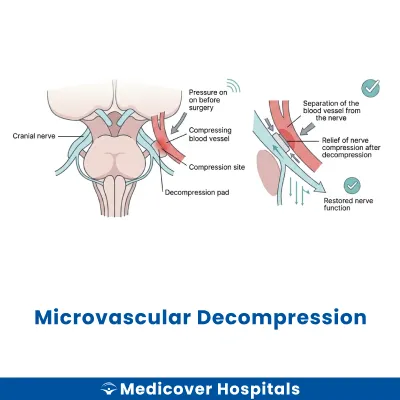
Microvascular Decompression (MVD) is a surgical procedure aimed at relieving abnormal compression of a cranial nerve. It often involves the trigeminal nerve, which is responsible for facial sensations. During the procedure, a small opening is made in the skull to access the nerve. The surgeon then places a cushioning material between the nerve and the blood vessel causing the compression.
This surgery is primarily needed for conditions like Trigeminal Neuralgia, which causes severe facial pain. If left untreated, the condition can lead to chronic pain and affect quality of life. Modern surgical approaches for MVD include minimally invasive techniques and the use of advanced imaging for precision. These methods help in reducing recovery time and improving outcomes.
Microvascular Decompression Doctors Near You
Discover skilled neurosurgeons for microvascular decompression at Medicover Hospitals across India. Choose your city and book a consultation to address your neurological concerns with expert care.
Why Choose Medicover Hospitals for Microvascular Decompression?
Get a second opinion from trusted experts and makeconfident, informed decisions.
 Get Second Opinion
Complete Guide To Microvascular Decompression
Everything you need to know about the procedure, preparation, and recovery
Microvascular Decompression Surgery Indications
Doctors recommend microvascular decompression surgery when blood vessels compress cranial nerves, causing severe symptoms. This procedure is often considered when medication and other treatments do not relieve the patient's condition.
Trigeminal Neuralgia
Patients experience sudden, severe facial pain, often triggered by simple actions like chewing or speaking. MRI scans may show blood vessels pressing on the trigeminal nerve. Surgery is considered when medication fails to control the pain.
Hemifacial Spasm
Involuntary twitching or spasms occur on one side of the face. These spasms can be visible and distressing. Imaging may reveal nerve compression by an artery. Surgery is suggested when botulinum toxin injections or medications do not provide relief.
Glossopharyngeal Neuralgia
Sharp, stabbing pain is felt in the throat, tongue, or ear. This pain can be triggered by swallowing or speaking. MRI might show vascular compression of the glossopharyngeal nerve. Surgery is considered when pain persists despite medication.
Refractory Tinnitus
Patients hear persistent ringing or noise in the ear, which can be linked to nerve compression. Audiological tests and imaging may indicate vascular involvement. Surgery is an option when other treatments do not alleviate the symptoms.
Persistent Vertigo
Severe dizziness or spinning sensations can occur due to nerve compression. Imaging studies may reveal compression of the vestibulocochlear nerve. Surgery is considered when vertigo is unresponsive to medications and lifestyle changes.
How to Prepare for Microvascular Decompression?
Proper preparation is crucial for a successful microvascular decompression surgery. It helps minimise risks and ensures a smoother recovery.
- Medication Review: Stop NSAIDs, anticoagulants, and herbal supplements at least 7 days before surgery.
- Fasting Guidelines: Fast for at least 8 hours before the procedure to ensure safety during anaesthesia.
- Pre-Surgery Tests: Complete all required blood tests, imaging, and other evaluations as advised by your doctor.
- Personal Items: Wear loose, comfortable clothing on the day of surgery for ease of changing and comfort.
- Transportation: Arrange for someone to drive you home post-surgery as you may feel groggy from anaesthesia.
- Medication List: Bring a list of all medications you are currently taking, including dosages, for the medical team.
- Pre-Op Instructions: Follow any specific instructions given by your healthcare provider, such as washing with antiseptic soap.
- Rest and Relaxation: Ensure you get adequate rest before the surgery to help your body prepare for recovery.
Microvascular Decompression Surgery (Step-by-Step)
Overview: This surgery is performed by neurosurgeons. It typically lasts 2-3 hours and is done under general anaesthesia.
- Preparation: The patient is placed under general anaesthesia. They are positioned to allow optimal access to the affected area.
- Incision: A small incision, about 2-3 cm, is made behind the ear. This allows access to the skull.
- Craniotomy: A small portion of the skull is removed using a drill. This exposes the area where the nerve and blood vessels are located.
- Exposure: The dura mater, a protective membrane, is carefully opened. The surgeon uses a microscope to view the nerve and surrounding vessels.
- Decompression: The surgeon identifies the blood vessel compressing the nerve. Using instruments like a micro-hook or bipolar cautery, the vessel is gently moved away. A small Teflon pad is placed between the nerve and vessel to prevent contact.
- Closure: The dura mater is closed. The bone flap is replaced and secured. The incision is then stitched or stapled.
- Recovery: The patient is moved to the recovery area. They are monitored as they wake from anaesthesia, experiencing some discomfort and swelling.
Who Performs Microvascular Decompression Surgery?
Microvascular decompression surgery is performed by neurosurgeons. These specialists are trained in surgeries involving the brain and nervous system. They use precise instruments to ensure the safety and effectiveness of the procedure.
Recovery After Microvascular Decompression Surgery
Recovery from microvascular decompression surgery involves gradual healing and adjustment. Patients can expect to stay in the hospital for a few days post-surgery. Rest and limited activity are crucial during the initial recovery period.
Day 1-3:
- Hospital stay for monitoring. Pain management and medications as prescribed.
- Start with a liquid diet. Gradually introduce soft foods like soups and khichdi.
- Minimal movement. Assistance needed for walking.
Day 4-7:
- Discharge from hospital if stable. Continue medications at home.
- Introduce soft, easily digestible foods like dal-rice, moong dal, and curd.
- Short, gentle walks around the house. Avoid strenuous activities.
Week 2-4:
- Gradual increase in activity. Light household tasks permitted.
- Continue with a balanced diet. Include fruits and vegetables.
- Resume work or school after consulting with your doctor, typically around week 3 or 4.
Month 2-3:
- Return to normal activities with caution. Avoid heavy lifting or high-impact sports.
- Regular follow-up appointments to monitor recovery progress.
When to Seek Urgent Help:
- Severe headache or neck stiffness.
- Persistent nausea or vomiting.
- Unusual swelling or redness at the incision site.
- Changes in vision or hearing.
- Any new neurological symptoms like weakness or numbness.
Benefits of Microvascular Decompression Surgery
Microvascular decompression (MVD) surgery is a procedure aimed at relieving nerve compression, often used to treat conditions like trigeminal neuralgia.
- Pain Relief: MVD can significantly reduce or eliminate chronic pain associated with nerve compression.
- Improved Quality of Life: Patients often experience a better quality of life post-surgery due to reduced pain.
- Long-term Solution: MVD offers a long-lasting solution compared to other treatments that may require repeated interventions.
- Preservation of Nerve Function: The procedure aims to relieve pressure without damaging the nerve, preserving its function.
Risks and Complications of Microvascular Decompression Surgery
While MVD surgery can be beneficial, it carries certain risks and potential complications.
- Common: Headache and nausea may occur post-surgery.
- Common: Temporary facial numbness can be experienced by some patients.
- Rare: Hearing loss may occur due to proximity to auditory nerves.
- Rare: Infection at the surgical site is a potential risk.
- Rare: Cerebrospinal fluid leakage can happen, requiring further treatment.
- Rare: Stroke or brain injury, though very uncommon, are serious risks.
Cost of Microvascular Decompression Surgery
The cost of Microvascular Decompression Surgery can vary starting from ₹2,50,000 - ₹6,00,000 based on factors such as the surgical approach, duration of hospital stay, room category, required diagnostics, and post-operative care.
At Medicover Hospitals, we ensure transparent pricing with support for insurance and TPA, including CGHS, ESI, and major TPAs. A cashless facility is also available for your convenience. Please contact the hospital for the latest insurance panel details as these may change periodically.
Frequently Asked Questions
1. How much does Microvascular Decompression surgery cost at Medicover Hospitals?
The cost of Microvascular Decompression surgery varies starting from ₹2,50,000 - ₹6,00,000 . Please contact Medicover Hospitals for detailed pricing information.
2. Is Microvascular Decompression surgery covered under health insurance at Medicover?
Microvascular Decompression surgery may be covered by insurance, including CGHS, ESI, and major TPAs. Please contact the hospital for current panel details.
3. Will I have facial numbness after surgery?
Facial numbness is a possible temporary side effect after Microvascular Decompression surgery. It usually improves as the healing process progresses.
4. Can I experience hearing loss post-surgery?
Hearing loss is a rare complication of Microvascular Decompression surgery. Discuss any concerns with your surgeon before the procedure.
5. What lifestyle changes are needed after surgery?
Post-surgery, avoid strenuous activities and manage stress to aid recovery. Follow your doctor's advice for a smooth healing process.
6. How soon can I return to work after surgery?
Most patients can return to work within 4-6 weeks after Microvascular Decompression surgery. Recovery time may vary depending on individual health conditions.
7. Will I need follow-up appointments?
Yes, follow-up appointments are crucial to monitor recovery after Microvascular Decompression surgery. Your doctor will schedule these based on your progress.


