 Call
Call Patient Reports
Micro Laryngeal Surgery Hospital Without Laser With Expert Ent Care
Micro Laryngeal Surgery without Laser at Medicover Hospitals is performed using an endoscopic approach by our skilled ENT specialists with qualifications like MS and DNB. This technique allows for precise treatment of vocal cord issues, often resulting in shorter hospital stays and reduced recovery time.
Expert Surgeons
Yearly Surgeries
Patient Satisfaction
What is Micro Laryngeal Surgery Without Laser?
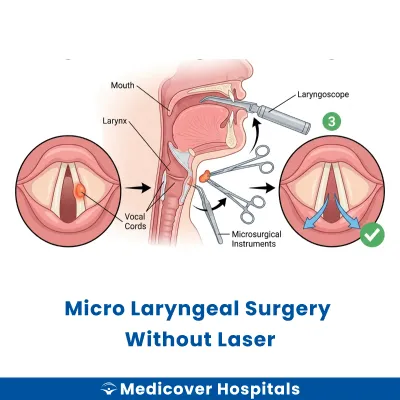
Micro Laryngeal Surgery without Laser is a surgical procedure focused on the larynx (voice box). It involves using specialized instruments to remove or repair abnormalities in the larynx. This surgery is performed under a microscope to ensure precision. Unlike laser surgery, it does not use laser technology for cutting or removing tissue.
This surgery is needed for conditions like vocal cord nodules, polyps, or cysts. These can cause voice changes or breathing difficulties. If left untreated, these conditions may lead to persistent hoarseness or airway obstruction. Modern surgical approaches include using micro-instruments and endoscopic techniques. These methods help in achieving effective results with minimal tissue damage.
Micro Laryngeal Surgery Without Laser Doctors Near You
Discover ENT specialists for micro laryngeal surgery without laser at Medicover Hospitals across India. Choose your city and book a consultation to address your voice and throat concerns today.
Why Choose Medicover Hospitals for Micro Laryngeal Surgery Without Laser?
Get a second opinion from trusted experts and makeconfident, informed decisions.
 Get Second Opinion
Complete Guide To Micro Laryngeal Surgery Without Laser
Everything you need to know about the procedure, preparation, and recovery
Micro Laryngeal Surgery without Laser procedure Indications
Doctors recommend Micro Laryngeal Surgery without Laser when non-invasive treatments are insufficient. This procedure is often chosen to address specific laryngeal issues that affect voice and breathing.
Vocal Cord Nodules
Patients may experience hoarseness and vocal fatigue. Examination reveals small, benign growths on the vocal cords. When voice therapy fails to resolve these nodules, surgery is considered.
Vocal Cord Polyps
Symptoms include a rough or breathy voice. Doctors find fluid-filled lesions on the vocal cords during laryngoscopy. Surgery is advised if polyps persist despite voice rest and therapy.
Recurrent Respiratory Papillomatosis
Patients suffer from chronic hoarseness and breathing difficulties. Examination shows wart-like growths in the airway. When these growths obstruct the airway or recur frequently, surgical intervention is needed.
Vocal Cord Cysts
Individuals may notice a change in voice quality. Laryngoscopic evaluation reveals cystic lesions on the vocal cords. Surgery is recommended if the cysts do not improve with conservative management.
Granulomas
Patients experience throat pain and voice changes. Examination identifies inflammatory masses on the vocal cords. When granulomas do not resolve with medication or voice therapy, surgery becomes necessary.
How to Prepare for Micro Laryngeal Surgery without Laser?
Proper preparation is crucial for a smooth Micro Laryngeal Surgery without Laser. It helps reduce complications and ensures a quicker recovery.
- Medication Review: Stop NSAIDs, anticoagulants, and herbal supplements 7-10 days before surgery. Consult your doctor for guidance.
- Fasting: Do not eat or drink anything for at least 6-8 hours before the surgery to ensure safety during anaesthesia.
- Smoking Cessation: Avoid smoking for at least 2 weeks before the procedure to promote better healing and reduce respiratory complications.
- Voice Rest: Minimise talking and avoid straining your voice a few days before surgery to reduce laryngeal stress.
- Clothing: Wear loose, comfortable clothing on the day of surgery to avoid pressure on the surgical area.
- Transport Arrangement: Arrange for someone to drive you home post-surgery as you may feel drowsy from anaesthesia.
- Medication List: Bring a list of all medications you are taking, including dosages, to inform the medical team.
- Hydration: Stay well-hydrated in the days leading up to the surgery, but avoid drinking on the day of the procedure.
Micro Laryngeal Surgery without Laser procedure (Step-by-Step)
Overview: This procedure is performed by an ENT specialist. It typically lasts between 30 to 60 minutes. General anaesthesia is used to ensure the patient is comfortable and pain-free.
- Preparation: The patient is positioned on the operating table. General anaesthesia is administered to induce sleep and prevent discomfort.
- Accessing the Larynx: A laryngoscope is gently inserted through the mouth to provide a clear view of the larynx. This instrument holds the throat open for the surgeon.
- Visualisation: A microscope is used to magnify the laryngeal structures. This helps the surgeon see small details clearly.
- Removal of Abnormalities: Using precise instruments like a curette or bipolar cautery, the surgeon carefully removes polyps, nodules, or other growths. No incisions are made on the skin.
- Hemostasis: Any bleeding is controlled using bipolar cautery. This ensures a clear surgical field and prevents complications.
- Final Inspection: The surgeon inspects the larynx to ensure all abnormalities are addressed. The laryngoscope is then removed gently.
- Recovery: The patient is moved to a recovery area. As the anaesthesia wears off, they may experience a sore throat or hoarseness, which usually resolves in a few days.
Who Performs Micro Laryngeal Surgery without Laser procedure?
An ENT (Ear, Nose, and Throat) specialist, also known as an otolaryngologist, performs this procedure. They have expertise in diagnosing and treating conditions affecting the larynx and surrounding areas.
Recovery After Micro Laryngeal Surgery without Laser procedure
Recovery from Micro Laryngeal Surgery without Laser involves rest and gradual return to normal activities. Expect some throat discomfort and voice changes initially. Follow your doctor's advice for a smooth recovery.
Day 1-3:
- Rest your voice completely. Avoid speaking or whispering.
- Stick to a soft diet. Include foods like curd, dal-rice, and khichdi.
- Stay hydrated with warm water and herbal teas.
Day 4-7:
- Gradually reintroduce soft speaking. Avoid shouting or singing.
- Continue with a soft diet. Add moong dal and soups to your meals.
- Light activities are allowed, but avoid strenuous exercises.
Day 8-14:
- Increase voice use gradually. Listen to your body and rest if needed.
- Resume normal diet, but avoid spicy or acidic foods.
- You may return to work or school if you feel comfortable.
Phase 3 (Week 3-4):
- Voice should be improving. Continue to avoid excessive vocal strain.
- Resume regular activities, but maintain vocal hygiene.
When to Seek Urgent Help
- Severe throat pain not relieved by medication.
- Difficulty breathing or swallowing.
- Persistent hoarseness or voice loss beyond expected recovery time.
- Fever or signs of infection.
If you experience any of these symptoms, contact your healthcare provider immediately.
Benefits of Micro Laryngeal Surgery without Laser procedure
This procedure is used to treat various laryngeal conditions with precision.
- Improved Voice Quality: Helps restore normal voice function by removing lesions or growths.
- Minimal Tissue Damage: Reduces the risk of damage to surrounding healthy tissues.
- Quick Recovery: Generally allows for a faster recovery compared to more invasive surgeries.
- Reduced Risk of Scarring: Less likely to cause scarring in the vocal cords.
Risks and Complications of Micro Laryngeal Surgery without Laser procedure
While generally safe, this procedure carries certain risks and potential complications.
- Common: Temporary hoarseness or voice changes may occur post-surgery.
- Common: Mild throat pain or discomfort is possible during recovery.
- Rare: Bleeding may occur, requiring additional medical attention.
- Rare: Infection at the surgical site, though uncommon, is a potential risk.
- Rare: Airway obstruction due to swelling or bleeding, necessitating immediate care.
- Rare: Permanent voice changes, though infrequent, can occur.
Cost of Micro Laryngeal Surgery without Laser procedure
The cost for Micro Laryngeal Surgery without Laser at Medicover Hospitals ranges from Rs. 15,000 to Rs. 33,000. The price varies depending on the ward category chosen. We offer transparent pricing to ensure clarity for our patients.
Insurance and TPA support, including CGHS, ESI, and major TPAs, are accepted. A cashless facility is available for added convenience. Please contact the hospital for the latest insurance panel details as these may change periodically.
Frequently Asked Questions
1. How much does Micro Laryngeal Surgery without Laser procedure cost at Medicover Hospitals?
The cost for Micro Laryngeal Surgery without Laser at Medicover Hospitals ranges from Rs. 15,000 to Rs. 33,000, depending on various factors.
2. Is Micro Laryngeal Surgery without Laser procedure covered under health insurance at Medicover?
This procedure is often covered by CGHS, ESI, and major TPAs, offering cashless options. Please contact the hospital for current panel details.
3. Will my voice change after the surgery?
Temporary hoarseness or voice changes may occur post-surgery. Most patients experience improvement within a few weeks.
4. Can I speak immediately after the surgery?
It's advisable to rest your voice for a few days post-surgery. This helps in reducing strain and promoting healing.
5. What foods should I avoid after surgery?
Avoid spicy foods and opt for soft, soothing meals like curd and dal-rice. These help in reducing throat irritation.
6. Will I need follow-up appointments?
Yes, follow-up appointments are crucial to monitor healing and voice recovery. Your doctor will schedule these as needed.
7. Can I return to work immediately after surgery?
Most patients can return to work within a week, depending on their job. It's important to avoid straining your voice during recovery.


