 Call
Call Patient Reports
Best Mediolateral Episiotomy Procedure Hospital With Advanced Care
At Medicover Hospitals, our skilled gynecologists, holding qualifications like MS, DNB, and FMAS, perform mediolateral episiotomies using the open surgical approach. This procedure helps manage childbirth-related complications effectively. Patients often experience reduced recovery time and shorter hospital stays with this method.
Expert Surgeons
Yearly Surgeries
Patient Satisfaction
What is Mediolateral Episiotomy?
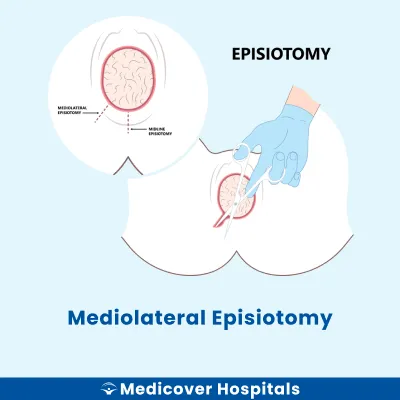
A mediolateral episiotomy is a surgical incision made in the perineum, which is the area between the vaginal opening and the anus. This procedure is performed during childbirth to enlarge the vaginal opening and facilitate the delivery of the baby. The incision is made at an angle from the midline of the perineum, extending laterally to avoid the anal sphincter.
This surgery is often needed when there is a risk of severe tearing during childbirth. It is also considered when the baby is in distress or if forceps or vacuum delivery is required. If left untreated, severe tearing can lead to complications such as incontinence or infection. Modern surgical approaches for mediolateral episiotomy focus on precise incision and careful suturing to promote healing and reduce discomfort.
Mediolateral Episiotomy Doctors Near You
Find skilled gynecologists for mediolateral episiotomy at Medicover Hospitals across India. Choose your city and book a consultation to discuss your needs and treatment options today.
Why Choose Medicover Hospitals for Mediolateral Episiotomy?
Get a second opinion from trusted experts and makeconfident, informed decisions.
 Get Second Opinion
Complete Guide To Mediolateral Episiotomy
Everything you need to know about the procedure, preparation, and recovery
Mediolateral Episiotomy procedure Indications
Doctors may recommend a mediolateral episiotomy during childbirth to prevent severe perineal tears. This procedure is often considered when specific conditions arise during labour that could complicate delivery.
Fetal Distress
When a baby shows signs of distress, such as abnormal heart rate patterns, quick delivery is crucial. If the baby's head is not progressing, a mediolateral episiotomy can help expedite delivery.
Shoulder Dystocia
In cases where the baby's shoulder gets stuck after the head is delivered, the mother may experience prolonged labour. A mediolateral episiotomy can create more space to assist in delivering the baby safely.
Instrumental Delivery
When forceps or a vacuum are needed, the mother might feel intense pressure and pain. If the instruments cannot be used effectively due to limited space, a mediolateral episiotomy may be recommended.
Prolonged Second Stage of Labour
If labour stalls and the mother is exhausted, she may struggle to push effectively. Doctors might find that the baby's head is not descending, prompting the need for an episiotomy to facilitate delivery.
Previous Perineal Scarring
Women with scars from previous deliveries may experience tightness and pain. During examination, doctors may notice reduced elasticity, making an episiotomy necessary to prevent further tearing.
How to Prepare for Mediolateral Episiotomy?
Proper preparation for a mediolateral episiotomy can help ensure a smoother procedure and recovery. Understanding the steps involved can ease anxiety and improve outcomes.
- Medication Review: Stop NSAIDs, anticoagulants, and herbal supplements as advised by your doctor to reduce bleeding risk.
- Fasting Guidelines: Follow the fasting instructions given by your healthcare provider, typically 6-8 hours before the procedure if general anaesthesia is used.
- Pelvic Floor Exercises: Engage in pelvic floor exercises as recommended to strengthen muscles and aid recovery.
- Clothing Choice: Wear loose, comfortable clothing on the day of the procedure for ease and comfort.
- Transportation Plan: Arrange for someone to drive you home post-procedure, as you may not be able to drive yourself.
- Medication List: Bring a list of all medications you are currently taking, including dosages, for your healthcare team.
- Personal Items: Pack essential items like sanitary pads and comfortable underwear for post-procedure comfort.
- Hydration: Stay well-hydrated before the fasting period to maintain good hydration levels.
Mediolateral Episiotomy procedure (Step-by-Step)
A mediolateral episiotomy is performed by gynecology doctors during childbirth. It typically lasts a few minutes and is done under local anaesthesia to numb the area.
- Preparation: The patient is positioned comfortably, usually in a lithotomy position. The area is cleaned and sterilized to prevent infection.
- Anaesthesia Administration: Local anaesthesia is injected into the perineal area. The patient may feel a slight sting or pressure as the anaesthetic is administered.
- Incision: Using surgical scissors, a 3-4 cm incision is made at a 45-degree angle from the vaginal opening towards the thigh. The patient should not feel pain but might experience some pressure.
- Delivery Assistance: The incision allows more space for the baby to pass through the birth canal, reducing the risk of tearing.
- Inspection and Repair: After delivery, the incision is inspected for any further tears. The gynecologist uses sutures to stitch the incision, ensuring proper healing. The patient might feel some tugging but no pain due to the anaesthesia.
- Post-Procedure Care: The area is cleaned and monitored for any signs of infection or excessive bleeding. Pain relief medications may be provided as needed.
Who Performs Mediolateral Episiotomy procedure?
A mediolateral episiotomy is performed by gynecologists who specialize in childbirth and women's reproductive health. They are trained to ensure the procedure is done safely and effectively. Please contact the hospital for current details as insurance panels may change.
Recovery After Mediolateral Episiotomy procedure
Recovery from a mediolateral episiotomy involves managing discomfort and ensuring proper healing. It is essential to follow your doctor's advice and take care of the incision site to prevent complications.
Day 1-3:
- Expect some pain and swelling. Use prescribed pain relief and apply cold packs.
- Rest as much as possible. Avoid sitting for long periods.
- Consume soft, easily digestible foods like curd, dal-rice, and soups to prevent constipation.
Day 4-7:
- Pain should gradually decrease. Continue using pain relief as needed.
- Maintain hygiene by gently cleaning the area with warm water.
- Include fibre-rich foods like khichdi and moong dal to aid digestion.
Day 8-14:
- Swelling and discomfort should significantly reduce.
- Start light activities but avoid heavy lifting or strenuous exercise.
- Consider returning to work or school if you feel comfortable, but consult your doctor first.
Phase 3-6 Weeks:
- Most women feel much better by this time. Resume normal activities gradually.
- Continue a balanced diet to support healing.
- Engage in pelvic floor exercises if advised by your doctor.
When to Seek Urgent Help
- Severe pain or swelling not relieved by medication.
- Foul-smelling discharge or excessive bleeding from the incision site.
- Fever or signs of infection.
Benefits of Mediolateral Episiotomy procedure
A mediolateral episiotomy is performed to aid childbirth and reduce complications during delivery.
- Reduced Tearing: Helps prevent severe perineal tears during childbirth.
- Easier Delivery: Facilitates the delivery process, especially in complicated births.
- Minimised Trauma: Reduces the risk of trauma to the baby during delivery.
- Better Healing: Allows for more controlled and potentially quicker healing compared to natural tears.
Risks and Complications of Mediolateral Episiotomy procedure
While generally safe, a mediolateral episiotomy may involve certain risks and complications.
- Common: Pain and discomfort at the incision site during recovery.
- Common: Swelling and bruising around the incision area.
- Rare: Infection at the incision site, requiring medical attention.
- Rare: Extended healing time due to complications in the incision.
- Rare: Scar tissue formation, which may cause discomfort during future deliveries.
- Rare: Difficulty in resuming normal activities due to pain or discomfort.
Cost of Mediolateral Episiotomy procedure
The cost of a Mediolateral Episiotomy procedure at Medicover Hospitals varies depending on the ward category. Prices range from Rs. 50000 to Rs. 207000 across different branches. Our pricing is transparent, and we offer support for insurance and TPA services, including CGHS, ESI, and major TPAs. Cashless facilities are available to ease your financial transactions. Please contact the hospital for the latest insurance panel details as these may change periodically.
Frequently Asked Questions
1. How much does Mediolateral Episiotomy cost?
The cost of a Mediolateral Episiotomy procedure at Medicover Hospitals ranges from Rs. 50000 to Rs. 207000, depending on the care level.
2. Is Mediolateral Episiotomy covered under insurance?
Mediolateral Episiotomy may be covered under CGHS, ESI, and major TPAs with cashless options. Please contact the hospital for current panel details.
3. Will I have difficulty sitting post-episiotomy?
Yes, sitting may be uncomfortable after a mediolateral episiotomy. Using a cushion or sitting on soft surfaces can help ease discomfort.
4. Can I resume exercise after episiotomy?
Light exercises can usually be resumed after 6 weeks post-episiotomy. Consult your doctor for personalized advice based on your recovery.
5. Is there a risk of infection after episiotomy?
Yes, there is a risk of infection at the episiotomy site. Keeping the area clean and dry is crucial to prevent complications.
6. Will I experience pain during urination?
Some women may experience discomfort during urination after an episiotomy. Pouring warm water over the area while urinating can help reduce pain.
7. Can I eat spicy food after episiotomy?
It's advisable to avoid spicy food initially after an episiotomy. Opt for bland foods like curd, dal-rice, and khichdi to aid recovery.
8. What muscles are cut during a mediolateral episiotomy?
A mediolateral episiotomy involves cutting through the skin, vaginal wall, and perineal muscles, mainly the bulbospongiosus and transverse perineal muscles. The incision is angled to reduce the risk of injury to the anal sphincter.
9. What are the disadvantages of mediolateral episiotomy?
It can cause more pain, bleeding, and discomfort compared to a natural tear. Healing may take longer, and there is a risk of infection or scarring.


