 Call
Call Patient Reports
Best Maxillary Fracture Repair or Reduction and Fixation of Maxilla Surgery Hospital
At Medicover Hospitals, our neurosurgeons, holding qualifications like MS and MCh, perform open surgical approaches for maxillary fracture repair or reduction and fixation of the maxilla. This procedure ensures precise alignment and fixation, often resulting in reduced recovery time and improved functional outcomes.
Expert Surgeons
Yearly Surgeries
Patient Satisfaction
What is Maxillary Fracture Repair or Reduction and Fixation of Maxilla?
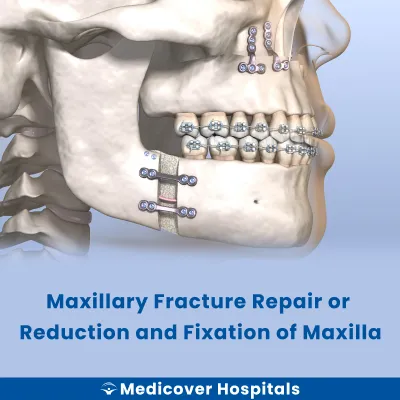
Maxillary Fracture Repair, or Reduction and Fixation of Maxilla, is a surgical procedure to treat fractures in the maxilla (upper jawbone). This surgery involves realigning the fractured bone and securing it with plates or screws to ensure proper healing. The maxilla plays a crucial role in facial structure and function, including chewing and speaking.
This surgery is needed when the maxilla is fractured due to trauma, accidents, or sports injuries. If left untreated, it can lead to misalignment, difficulty in chewing, and facial deformity. Modern surgical approaches include open reduction and internal fixation (ORIF) and minimally invasive techniques. These methods help restore the normal function and appearance of the jaw. Early intervention is crucial for optimal recovery.
Maxillary Fracture Repair or Reduction and Fixation of Maxilla Doctors Near You
Discover Plastic surgeons for maxillary fracture repair at Medicover Hospitals across India. Choose your city and book a consultation to explore effective treatment options tailored to your needs.
Why Choose Medicover Hospitals for Maxillary Fracture Repair or Reduction and Fixation of Maxilla?
Get a second opinion from trusted experts and makeconfident, informed decisions.
 Get Second Opinion
Complete Guide To Maxillary Fracture Repair Or Reduction And Fixation Of Maxilla
Everything you need to know about the procedure, preparation, and recovery
Maxillary Fracture Repair or Reduction and Fixation of Maxilla Surgery Indications
Doctors recommend maxillary fracture repair when the upper jaw is fractured, affecting facial structure and function. This surgery helps restore normal appearance and function when non-surgical methods are insufficient.
Severe Facial Trauma
Patients may experience intense pain, swelling, and bruising around the face. Doctors find misalignment of the jaw and facial asymmetry on examination. When these symptoms do not improve with conservative treatment, surgery is necessary.
Difficulty Breathing
Some patients have trouble breathing due to nasal obstruction from a displaced maxilla. Imaging may reveal fractures affecting the nasal passages. If breathing issues persist despite non-surgical interventions, surgical repair is advised.
Malocclusion
Patients often report difficulty chewing or biting due to misaligned teeth. Dental examinations show improper bite alignment. When orthodontic methods fail to correct this, surgery becomes essential.
Persistent Pain
Chronic pain in the facial region can occur after a maxillary fracture. Doctors may find no improvement with pain management strategies. Surgery is considered when pain remains unmanageable.
Facial Deformity
Visible deformity or asymmetry can distress patients. Clinical assessments and imaging confirm structural abnormalities. Surgery is recommended when cosmetic concerns cannot be addressed through non-invasive means.
Nasal Bleeding
Frequent nosebleeds may occur due to maxillary fractures. Examination and imaging show fractures affecting blood vessels. When bleeding does not resolve with conservative care, surgical intervention is needed.
How to Prepare for Maxillary Fracture Repair or Reduction and Fixation of Maxilla?
Proper preparation is crucial for a successful maxillary fracture repair. It ensures safety and optimizes recovery. Follow these steps to get ready for the procedure.
- Medication Review: Stop NSAIDs, anticoagulants, and herbal supplements 7 days before surgery. Consult your doctor for guidance.
- Fasting: Do not eat or drink anything for at least 8 hours before the procedure. This is essential for general anaesthesia.
- Nasal Care: Use prescribed nasal sprays to reduce congestion and improve breathing. Follow your doctor's instructions.
- Clothing: Wear loose, comfortable clothing on the day of surgery. It helps with easy movement post-surgery.
- Transportation: Arrange for someone to drive you home after the procedure. Anaesthesia effects can impair your ability to drive.
- Medication List: Bring a list of all medications you take, including dosages. This helps the medical team manage your care effectively.
- Smoking and Alcohol: Avoid smoking and alcohol at least 24 hours before surgery. It aids in better healing and reduces complications.
- Rest Well: Ensure you get a good night's sleep before the surgery. It helps your body cope better with the procedure.
Maxillary Fracture Repair or Reduction and Fixation of Maxilla Surgery (Step-by-Step)
This procedure is performed by Plastic surgeons & maxillofacial surgeons. It typically lasts 2-4 hours and is done under general anaesthesia.
- Preparation: The patient is given general anaesthesia. Vital signs are monitored. The surgical area is sterilised.
- Incision: A small incision, usually 1-2 cm, is made inside the mouth to access the maxilla. This minimises visible scarring.
- Reduction: The fractured maxilla is carefully realigned using instruments like bone-holding forceps. This restores the normal anatomy.
- Fixation: Plates and screws are used to stabilise the bones. A drill and screwdriver are used for precise placement.
- Closure: The incision is closed with sutures. Dissolvable stitches are often used inside the mouth.
- Recovery: The patient is moved to recovery. They are monitored as they wake from anaesthesia. Pain management is provided.
- Post-Operative Care: Instructions are given for oral hygiene and diet. Follow-up appointments are scheduled.
Who Performs Maxillary Fracture Repair or Reduction and Fixation of Maxilla Surgery?
This surgery is performed by oral and maxillofacial and Plastic surgeons. They are specialists in treating facial injuries and conditions. Their expertise ensures proper alignment and healing of facial bones.
Recovery After Maxillary Fracture Repair or Reduction and Fixation of Maxilla Surgery
Recovery from maxillary fracture repair involves gradual healing and adjustment. Patients can expect some swelling and discomfort initially. Following the surgeon's advice is crucial for a smooth recovery.
Day 1-3:
- Rest is essential. Keep the head elevated to reduce swelling.
- Apply cold compresses to the affected area as advised.
- Stick to a liquid or soft diet. Include foods like curd, dal-rice, and soups.
Day 4-7:
- Swelling and bruising should begin to decrease.
- Continue with a soft diet. Try khichdi, moong dal, and mashed vegetables.
- Avoid strenuous activities and heavy lifting.
Week 2-4:
- Gradual return to normal activities. Avoid contact sports.
- Introduce more solid foods as tolerated, but avoid hard or crunchy items.
- Most patients can return to work or school, depending on comfort and job demands.
Week 4-6:
- Most swelling should have subsided.
- Resume regular diet, but continue to avoid very hard foods.
- Discuss with your doctor about resuming sports or heavy physical activities.
When to Seek Urgent Help
- Severe pain not relieved by medication.
- Persistent or increasing swelling.
- Fever or signs of infection.
- Difficulty breathing or swallowing.
Benefits of Maxillary Fracture Repair or Reduction and Fixation of Maxilla Surgery
This surgery aims to restore the normal function and appearance of the maxilla after a fracture.
- Improved Functionality: Restores the ability to chew and speak properly.
- Enhanced Aesthetics: Helps in regaining facial symmetry and appearance.
- Pain Relief: Reduces pain associated with the fracture.
- Prevention of Complications: Minimises the risk of infection and improper healing.
Risks and Complications of Maxillary Fracture Repair or Reduction and Fixation of Maxilla Surgery
While generally safe, this surgery carries certain risks and potential complications.
- Common: Swelling and bruising around the surgical area.
- Common: Temporary numbness or altered sensation in the face.
- Rare: Infection at the surgical site.
- Rare: Bleeding or hematoma formation.
- Rare: Malocclusion or misalignment of teeth.
- Rare: Non-union or delayed healing of the fracture.
Cost of Maxillary Fracture Repair or Reduction and Fixation of Maxilla Surgery
The cost of Maxillary Fracture Repair or Reduction and Fixation of Maxilla Surgery can vary Rs.100000 to Rs.400000 based on the surgical approach, duration of hospital stay, room category, diagnostic tests, and post-operative care required.
At Medicover Hospitals, we ensure transparent pricing. We offer insurance and TPA support, accepting CGHS, ESI, and major TPAs. Cashless facility is available for your convenience. Please contact the hospital for the latest insurance panel details as these may change periodically.
Frequently Asked Questions
1. How much does Maxillary Fracture Repair cost?
The cost varies Rs.100000 to Rs.400000 based on individual cases. Please contact Medicover Hospitals for detailed pricing information.
2. Is Maxillary Fracture Repair covered under insurance?
Many insurance plans, including CGHS and ESI, may cover this surgery. Please contact the hospital for current panel details.
3. Will my facial appearance change after surgery?
Surgery aims to restore facial structure and function. Temporary swelling may occur but typically subsides within weeks.
4. Can I eat solid food immediately after surgery?
Soft foods like curd, dal-rice, and khichdi are recommended initially. Solid foods can usually be resumed after a week, as advised by your doctor.
5. Will I have difficulty breathing post-surgery?
Breathing issues are uncommon but possible due to swelling. Any persistent difficulty should be reported to your healthcare provider.
6. How soon can I return to normal activities?
Most patients can resume light activities within two weeks. Strenuous activities should be avoided for at least six weeks post-surgery.
7. Are there risks of infection after maxillary surgery?
Infections are rare but possible. Follow post-operative care instructions carefully to minimize risk.


