 Call
Call Patient Reports
Best Mass Excision of the Hand and Wrist Surgery Hospital
Mass excision of the hand and wrist at Medicover Hospitals is performed using open surgical techniques by our skilled orthopedic surgeons with qualifications such as MS and DNB. This approach ensures precise removal of masses, leading to shorter hospital stays and reduced recovery times for patients.
Expert Surgeons
Yearly Surgeries
Patient Satisfaction
What is Mass Excision of the Hand and Wrist?
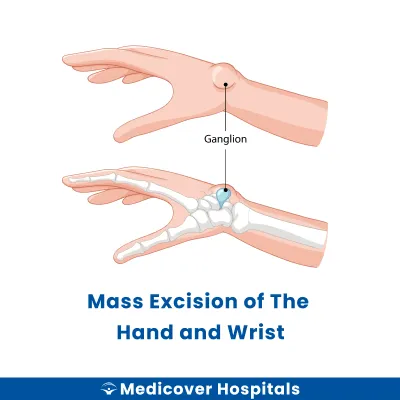
Mass Excision of the Hand and Wrist is a surgical procedure to remove abnormal growths (masses) from the hand or wrist. These masses can be benign (non-cancerous) or malignant (cancerous). The surgery involves careful removal of the mass while preserving surrounding tissues. It is performed on the hand and wrist, which are complex structures with bones, muscles, and nerves.
This surgery is needed when a mass causes pain, restricts movement, or has the potential to be cancerous. Conditions like ganglion cysts, lipomas, or tumors may require excision. If left untreated, these masses can lead to discomfort, functional impairment, or spread of malignancy. Modern surgical approaches include minimally invasive techniques and open surgery, depending on the mass's size and location.
Mass Excision of the Hand and Wrist Doctors Near You
Discover skilled orthopedic surgeons for mass excision of the hand and wrist at Medicover Hospitals across India. Choose your city and book a consultation to address your healthcare needs today.
Why Choose Medicover Hospitals for Mass Excision of the Hand and Wrist?
Get a second opinion from trusted experts and makeconfident, informed decisions.
 Get Second Opinion
Complete Guide To Mass Excision Of The Hand And Wrist
Everything you need to know about the procedure, preparation, and recovery
Mass Excision of the Hand and Wrist Surgery Indications
Doctors recommend mass excision of the hand and wrist when non-surgical treatments fail to address growths causing discomfort or functional issues. This procedure is often suggested to alleviate symptoms and prevent further complications.
Persistent Pain and Swelling
Patients may experience ongoing pain and noticeable swelling in the hand or wrist. Imaging tests like X-rays or MRIs often reveal a mass. When pain management and anti-inflammatory medications do not provide relief, surgery may be necessary.
Restricted Movement
Difficulty in moving fingers or the wrist can occur due to a mass pressing on tendons or joints. Physical examinations may show limited range of motion. If physiotherapy and other treatments do not improve mobility, excision is considered.
Nerve Compression Symptoms
Numbness, tingling, or weakness in the hand can indicate a mass compressing a nerve. Electromyography (EMG) tests may confirm nerve involvement. Surgery is advised when symptoms persist despite conservative measures.
Visible Lumps
Patients might notice a visible lump on the hand or wrist. Ultrasound or MRI can confirm its presence and size. If the lump grows or becomes painful, surgical removal is often recommended.
Infection or Ulceration
Some masses may lead to skin breakdown or infection, causing redness and pus. Clinical examination and lab tests can identify infection. When antibiotics and wound care fail, excision may be required.
Please contact the hospital for current details as insurance panels may change.
How to Prepare for Mass Excision of the Hand and Wrist?
Proper preparation is crucial for a successful mass excision of the hand and wrist. It helps minimise risks and ensures a smoother recovery.
- Medication Review: Stop NSAIDs, anticoagulants, and herbal supplements as advised by your doctor.
- Fasting Guidelines: Fast for at least 6-8 hours before the procedure if general anaesthesia is used.
- Pre-Surgery Hygiene: Clean the hand and wrist area thoroughly the night before surgery.
- Comfortable Clothing: Wear loose, easy-to-remove clothing on the day of the surgery.
- Transportation: Arrange for someone to drive you home post-surgery, as you may feel drowsy.
- Medication List: Bring a list of all medications you are currently taking, including dosages.
- Pre-Surgery Consultation: Discuss any allergies or previous reactions to anaesthesia with your surgeon.
- Rest and Relaxation: Ensure you get a good night's sleep before the surgery day.
Mass Excision of the Hand and Wrist Surgery (Step-by-Step)
This procedure is performed by orthopaedic surgeons. It typically lasts between 1 to 2 hours. Anaesthesia can be general or regional, depending on the case.
- Preparation: The patient is positioned comfortably. Anaesthesia is administered to ensure no pain during the procedure.
- Incision: A small incision, usually 1-2 cm, is made over the mass. The surgeon uses a scalpel for precision.
- Exposure: The surrounding tissues are carefully moved aside using retractors to expose the mass.
- Excision: The mass is carefully separated from surrounding tissues using a curette or harmonic scalpel. The surgeon ensures complete removal to prevent recurrence.
- Closure: The incision is closed with sutures. Bipolar cautery may be used to control any bleeding.
- Dressing: A sterile dressing is applied to protect the incision site and promote healing.
- Recovery: The patient is moved to a recovery area. They are monitored as the anaesthesia wears off. Pain management is provided if needed.
Who Performs Mass Excision of the Hand and Wrist Surgery?
This surgery is performed by orthopaedic surgeons. They specialise in conditions affecting bones, joints, and muscles. Their expertise ensures safe and effective removal of masses in the hand and wrist.
Recovery After Mass Excision of the Hand and Wrist Surgery
Recovery from mass excision of the hand and wrist surgery involves rest, gradual rehabilitation, and following medical advice. Expect some swelling and discomfort initially, which will gradually improve.
Day 1-3:
- Rest the hand and wrist. Keep the area elevated to reduce swelling.
- Apply ice packs as advised by your doctor.
- Take prescribed medications for pain relief.
- Stick to a soft diet. Include foods like curd, dal-rice, and soups.
Day 4-7:
- Begin gentle movements as advised by your physiotherapist.
- Continue with a nutritious diet. Add moong dal and khichdi for protein and energy.
- Avoid using the affected hand for heavy tasks.
Week 2-4:
- Gradually increase hand movements and exercises.
- Resume light activities, but avoid lifting heavy objects.
- Return to work or school if your job or studies do not require strenuous hand use.
Phase 2 (1-3 Months):
- Continue physiotherapy to regain strength and flexibility.
- Slowly reintroduce regular activities as comfort allows.
- Monitor for any unusual symptoms and maintain follow-up appointments.
When to Seek Urgent Help
- Severe pain not relieved by medication.
- Excessive swelling or redness around the incision site.
- Fever or chills indicating possible infection.
- Numbness or loss of movement in the fingers.
Benefits of Mass Excision of the Hand and Wrist Surgery
Mass excision of the hand and wrist can alleviate symptoms and improve function.
- Pain Relief: Reduces discomfort caused by the mass.
- Improved Mobility: Enhances hand and wrist movement.
- Cosmetic Improvement: Removes visible lumps or bumps.
- Prevention of Complications: Stops potential growth-related issues.
Risks and Complications of Mass Excision of the Hand and Wrist Surgery
While generally safe, mass excision surgery carries some risks.
- Infection (Common): Risk of infection at the surgical site.
- Bleeding (Common): Possible bleeding during or after surgery.
- Nerve Damage (Rare): Potential injury to nearby nerves.
- Scarring (Common): Formation of scar tissue at the incision site.
- Recurrence (Rare): The mass may return after removal.
- Stiffness (Common): Temporary stiffness in the hand or wrist.
Cost of Mass Excision of the Hand and Wrist Surgery
The cost for Mass Excision of the Hand and Wrist Surgery at Medicover Hospitals ranges from Rs.1650 to Rs.11500. The price varies depending on the ward category chosen, such as outpatient, day care, or suite options. We offer transparent pricing to ensure clarity for our patients.
Insurance and TPA support is available, with acceptance of CGHS, ESI, and major TPAs. A cashless facility is also offered for convenience. Please contact the hospital for the latest insurance panel details as these may change periodically.
Frequently Asked Questions
1. How much does Mass Excision of the Hand and Wrist surgery cost at Medicover Hospitals?
The cost ranges from Rs. 1650 to Rs. 11500 across Medicover Hospitals, depending on the type of excision and room choice.
2. Is Mass Excision of the Hand and Wrist surgery covered under health insurance at Medicover?
Yes, it is often covered by CGHS, ESI, and major TPAs with cashless options. Please contact the hospital for current panel details.
3. Will I regain full hand function after surgery?
Full hand function recovery varies per individual. Physiotherapy may be needed to regain strength and mobility over time.
4. Can I drive immediately after hand mass excision?
Driving is not recommended immediately post-surgery. Wait until your doctor confirms safe hand movement, usually after a few weeks.
5. Will I need physiotherapy after hand surgery?
Physiotherapy is often recommended to restore hand strength and flexibility. It aids in quicker recovery and prevents stiffness.
6. Can I lift weights after hand mass excision?
Avoid lifting heavy weights until your doctor advises. Generally, light activities can resume after a few weeks post-surgery.
7. What diet should I follow after hand surgery?
Consume a balanced diet with foods like curd, dal-rice, and khichdi. These promote healing and provide necessary nutrients.
8. Is wrist surgery a major operation?
Wrist surgery can be minor or major depending on the condition, such as fracture repair or ligament reconstruction. Most procedures are considered moderately invasive and are commonly performed with good outcomes.
9. How many days to recover from wrist surgery?
Initial recovery usually takes about 2–6 weeks, depending on the type of surgery. Full recovery, including strength and movement, may take a few months.


