 Call
Call Patient Reports
Manual Removal of Placenta under GA Hospital with Expert Obstetric Care
At Medicover Hospitals, the manual removal of placenta under general anaesthesia is performed using the open surgical approach. Our team of gynecologists, with qualifications like MS, DNB, and FMAS, ensures precise care. This method often results in reduced blood loss and a shorter hospital stay.
Expert Surgeons
Yearly Surgeries
Patient Satisfaction
What is Manual Removal of Placenta Under GA?
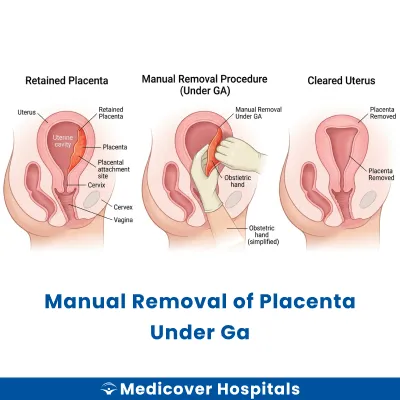
Manual Removal of Placenta under GA (General Anaesthesia) is a procedure to extract the placenta from the uterus after childbirth. The placenta is an organ that develops in the uterus during pregnancy, providing oxygen and nutrients to the growing baby. During this procedure, a healthcare provider manually removes the placenta when it does not detach naturally.
This surgery is needed when the placenta fails to separate from the uterine wall, a condition known as retained placenta. If untreated, it can lead to severe bleeding or infection. Modern surgical approaches include manual extraction under sterile conditions, often guided by ultrasound for precision. This ensures the complete removal of the placenta, reducing complications.
Manual Removal of Placenta Under GA Doctors Near You
Find expert gynecologists for manual placenta removal under general anaesthesia at Medicover Hospitals across India. Choose your city and book a consultation to ensure timely medical care.
Why Choose Medicover Hospitals for Manual Removal of Placenta Under GA?
Get a second opinion from trusted experts and makeconfident, informed decisions.
 Get Second Opinion
Complete Guide To Manual Removal Of Placenta Under Ga
Everything you need to know about the procedure, preparation, and recovery
Manual Removal of Placenta under GA Surgery Indications
Doctors recommend manual removal of the placenta under general anaesthesia when the placenta does not detach naturally after childbirth. This procedure is crucial to prevent complications such as severe bleeding or infection.
Retained Placenta
Patients may experience heavy bleeding and abdominal pain after delivery. On examination, the placenta is found to be partially or completely retained in the uterus. When medications and gentle traction fail to expel the placenta, surgery is necessary.
Placenta Accreta
Severe bleeding and difficulty in delivering the placenta are common symptoms. Imaging tests may show the placenta abnormally attached to the uterine wall. When conservative methods are ineffective, surgical removal is required to prevent further complications.
Incomplete Placental Separation
Patients often report persistent bleeding and discomfort post-delivery. Examination reveals that parts of the placenta remain attached. If manual attempts to remove these fragments are unsuccessful, surgery is indicated.
Uterine Atony
Symptoms include excessive bleeding and a soft, boggy uterus. Despite uterotonics and massage, the uterus fails to contract and expel the placenta. Surgical intervention becomes necessary to manage the situation effectively.
Placental Adhesion
Patients may face ongoing bleeding and pain after childbirth. Examination shows the placenta adheres to the uterine wall. When non-surgical methods do not resolve the issue, surgery is performed to safely remove the placenta.
How to Prepare for Manual Removal of Placenta under GA?
Proper preparation is crucial for a smooth procedure and recovery. It ensures safety and reduces complications during the manual removal of the placenta under general anaesthesia (GA).
- Medication Review: Stop NSAIDs, anticoagulants, and herbal supplements at least 7 days before the procedure.
- Fasting: Do not eat or drink anything for at least 6 hours before the procedure to ensure safety under anaesthesia.
- Clothing: Wear loose, comfortable clothing on the day of the procedure for ease and comfort post-surgery.
- Transport: Arrange for someone to drive you home after the procedure as you may feel drowsy from the anaesthesia.
- Medication List: Bring a list of all medications you are currently taking, including dosages, to inform the medical team.
- Pre-Procedure Check: Attend any scheduled pre-operative appointments to discuss the procedure and address any concerns.
- Personal Items: Leave valuables at home and bring only essentials to the hospital.
- Follow Instructions: Adhere to any additional instructions provided by your healthcare provider for optimal preparation.
Manual Removal of Placenta under GA Surgery (Step-by-Step)
This procedure is performed by women's care specialists. It typically lasts 30 to 60 minutes. General anaesthesia is used to ensure the patient is unconscious and pain-free.
- Preparation: The patient is positioned comfortably on the operating table. General anaesthesia is administered to ensure they are asleep and do not feel any pain.
- Vaginal Examination: The gynecologist conducts a thorough examination to assess the position of the placenta. This helps in planning the removal process.
- Insertion of Hand: The gynecologist gently inserts a gloved hand into the uterus through the vagina. This is done carefully to avoid any trauma to the uterus.
- Placenta Detachment: The gynecologist uses their fingers to carefully detach the placenta from the uterine wall. This step requires precision to ensure complete removal.
- Removal of Placenta: Once detached, the placenta is slowly and gently removed from the uterus. The gynecologist ensures that no fragments are left behind to prevent complications.
- Uterine Examination: A thorough examination of the uterus is conducted to ensure it is clear of any remaining placental tissue. Instruments like a curette may be used if necessary.
- Closure and Recovery: The patient is monitored as they wake up from anaesthesia. Vital signs are checked to ensure stability before moving to recovery.
Who Performs Manual Removal of Placenta under GA Surgery?
This procedure is performed by experienced gynecologists. They have specialized training in managing childbirth-related complications. Their expertise ensures safe and effective removal of the placenta.
Recovery After Manual Removal of Placenta under GA Surgery
Recovery from manual removal of the placenta under general anaesthesia (GA) involves rest and gradual return to normal activities. You may experience some discomfort and fatigue, but these should improve over time.
Day 1-3:
- Rest is crucial. Avoid strenuous activities.
- Expect some bleeding and cramping. Use sanitary pads, not tampons.
- Eat light meals. Include curd, dal-rice, and soups to aid digestion.
Day 4-7:
- Gradually increase light activities like walking around the house.
- Continue with a balanced diet. Incorporate khichdi and moong dal for protein.
- Hydration is important. Drink plenty of fluids.
Day 8-14:
- Most women can resume work or school, depending on how they feel.
- Avoid heavy lifting or intense exercise until cleared by your doctor.
- Maintain a nutritious diet to support recovery.
Phase 3 (Week 3-4):
- Normal activities can usually be resumed, but listen to your body.
- Continue follow-up appointments to ensure proper healing.
When to Seek Urgent Help:
- Heavy bleeding or passing large clots.
- Severe abdominal pain or fever.
- Foul-smelling discharge.
- Feeling faint or dizzy.
If you experience any of these symptoms, contact your healthcare provider immediately.
Benefits of Manual Removal of Placenta under GA Surgery
Manual removal of the placenta under general anaesthesia (GA) can be crucial in certain childbirth situations. It offers several benefits for both the mother and the medical team.
- Immediate Intervention: Allows for quick removal of the placenta, reducing the risk of postpartum haemorrhage.
- Pain Management: General anaesthesia ensures the mother does not experience pain during the procedure.
- Controlled Environment: Provides a controlled setting for the procedure, ensuring safety and efficiency.
- Prevention of Infection: Timely removal can help prevent infections that may arise from retained placental tissue.
Risks and Complications of Manual Removal of Placenta under GA Surgery
While generally safe, manual removal of the placenta under GA carries certain risks and complications. It's important to be aware of these potential issues.
- Bleeding may occur during or after the procedure.
- Infection risk due to the invasive nature of the procedure.
- Anaesthesia-related complications, such as allergic reactions or breathing difficulties.
- Uterine perforation, which may require additional surgical intervention.
- Blood clots forming in the legs or lungs.
Cost of Manual Removal of Placenta under GA Surgery
The cost for Manual Removal of Placenta under GA Surgery at Medicover Hospitals ranges from Rs.28,000 to Rs.58,000. The price varies based on the ward category chosen, such as general, private, or suite options.
Medicover Hospitals ensures transparent pricing with support for insurance and TPA, including CGHS, ESI, and major TPAs. Cashless facilities are available for a hassle-free experience. Please contact the hospital for the latest insurance panel details as these may change periodically.
Frequently Asked Questions
1. How much does Manual Removal of Placenta under GA surgery cost at Medicover Hospitals?
The cost for Manual Removal of Placenta under GA surgery ranges from Rs.28,000 to Rs.58,000 across Medicover Hospitals.
2. Is Manual Removal of Placenta under GA surgery covered under health insurance at Medicover?
Yes, it is often covered under CGHS, ESI, and major TPAs for cashless treatment. Please contact the hospital for current panel details.
3. Will I experience heavy bleeding after placenta removal?
Some bleeding is normal after the procedure. If you experience heavy bleeding, contact your healthcare provider immediately.
4. Can I breastfeed immediately after placenta removal?
Yes, breastfeeding can usually resume shortly after recovery. Consult your doctor for specific guidance based on your condition.
5. Will I have pain after manual placenta removal?
Mild pain or discomfort is common post-surgery. Pain relief medication will be provided to help manage any discomfort.
6. What foods aid recovery after placenta removal?
Nutrient-rich foods like dal-rice, khichdi, and curd can support recovery. These foods are gentle on the stomach and promote healing.
7. Can placenta removal affect future pregnancies?
Manual removal of the placenta generally does not affect future pregnancies. Discuss any concerns with your healthcare provider for personalised advice.


