 Call
Call Patient Reports
Mandibulectomy Surgery Hospital by Expert Oncologists
Mandibulectomy at Medicover Hospitals is performed using the open surgical approach by skilled oncologists with qualifications such as MS, DNB, and MCh. This procedure addresses head and neck cancers effectively. Patients benefit from shorter hospital stays due to precise surgical techniques.
Expert Surgeons
Yearly Surgeries
Patient Satisfaction
What is Mandibulectomy?
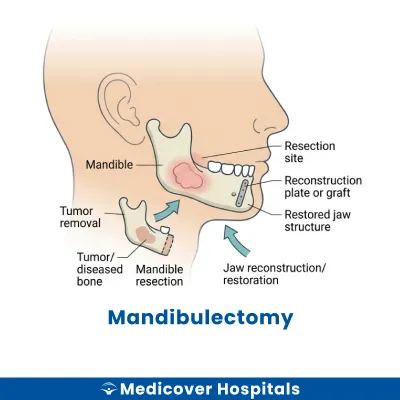
Mandibulectomy is a surgical procedure involving the removal of part or all of the mandible (lower jawbone). This operation is performed to address issues affecting the jawbone, such as tumors or severe infections. The mandible is crucial for chewing and speaking, making its health vital for daily functions.
This surgery is often necessary for treating oral cancers, benign tumors, or osteoradionecrosis (bone damage due to radiation). If these conditions are not treated, they can lead to severe complications, including difficulty in eating and speaking, and potential spread of cancer. Modern surgical approaches for mandibulectomy include segmental and marginal mandibulectomy, which aim to preserve as much of the jaw's function and appearance as possible.
Mandibulectomy Doctors Near You
Discover experienced oncologists for mandibulectomy at Medicover Hospitals across India. Choose your city and book a consultation to explore treatment options tailored to your needs.
Why Choose Medicover Hospitals for Mandibulectomy?
Get a second opinion from trusted experts and makeconfident, informed decisions.
 Get Second Opinion
Complete Guide To Mandibulectomy
Everything you need to know about the procedure, preparation, and recovery
Mandibulectomy Surgery Indications
Doctors recommend mandibulectomy when there are serious conditions affecting the jawbone. This surgery is often necessary when other treatments do not resolve the underlying issues.
Oral Cancer
Patients may experience persistent mouth sores, bleeding, or pain. Imaging and biopsy can reveal cancerous growths in the jawbone. When chemotherapy or radiation fails to control the spread, surgery is considered.
Osteoradionecrosis
After radiation therapy, some patients develop jawbone death, leading to pain and exposed bone. X-rays or CT scans show significant bone damage. Surgery is needed when conservative treatments like antibiotics and hyperbaric oxygen therapy do not heal the bone.
Ameloblastoma
This benign tumor can cause swelling, pain or facial asymmetry. Dental X-rays or MRI scans show a tumour affecting the jawbone. Surgery is required when the tumour grows large or causes structural issues.
Severe Jaw Infections
Patients may have fever, swelling, and pus discharge. Blood tests and imaging show infection spreading to the bone. When antibiotics and drainage fail, surgery becomes necessary to remove infected tissue.
Trauma
Severe facial injuries can lead to jaw fractures or bone loss. CT scans reveal the extent of damage. Surgery is needed when fractures do not heal with immobilization or when bone reconstruction is required.
How to Prepare for Mandibulectomy?
Proper preparation for a mandibulectomy is crucial to ensure a smooth surgical experience and recovery. Following the guidelines can help minimise risks and complications.
- Medication Review: Stop NSAIDs, anticoagulants, and herbal supplements at least 7 days before surgery.
- Fasting Instructions: Fast for at least 8 hours before the procedure if general anaesthesia is used.
- Pre-Surgical Tests: Complete any required blood tests, imaging, or dental evaluations as advised by your doctor.
- Personal Items: Wear loose, comfortable clothing and avoid wearing jewellery or makeup on the day of surgery.
- Transportation: Arrange for someone to drive you home post-surgery, as you will not be able to drive yourself.
- Medication List: Bring a list of current medications with dosages for the medical team to review.
- Smoking and Alcohol: Avoid smoking and alcohol consumption at least 24 hours before the surgery.
- Oral Hygiene: Maintain good oral hygiene but avoid using mouthwash with alcohol on the day of surgery.
Mandibulectomy Surgery (Step-by-Step)
Overview: Mandibulectomy is performed by surgical oncologists. The surgery typically lasts 3-6 hours and is done under general anaesthesia.
- Preparation: The patient is placed under general anaesthesia. This ensures they are asleep and pain-free during the procedure.
- Incision: A 1-2 cm incision is made in the oral cavity or along the jawline, depending on the tumour's location. This allows access to the mandible.
- Tumour Exposure: Surgical instruments like a harmonic scalpel or curette are used to carefully expose the tumour. The surrounding tissues are protected.
- Resection: The affected part of the mandible is removed using tools such as a coblation wand or bipolar cautery. The extent of removal depends on the tumour size and spread.
- Reconstruction: If needed, reconstruction of the jaw is performed using bone grafts or metal plates. This helps restore function and appearance.
- Closure: The incision is closed with sutures. The patient is monitored as they wake up from anaesthesia.
- Recovery: Post-surgery, the patient may experience swelling and discomfort. Pain management and antibiotics are provided to aid recovery.
Who Performs Mandibulectomy Surgery?
Mandibulectomy is performed by surgical oncologists. These specialists are trained in the surgical treatment of cancers affecting the jaw. They use precise techniques to remove tumours while preserving as much healthy tissue as possible.
Recovery After Mandibulectomy Surgery
Recovery from mandibulectomy surgery involves gradual healing and adjustment. Patients may experience swelling, discomfort, and difficulty in eating initially. Following the surgeon's advice is crucial for a smooth recovery.
Day 1-3:
- Expect swelling and bruising around the jaw area. Pain management will be provided.
- Stick to a liquid diet. Include soups, broths, and juices.
- Rest is essential. Avoid any strenuous activities.
Day 4-7:
- Swelling should start to decrease. Continue with prescribed medications.
- Introduce soft foods like curd, dal-rice, and khichdi.
- Gentle oral hygiene practices are important. Follow the surgeon's instructions.
- Short walks can be resumed, but avoid heavy lifting.
Day 8-14:
- Most patients can start eating semi-solid foods like moong dal and soft fruits.
- Continue to avoid hard or crunchy foods.
- Gradually increase activity levels. Return to work or school if comfortable, but avoid strenuous tasks.
Phase 3 (Week 3-6):
- Normal diet can be gradually resumed, focusing on balanced nutrition.
- Regular follow-up appointments are important to monitor healing.
- Resume normal activities, but consult the doctor before engaging in sports or heavy physical work.
When to Seek Urgent Help:
- Persistent or worsening pain not relieved by medication.
- Excessive swelling or bleeding.
- Signs of infection such as fever or pus discharge.
- Difficulty in breathing or swallowing.
Benefits of Mandibulectomy Surgery
Mandibulectomy is a surgical procedure aimed at removing part or all of the mandible (jawbone) to treat various conditions. Here are some benefits:
- Tumour Removal: Effective in removing cancerous or benign tumours from the jaw.
- Pain Relief: Alleviates pain caused by tumours or infections in the jaw.
- Improved Function: Restores oral functions like chewing and speaking when combined with reconstructive surgery.
- Prevention of Spread: Helps prevent the spread of cancer to other parts of the body.
Risks and Complications of Mandibulectomy Surgery
While mandibulectomy can be beneficial, it carries certain risks and complications. It is important to be aware of them:
- Infection (Common): Risk of infection at the surgical site.
- Bleeding (Common): Potential for significant bleeding during or after surgery.
- Nerve Damage (Common): Possible damage to nerves affecting sensation or movement.
- Facial Disfigurement (Rare): Changes in facial appearance due to bone removal.
- Difficulty in Healing (Rare): Delayed healing of the surgical site.
- Speech Difficulties (Rare): Temporary or permanent changes in speech.
Cost of Mandibulectomy Surgery
The cost of Mandibulectomy surgery at Medicover Hospitals ranges from Rs. 33,000 to Rs. 1,23,000. The price varies based on the ward category chosen, such as day care, general, or deluxe suites. We offer transparent pricing to ensure clarity for our patients. Insurance and TPA support, including CGHS, ESI, and major TPAs, are accepted, and a cashless facility is available for your convenience. Please contact the hospital for the latest insurance panel details as these may change periodically.
Frequently Asked Questions
1. How much does Mandibulectomy surgery cost?
Mandibulectomy surgery at Medicover Hospitals ranges from Rs. 33,000 to Rs. 1,23,000, depending on the type of care and facilities chosen.
2. Is Mandibulectomy surgery covered under insurance?
Mandibulectomy surgery may be covered by CGHS, ESI, and major TPAs. Please contact the hospital for current panel details.
3. Will I have difficulty chewing after Mandibulectomy?
Post-surgery, patients may experience difficulty chewing. Soft foods like dal-rice and khichdi are recommended initially.
4. Can I speak normally after Mandibulectomy?
Speech may be temporarily affected after surgery. Speech therapy can help restore normal speaking abilities over time.
5. Will I need a special diet after Mandibulectomy?
Yes, a soft diet including curd, dal-rice, and khichdi is recommended initially. Gradually, you can reintroduce regular foods.
6. Is there a risk of infection post-Mandibulectomy?
There is a risk of infection after Mandibulectomy. Proper oral hygiene and following post-operative care instructions can minimize this risk.
7. How long is the recovery period for Mandibulectomy?
Recovery from Mandibulectomy can take several weeks. Most patients return to normal activities within 4-6 weeks.


