 Call
Call Patient Reports
Lumbar Spinal Fusion or Fixation Surgery by Expert Neurosurgeons
At Medicover Hospitals, our neurosurgeons, with qualifications like MS, MCh, and DNB, perform open lumbar spinal fusion or fixation. This procedure stabilises the spine and alleviates pain. Patients often experience reduced blood loss and shorter hospital stays, enhancing recovery.
Expert Surgeons
Yearly Surgeries
Patient Satisfaction
What is Lumbar Spinal Fusion or Fixation?
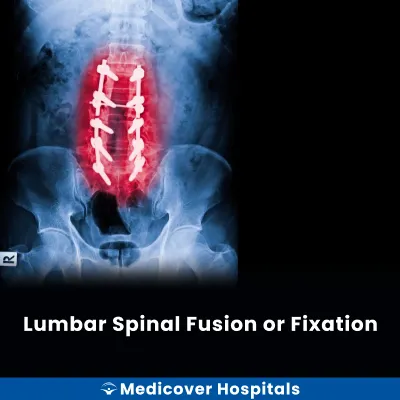
Lumbar Spinal Fusion or Fixation is a surgical procedure that involves joining two or more vertebrae in the lower back (lumbar spine). This is done using bone grafts, screws, and rods to stabilize the spine. The goal is to eliminate movement between the fused vertebrae, reducing pain and improving function.
This surgery is often needed for conditions like degenerative disc disease, spinal stenosis, or spondylolisthesis. If left untreated, these conditions can lead to chronic pain, nerve damage, or mobility issues. Modern surgical approaches include minimally invasive techniques and robotic-assisted surgery. These methods aim to reduce recovery time and improve outcomes. Always consult a specialist for the best treatment plan.
Lumbar Spinal Fusion or Fixation Doctors Near You
Discover neurosurgeons for lumbar spinal fusion at Medicover Hospitals across India. Choose your city and book a consultation to explore treatment options tailored to your needs.
Why Choose Medicover Hospitals for Lumbar Spinal Fusion or Fixation?
Get a second opinion from trusted experts and makeconfident, informed decisions.
 Get Second Opinion
Complete Guide To Lumbar Spinal Fusion Or Fixation
Everything you need to know about the procedure, preparation, and recovery
Lumbar Spinal Fusion or Fixation Surgery Indications
Doctors recommend lumbar spinal fusion or fixation surgery when non-surgical treatments fail to relieve symptoms. This procedure stabilizes the spine and alleviates pain caused by various spinal conditions.
Degenerative Disc Disease
Patients experience persistent lower back pain and stiffness. Imaging tests reveal disc degeneration and instability. Surgery is considered when physical therapy and medications do not provide relief.
Spinal Stenosis
Individuals suffer from leg pain, numbness, or weakness, often worsening with walking. MRI or CT scans show narrowing of the spinal canal. Surgery is advised when symptoms limit daily activities despite conservative treatments.
Spondylolisthesis
Patients report back pain and leg discomfort due to vertebrae slipping out of place. X-rays confirm vertebral misalignment. Surgery is recommended when bracing and physical therapy are ineffective.
Spinal Fractures
Severe back pain and mobility issues occur after trauma. X-rays or CT scans detect fractures and instability. Surgery is necessary when bracing fails to stabilize the spine.
Scoliosis
Patients experience uneven shoulders, back pain, or a visible spinal curve. X-rays show significant curvature. Surgery is considered when the curve progresses despite bracing.
Recurrent Herniated Disc
Persistent leg pain and numbness return after initial disc surgery. MRI confirms disc re-herniation. Surgery is needed when symptoms persist despite rest and medication.
How to Prepare for Lumbar Spinal Fusion or Fixation?
Proper preparation is crucial for a successful lumbar spinal fusion or fixation surgery. It helps reduce risks and ensures a smoother recovery.
- Medication Review: Stop NSAIDs, anticoagulants, and herbal supplements as advised by your doctor to reduce bleeding risks.
- Fasting Guidelines: Do not eat or drink anything for at least 8 hours before the surgery to prepare for anaesthesia.
- Pre-Surgery Health Check: Complete any required blood tests or imaging studies as directed by your healthcare team.
- Comfortable Clothing: Wear loose, comfortable clothing on the day of surgery for easy dressing post-procedure.
- Transportation Arrangements: Arrange for someone to drive you home after the surgery, as you will not be able to drive yourself.
- Medication List: Bring a list of all medications you are currently taking, including dosages, to the hospital.
- Home Preparation: Prepare your home for a comfortable recovery, such as setting up a rest area with necessary supplies.
- Smoking Cessation: Stop smoking well in advance to improve healing and reduce complications.
Lumbar Spinal Fusion or Fixation Surgery (Step-by-Step)
Overview: Lumbar spinal fusion or fixation is performed by neurosurgeons. The surgery typically lasts 3-4 hours and is done under general anaesthesia.
- Preparation: The patient is positioned on the operating table. Vital signs are monitored. General anaesthesia is administered to ensure the patient is asleep and pain-free.
- Incision: A small incision, usually 3-5 cm, is made in the lower back. The surgeon carefully accesses the spine using retractors.
- Disc Removal: The damaged disc material is removed using instruments like curettes and rongeurs. This creates space for the bone graft.
- Bone Grafting: A bone graft is placed between the vertebrae. This may be taken from the patient's pelvis or a donor. It helps the bones fuse together over time.
- Stabilisation: Metal screws and rods are inserted to hold the vertebrae in place. Instruments like a harmonic scalpel and bipolar cautery may be used to ensure precision.
- Closure: The incision is closed with sutures or staples. A sterile bandage is applied to protect the area.
- Recovery: The patient is moved to a recovery room. They are monitored as they wake up from anaesthesia. Pain management is provided as needed.
Who Performs Lumbar Spinal Fusion or Fixation Surgery?
This surgery is performed by neurosurgery doctors or orthopaedic spine surgeons. These specialists have extensive training in spinal procedures and focus on treating conditions affecting the spine.
Recovery After Lumbar Spinal Fusion or Fixation Surgery
Recovery from lumbar spinal fusion or fixation surgery is a gradual process. It requires patience and adherence to medical advice. Expect some discomfort initially, but this will improve over time with proper care.
Day 1-3:
- Hospital stay for monitoring. Pain management and mobility assistance provided.
- Start with a liquid diet, gradually moving to soft foods like curd, dal-rice, and soups.
Day 4-7:
- Discharge from the hospital is possible if recovery is smooth.
- Continue with soft, easily digestible foods like khichdi and moong dal.
- Begin gentle walking with support. Avoid bending or twisting.
Week 2-4:
- Gradually increase activity levels. Short walks are encouraged.
- Continue a balanced diet with plenty of fluids.
- Avoid lifting heavy objects or strenuous activities.
Month 1-3:
- Physical therapy may be recommended to improve strength and flexibility.
- Most patients can return to work or school, depending on their job's physical demands.
- Continue to avoid high-impact activities.
When to Seek Urgent Help:
- Severe or increasing pain not relieved by medication.
- Signs of infection: fever, redness, or discharge at the incision site.
- Numbness or weakness in the legs.
- Loss of bladder or bowel control.
Benefits of Lumbar Spinal Fusion or Fixation Surgery
Lumbar spinal fusion or fixation surgery can provide relief for various spinal conditions. Here are some benefits:
- Pain Reduction: Helps alleviate chronic back pain by stabilising the spine.
- Improved Mobility: Can enhance movement and flexibility by addressing spinal instability.
- Enhanced Quality of Life: Reduces discomfort, allowing for a more active lifestyle.
- Prevention of Further Damage: Stops the progression of spinal degeneration.
Risks and Complications of Lumbar Spinal Fusion or Fixation Surgery
While the surgery can be beneficial, it is important to be aware of potential risks and complications.
Common Risks
- Infection at the surgical site.
- Blood clots may form in the legs.
Rare Risks
- Nerve damage leading to numbness or weakness.
- Non-union, where the bones do not fuse as expected.
- Adjacent segment disease, affecting nearby spinal segments.
- Hardware failure, requiring additional surgery.
Cost of Lumbar Spinal Fusion or Fixation Surgery
The cost of Lumbar Spinal Fusion or Fixation Surgery can vary from ₹1,50,000 to ₹6,00,000 based on the surgical approach, duration of hospital stay, room category, diagnostics, and post-operative care.
At Medicover Hospitals, we offer transparent pricing and support for insurance and TPA, including CGHS, ESI, and major TPAs. A cashless facility is available for your convenience. Please contact the hospital for the latest insurance panel details as these may change periodically.
Frequently Asked Questions
1. How much does Lumbar Spinal Fusion or Fixation surgery cost at Medicover Hospitals?
The cost of Lumbar Spinal Fusion or Fixation surgery varies from ₹1,50,000 to ₹6,00,
2. Please contact Medicover Hospitals for detailed pricing information. 2. Is Lumbar Spinal Fusion or Fixation surgery covered under health insurance at Medicover?
Many insurance plans, including CGHS and ESI, may cover this surgery. Please contact the hospital for current panel details.
3. Will I need a brace after Lumbar Spinal Fusion?
A brace may be recommended to support your spine during recovery. Your doctor will advise based on your specific condition.
4. Can I drive after Lumbar Spinal Fusion surgery?
Driving is usually not advised for at least 6 weeks post-surgery. Consult your doctor for personalized advice based on your recovery progress.
5. What exercises are safe after Lumbar Spinal Fusion?
Gentle walking and stretching are typically safe after initial recovery. Avoid heavy lifting or twisting exercises until cleared by your doctor.
6. Will I have reduced flexibility after Lumbar Fusion?
Some loss of flexibility in the lumbar region is common post-surgery. Your physiotherapist will guide you on exercises to improve mobility.
7. Is nerve damage a risk in Lumbar Fusion surgery?
Nerve damage is a potential risk, though it is rare. Discuss any concerns with your surgeon to understand the precautions taken during surgery.


