 Call
Call Patient Reports
Best Hospital for C-Section with Bilateral Tubal Ligation with Expert Care
At Medicover Hospitals, our experienced gynecologists, holding qualifications like MS, DNB, and FMAS, perform Lower Segment Caesarean Section with Bilateral Tubal Ligation using the open surgical approach. This procedure allows for effective birth control and typically results in a shorter hospital stay.
Expert Surgeons
Yearly Surgeries
Patient Satisfaction
What is C-section With Bilateral Tubal Ligation?
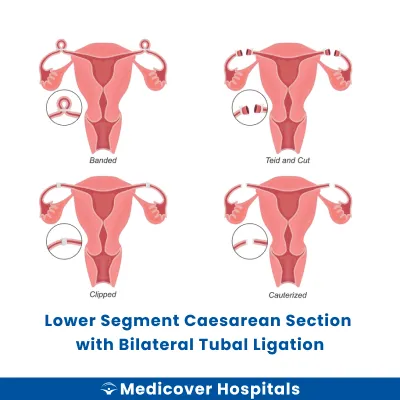
A C-section (LSCS) is a surgical procedure where an incision is made in the lower part of the uterus (womb) to deliver a baby. Bilateral Tubal Ligation is performed alongside, where the fallopian tubes are cut or sealed to prevent future pregnancies. This combined procedure involves both the uterus and fallopian tubes.
This surgery is needed when a vaginal delivery poses risks to the mother or baby. Conditions like placenta previa, fetal distress, or previous caesarean deliveries may necessitate an LSCS. If untreated, these conditions can lead to complications. Modern surgical approaches for LSCS with Bilateral Tubal Ligation include minimally invasive techniques, which may offer quicker recovery.
C-section with Bilateral Tubal Ligation Surgery Doctors Near You
Find experienced gynecologists for lower segment caesarean section with bilateral tubal ligation at Medicover Hospitals across India. Choose your city and book a consultation today for expert care.
Why Choose Medicover Hospitals for C-section (LSCS) With Bilateral Tubal Ligation?
Get a second opinion from trusted experts and makeconfident, informed decisions.
 Get Second Opinion
Complete Guide To Lower Segment Caesarean Section With Bilateral Tubal Ligation
Everything you need to know about the procedure, preparation, and recovery
C-Section with Bilateral Tubal Ligation Surgery Indications
Doctors may recommend a C-section (LSCS) with Bilateral Tubal Ligation (BTL) when a woman requires a caesarean delivery and has decided on permanent contraception. This procedure is suggested based on specific medical conditions and patient preferences.
Previous Caesarean Deliveries
Women with multiple previous caesarean sections may experience uterine scarring, increasing the risk of complications during vaginal delivery. Doctors often find that the uterine wall is thinner in imaging or during examination, making LSCS a safer option. When a patient also desires permanent contraception, BTL is performed simultaneously.
Placenta Previa
Placenta previa occurs when the placenta covers the cervix, leading to severe bleeding during pregnancy. Ultrasound imaging confirms the placenta's position. If conservative management fails to control bleeding, LSCS is necessary. BTL can be added if the patient wishes to avoid future pregnancies.
Fetal Distress
Signs of fetal distress include abnormal heart rate patterns detected during monitoring. If the baby is not receiving enough oxygen, immediate delivery via LSCS is required. For women opting for no more children, BTL is performed concurrently.
Maternal Request for Sterilisation
Some women choose sterilisation for personal or medical reasons. If they require a caesarean delivery, BTL can be conveniently performed at the same time, eliminating the need for a separate procedure.
Failed Induction of Labour
When labour induction does not progress, it may lead to prolonged labour and increased risk of complications. Doctors may recommend LSCS to ensure the safety of both mother and child. BTL is an option if the patient desires permanent contraception.
How to Prepare for Lower Segment Caesarean Section (C-section) with Bilateral Tubal Ligation?
Proper preparation is crucial for a smooth Lower Segment Caesarean Section with Bilateral Tubal Ligation. It helps ensure safety and optimal outcomes for both mother and baby.
- Medication Review: Stop NSAIDs, anticoagulants, and herbal supplements as advised by your doctor to reduce bleeding risk.
- Fasting Guidelines: Fast for at least 6-8 hours before surgery to prepare for anaesthesia.
- Bowel Preparation: Follow any specific instructions given by your healthcare provider regarding bowel prep.
- Clothing Choice: Wear loose, comfortable clothing to the hospital for ease of movement post-surgery.
- Transportation Arrangement: Arrange for someone to drive you home after the procedure as you may feel drowsy.
- Medication List: Bring a list of current medications with dosages for the medical team to review.
- Pelvic Floor Exercises: Practice pelvic floor exercises if recommended by your doctor to aid recovery.
- Hospital Bag: Pack essentials like toiletries, comfortable clothing, and any personal items you may need.
C-section with Bilateral Tubal Ligation Surgery (Step-by-Step)
This procedure is performed by gynecologists. It typically lasts 1-2 hours. It is usually done under regional anaesthesia, such as a spinal or epidural block.
- Preparation: The patient is positioned on the operating table. Regional anaesthesia is administered to numb the lower body. The surgical area is cleaned and sterilized.
- Incision: A horizontal incision, about 10-15 cm, is made in the lower abdomen. This is known as the Pfannenstiel incision. The surgeon uses a scalpel for this step.
- Uterine Access: The surgeon carefully makes an incision in the lower segment of the uterus. This allows access to the baby. Surgical instruments like retractors are used to hold the incision open.
- Delivery: The baby is gently delivered through the uterine incision. The umbilical cord is clamped and cut. The baby is handed over to the paediatric team for immediate care.
- Tubal Ligation: The surgeon locates the fallopian tubes. Using instruments like bipolar cautery or clips, the tubes are sealed or cut to prevent future pregnancies.
- Closure: The uterine incision is closed with sutures. The abdominal layers are stitched back together. The skin is closed with sutures or staples.
- Recovery: The patient is moved to a recovery area. Vital signs are monitored. Pain relief is provided as needed.
Who Performs Lower Segment Caesarean Section (C-section) with Bilateral Tubal Ligation Surgery?
This surgery is performed by gynecologists. They are specialists in women's reproductive health and surgical procedures related to childbirth and sterilization.
Recovery After C-section with Bilateral Tubal Ligation Surgery
Recovery from a Lower Segment Caesarean Section (C-section) with Bilateral Tubal Ligation involves healing from both the delivery and the surgical procedure. It's important to follow your doctor's advice and take it easy during this period.
Day 1-3:
- Rest is crucial. Avoid any strenuous activities.
- Pain and discomfort are common. Follow prescribed pain management.
- Start with a liquid diet, gradually introducing soft foods like soups and moong dal.
Day 4-7:
- Slowly increase mobility by taking short walks to improve circulation.
- Introduce light meals such as dal-rice and khichdi.
- Keep the incision area clean and dry.
Day 8-14:
- Continue with light activities. Avoid lifting heavy objects.
- Include curd in your diet to aid digestion and boost immunity.
- Most women can resume light household tasks by the end of this period.
Phase 3 (Week 3-6):
- Gradually return to normal activities. Listen to your body.
- Consult your doctor before resuming work or school.
- Continue eating a balanced diet rich in proteins and vitamins.
When to Seek Urgent Help:
- Fever over 100.4F (38C) or chills.
- Severe abdominal pain or swelling.
- Heavy bleeding or foul-smelling discharge.
- Signs of infection at the incision site, such as redness or pus.
Benefits of Caesarean Section with Bilateral Tubal Ligation Surgery
This combined procedure offers several advantages for women who have decided not to have more children.
- Convenience: Undergoing both procedures at once eliminates the need for a separate surgery.
- Effective Contraception: Bilateral tubal ligation is a permanent method of birth control.
- Reduced Recovery Time: Combining the procedures means a single recovery period.
- Cost-Effective: It may be more economical than having two separate surgeries.
Risks and Complications of Lower Segment Caesarean Section with Bilateral Tubal Ligation Surgery
While generally safe, this surgery carries potential risks and complications.
- A possible effect: Infection at the incision site can occur, requiring medical attention.
- May occur: Blood loss during the procedure may necessitate a transfusion.
- In rare cases: Injury to nearby organs such as the bladder or bowel.
- Uncommon risk: Anesthesia-related complications, which can affect breathing or heart function.
- Occasionally: Failure of the tubal ligation, leading to an unintended pregnancy.
What is the Cost of Lower Segment Caesarean Section ( C-section) with Bilateral Tubal Ligation Surgery
The cost for a Lower Segment Caesarean Section with Bilateral Tubal Ligation Surgery at Medicover Hospitals ranges from Rs. 55,000 to Rs. 202,000. The price varies depending on the ward category chosen, such as day care, general, private, or suite options.
We offer transparent pricing and support for insurance and TPA services, including CGHS, ESI, and major TPAs. Cashless facilities are available for your convenience. Please contact the hospital for the latest insurance panel details as these may change periodically.
Frequently Asked Questions
1. How much does Lower Segment Caesarean Section with Bilateral Tubal Ligation surgery cost at Medicover Hospitals?
The cost ranges from Rs. 55,000 to Rs. 202,000 across Medicover Hospitals, depending on the type of room and care required.
2. Is LSCS with Bilateral Tubal Ligation surgery covered under health insurance at Medicover?
Yes, it is often covered by CGHS, ESI, and major TPAs with cashless options. Please contact the hospital for current panel details.
3. Will I experience hormonal changes after the surgery?
No, bilateral tubal ligation does not affect hormone levels. It only prevents future pregnancies by blocking the fallopian tubes.
4. How soon can I resume normal activities post-surgery?
Most women can return to light activities within 2 weeks. Full recovery and resuming normal activities may take about 6 weeks.
5. Can I breastfeed immediately after the surgery?
Yes, you can breastfeed your baby right after a Lower Segment Caesarean Section. The surgery does not affect milk production or breastfeeding.
6. What are the specific risks associated with this surgery?
There is a risk of infection, bleeding, or injury to nearby organs. Discuss any concerns with your doctor before the procedure.
7. Will I need a special diet after the surgery?
A balanced diet including curd, dal-rice, and khichdi is recommended. Avoid heavy and spicy foods for a few weeks post-surgery.


