 Call
Call Patient Reports
Living Donor Liver Transplantation Surgery by Expert Liver Transplant Surgeons
Living Donor Liver Transplantation at Medicover Hospitals uses the open surgical approach. Our liver-transplant-surgeons, with qualifications like MS, DNB, and MCh, perform these procedures. This approach often results in reduced blood loss, enhancing recovery for patients across India.
Expert Surgeons
Yearly Surgeries
Patient Satisfaction
What is Living Donor Liver Transplantation?
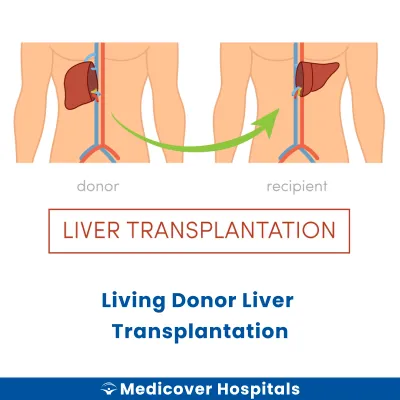
Living Donor Liver Transplantation is a surgical procedure where a portion of a healthy person's liver (donor) is transplanted into a patient with liver disease (recipient). The liver is a vital organ responsible for detoxification, protein synthesis, and digestion. This procedure leverages the liver's unique ability to regenerate, allowing both the donor's and recipient's liver to grow back to normal size over time.
This surgery is often needed for conditions like cirrhosis, liver cancer, or acute liver failure. If untreated, these conditions can lead to life-threatening complications. Modern surgical approaches, such as laparoscopic and robotic-assisted techniques, are available for Living Donor Liver Transplantation. These methods aim to minimise recovery time and improve outcomes for both donor and recipient.
Living Donor Liver Transplantation Doctors Near You
Discover skilled liver-transplant-surgeons at Medicover Hospitals across India. Choose your city and book a consultation to explore living donor liver transplantation options tailored to your needs.
Why Choose Medicover Hospitals for Living Donor Liver Transplantation?
Get a second opinion from trusted experts and makeconfident, informed decisions.
 Get Second Opinion
Complete Guide To Living Donor Liver Transplantation
Everything you need to know about the procedure, preparation, and recovery
Living Donor Liver Transplantation Surgery Indications
Doctors recommend living donor liver transplantation when a patient's liver is failing and no longer responds to other treatments. This procedure is often considered when the liver disease is advanced and life-threatening.
Cirrhosis
Patients with cirrhosis may experience fatigue, Jaundice, and abdominal swelling. Doctors find elevated liver enzymes and abnormal imaging showing liver scarring. When medication and lifestyle changes fail, transplantation becomes necessary.
Acute Liver Failure
Symptoms include confusion, jaundice, and sudden abdominal pain. Blood tests reveal high bilirubin and liver enzyme levels. When the liver rapidly deteriorates despite medical intervention, a transplant is urgently needed.
Hepatocellular Carcinoma
Patients may notice weight loss and abdominal discomfort. Imaging shows liver masses, and biopsy confirms cancer. When the cancer is confined to the liver and not amenable to resection, transplantation is considered.
Primary Biliary Cholangitis
Symptoms include itching and fatigue. Blood tests show elevated alkaline phosphatase and bilirubin. When medications no longer control symptoms and liver function declines, transplantation is advised.
Primary Sclerosing Cholangitis
Patients often experience jaundice and recurrent infections. Imaging reveals bile duct strictures. When symptoms persist despite treatment and liver function worsens, transplantation is recommended.
How to Prepare for Living Donor Liver Transplantation?
Proper preparation is crucial for a successful living donor liver transplantation. It ensures the safety and effectiveness of the procedure, minimising risks and complications.
- Medication Review: Stop NSAIDs, anticoagulants, and herbal supplements as advised by your doctor.
- Fasting: Fast for at least 8 hours before the surgery. This is essential for anaesthesia safety.
- Medical Tests: Complete all required blood tests, imaging, and evaluations as scheduled.
- Pre-Surgery Instructions: Follow any specific bowel preparation or other instructions provided by your healthcare team.
- Clothing: Wear loose, comfortable clothing on the day of the surgery for ease and comfort.
- Transportation: Arrange for someone to drive you home post-surgery, as you will not be able to drive yourself.
- Medication List: Bring a list of all medications you take, including dosages, to the hospital.
- Support System: Inform family or friends to be available for support during your recovery period.
Living Donor Liver Transplantation Surgery (Step-by-Step)
Overview: This procedure is performed by liver-transplant-surgeons. It typically lasts between 6 to 12 hours and is done under general anaesthesia.
- Donor Evaluation: The donor undergoes thorough medical tests to ensure suitability. This includes blood tests, imaging, and psychological evaluation.
- Recipient Preparation: The recipient is prepped for surgery. This involves administering anaesthesia and monitoring vital signs.
- Donor Surgery: Surgeons make an incision of about 15-20 cm in the donor's abdomen. Using tools like a harmonic scalpel and bipolar cautery, they carefully remove a portion of the liver.
- Recipient Surgery: The recipient's diseased liver is removed through a similar incision. Surgeons use a laparoscope and other instruments to ensure precision.
- Liver Implantation: The donor liver portion is implanted into the recipient. Surgeons connect blood vessels and bile ducts using sutures and a trocar.
- Closure: Incisions are closed with sutures or staples. The patient is moved to the recovery room for monitoring.
- Recovery: Both donor and recipient are monitored in the ICU. Pain management and infection prevention are priorities.
Who Performs Living Donor Liver Transplantation Surgery?
This surgery is performed by specialised liver-transplant-surgeons. They have expertise in complex surgical techniques and post-operative care. Their skills are crucial for a successful transplant.
Recovery After Living Donor Liver Transplantation Surgery
Recovering from a living donor liver transplantation is a gradual process. Patients need to follow medical advice closely to ensure a smooth recovery. Expect regular follow-ups and lifestyle adjustments during this period.
Day 1-3:
- Hospital stay with close monitoring.
- Pain management and initial mobilisation.
- Start with clear liquids and gradually introduce soft foods.
Day 4-7:
- Transition to a regular diet with easily digestible foods like curd, dal-rice, and soups.
- Continue walking short distances.
- Focus on deep breathing exercises.
Day 8-14:
- Discharge from the hospital if recovery is on track.
- Introduce more variety in diet, including khichdi and moong dal.
- Gradual increase in physical activity.
Phase 3 (Week 3-6):
- Regular follow-up appointments to monitor liver function.
- Resume light activities, avoiding heavy lifting.
- Return to work or school may be possible, depending on recovery.
Phase 4 (Week 7-12):
- Gradual return to normal activities.
- Continue a balanced diet with Indian staples.
- Full recovery may take up to 3 months.
When to Seek Urgent Help:
- Fever or signs of infection.
- Jaundice or yellowing of the skin.
- Severe abdominal pain or swelling.
- Sudden weight gain or fluid retention.
Benefits of Living Donor Liver Transplantation Surgery
Living donor liver transplantation offers several advantages for patients needing a liver transplant.
- Reduced Waiting Time: Patients can receive a transplant sooner compared to waiting for a deceased donor.
- Better Organ Function: The liver from a living donor often functions better and lasts longer.
- Planned Surgery: The procedure can be scheduled at a convenient time for both donor and recipient.
- Improved Survival Rates: Recipients generally have better outcomes compared to deceased donor transplants.
Risks and Complications of Living Donor Liver Transplantation Surgery
While living donor liver transplantation is generally safe, it carries certain risks for both donor and recipient.
- Common: Infection at the surgical site or within the body.
- Common: Bleeding during or after the surgery.
- Rare: Bile leakage, which may require additional treatment.
- Rare: Blood clots that can affect recovery.
- Rare: Liver failure in the donor, necessitating urgent medical care.
- Rare: Psychological impact on the donor, requiring support.
Cost of Living Donor Liver Transplantation Surgery
The cost of Living Donor Liver Transplantation Surgery varies from Rs. 18,00,000 to Rs.35,00,000 based on several factors. These include the surgical approach, duration of hospital stay, room category, necessary diagnostics, and post-operative care.
At Medicover Hospitals, we offer transparent pricing to ensure clarity. We support insurance and TPA services, including CGHS, ESI, and major TPAs, with a cashless facility available for ease of payment. Please contact the hospital for the latest insurance panel details as these may change periodically.
Frequently Asked Questions
1. How much does Living Donor Liver Transplantation surgery cost at Medicover Hospitals?
The cost of Living Donor Liver Transplantation surgery varies from Rs. 18,00,000 to Rs. 35,00,000 based on specific medical needs. Please contact Medicover Hospitals for detailed pricing information.
2. Is Living Donor Liver Transplantation surgery covered under health insurance at Medicover?
Living Donor Liver Transplantation may be covered by CGHS, ESI, and major TPAs. Please contact the hospital for current panel details.
3. Can a living donor liver transplant fail?
Yes, complications like organ rejection can occur after a liver transplant. Regular follow-ups and medication adherence are crucial for success.
4. What lifestyle changes are needed post-liver transplant?
Post-transplant, a healthy lifestyle is essential, including avoiding alcohol and maintaining a balanced diet. Regular exercise and follow-ups are also recommended.
5. Is special care needed for the donor after surgery?
Yes, donors require careful monitoring and rest for recovery. They should avoid heavy lifting and follow medical advice for a smooth recovery.
6. What foods should be avoided after liver transplant?
Post-transplant, avoid raw seafood and undercooked meats. Opt for easily digestible foods like dal-rice, khichdi, and curd.
7. How long does it take for the liver to regenerate after donation?
The liver typically regenerates to its original size within 6-8 weeks. Regular check-ups ensure the donor's health and recovery.


