 Call
Call Patient Reports
Lateral Internal Sphincterotomy Surgery by Expert Gastroenterologists Medical
At Medicover Hospitals, our experienced gastroenterologists, holding qualifications like DM and DNB, perform Lateral Internal Sphincterotomy using the open surgical approach. This procedure effectively treats anal fissures, leading to quicker recovery and shorter hospital stays for patients across India.
Expert Surgeons
Yearly Surgeries
Patient Satisfaction
What is Lateral Internal Sphincterotomy?
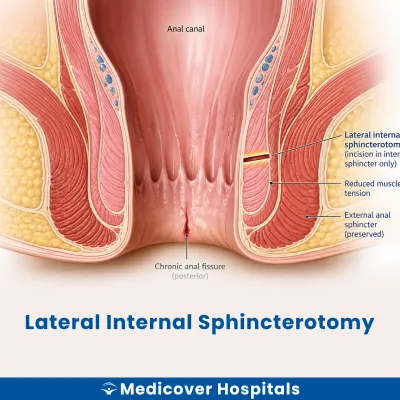
Lateral Internal Sphincterotomy is a surgical procedure involving the anal sphincter. The anal sphincter is a muscle that controls the opening and closing of the anus. This surgery involves making a small incision in the internal anal sphincter. It helps to relieve pressure and reduce pain.
This surgery is often needed for chronic anal fissures. Anal fissures are small tears in the lining of the anus. They cause pain and bleeding during bowel movements. If left untreated, they can lead to persistent pain and discomfort. Modern surgical approaches for Lateral Internal Sphincterotomy include open and closed techniques. These methods aim to provide relief and promote healing.
Lateral Internal Sphincterotomy Doctors Near You
Discover skilled gastroenterologists-medical for lateral internal sphincterotomy at Medicover Hospitals across India. Choose your city and book a consultation to address your health needs today.
Why Choose Medicover Hospitals for Lateral Internal Sphincterotomy?
Get a second opinion from trusted experts and makeconfident, informed decisions.
 Get Second Opinion
Complete Guide To Lateral Internal Sphincterotomy
Everything you need to know about the procedure, preparation, and recovery
Lateral Internal Sphincterotomy Surgery Indications
Lateral Internal Sphincterotomy is often recommended for patients with chronic anal fissures that do not heal with conservative treatments. This procedure helps relieve pain and promote healing by reducing the pressure in the anal sphincter.
Chronic Anal Fissures
Patients experience severe pain during bowel movements, often accompanied by bleeding. On examination, doctors find a tear in the anal lining that persists for more than six weeks. When ointments and dietary changes fail to heal the fissure, surgery is considered.
Recurrent Anal Fissures
Patients report repeated episodes of sharp anal pain and bleeding. Examination reveals multiple fissures or a single fissure that reopens frequently. When lifestyle modifications and medications do not prevent recurrence, surgical intervention is advised.
High Anal Sphincter Pressure
Patients may feel persistent discomfort or pain in the anal area. Manometry tests show elevated resting pressure in the anal sphincter. If pressure does not decrease with medication, surgery is needed to relax the sphincter.
Non-healing Fissures
Patients suffer from ongoing pain and bleeding despite using topical treatments. Examination shows a chronic fissure with signs of fibrosis. When healing stalls despite conservative management, surgery becomes necessary.
Associated Anal Spasms
Patients experience spasmodic pain in the anal region. Examination and patient history indicate spasms linked to fissures. If muscle relaxants and other treatments fail, surgery is recommended to alleviate the spasms.
How to Prepare for Lateral Internal Sphincterotomy?
Proper preparation is crucial for a smooth Lateral Internal Sphincterotomy. It helps reduce complications and ensures a quicker recovery.
- Medication Review: Stop NSAIDs, anticoagulants, and herbal supplements as advised by your doctor.
- Fasting: Fast for at least 6-8 hours before the procedure to prepare for anaesthesia.
- Bowel Preparation: Follow any bowel prep instructions given by your healthcare provider to ensure a clean surgical area.
- Comfortable Clothing: Wear loose, comfortable clothing on the day of the surgery for ease after the procedure.
- Transportation: Arrange for someone to drive you home post-surgery as you may feel drowsy from anaesthesia.
- Medication List: Bring a list of all medications you take, including dosages, for the medical team to review.
- Pre-Surgery Instructions: Follow any specific instructions provided by your surgeon to ensure a successful procedure.
- Hydration: Stay well-hydrated the day before the surgery unless instructed otherwise.
Lateral Internal Sphincterotomy Surgery (Step-by-Step)
Overview: This procedure is performed by gastroenterologists. It typically takes about 15 to 30 minutes. Local anaesthesia is commonly used, but general anaesthesia may be considered in some cases.
- Preparation: The patient is positioned comfortably. Local anaesthesia is administered to numb the area, ensuring the patient feels minimal discomfort.
- Incision: A small incision, about 1-2 cm, is made near the anal opening. This allows access to the internal anal sphincter.
- Muscle Identification: The surgeon identifies the internal sphincter muscle using a small retractor. This step ensures precision in the procedure.
- Sphincterotomy: A surgical instrument, such as a scalpel or bipolar cautery, is used to make a controlled cut in the sphincter muscle. This helps reduce pressure and promotes healing.
- Closure: The incision may be left open to heal naturally or closed with sutures, depending on the surgeon's preference and the patient's condition.
- Recovery: The patient is monitored for a short period before being discharged. Post-operative instructions are provided to aid recovery.
Who Performs Lateral Internal Sphincterotomy Surgery?
This surgery is performed by gastroenterology doctor with expertise in treating anal fissures. They are skilled in using precise techniques to ensure effective results. Please contact the hospital for current details as insurance panels may change.
Recovery After Lateral Internal Sphincterotomy Surgery
Recovery from lateral internal sphincterotomy surgery is generally smooth, with most patients experiencing relief from symptoms. However, it's important to follow post-operative care instructions for a quick and safe recovery.
Day 1-3:
- Expect some pain and discomfort. Pain relief medication will be provided.
- Rest is crucial. Avoid any strenuous activities.
- Stick to a soft diet. Include curd, dal-rice, and soups to ease digestion.
Day 4-7:
- Pain should gradually decrease. Continue prescribed medications.
- Begin gentle walking to improve circulation.
- Maintain a high-fibre diet with foods like khichdi and moong dal to prevent constipation.
Day 8-14:
- Most patients can resume work or school, depending on comfort and job nature.
- Continue avoiding heavy lifting or intense physical activities.
- Monitor bowel movements and maintain hydration.
Phase: 2-4 Weeks:
- Gradually return to normal activities as tolerated.
- Continue with a balanced diet to support healing.
- Regular follow-up appointments to monitor recovery.
When to Seek Urgent Help
- Severe pain not relieved by medication.
- Excessive bleeding or pus from the surgical site.
- High fever or chills.
- Difficulty in bowel movements despite dietary adjustments.
Benefits of Lateral Internal Sphincterotomy Surgery
Lateral Internal Sphincterotomy is a surgical procedure aimed at providing relief from chronic anal fissures. It offers several benefits for patients.
- Pain Relief: This procedure significantly reduces pain associated with anal fissures.
- Improved Healing: It promotes faster healing of the fissure by reducing sphincter pressure.
- Minimally Invasive: The surgery is less invasive, leading to quicker recovery times.
- High Success Rate: Many patients experience long-term relief from symptoms.
Risks and Complications of Lateral Internal Sphincterotomy Surgery
While Lateral Internal Sphincterotomy is generally safe, like any surgery, it carries potential risks and complications.
Common Risks
- Temporary incontinence, particularly for gas, may occur.
- Bleeding during or after the procedure is possible.
Rare Risks
- Infection at the surgical site can develop.
- Permanent incontinence is a less common but serious risk.
- Recurrence of the fissure may happen in some cases.
- Fistula formation is an uncommon complication.
Cost of Lateral Internal Sphincterotomy Surgery
The cost of Lateral Internal Sphincterotomy Surgery can vary from ₹25,500 to ₹1,40,000 based on the surgical approach, duration of hospital stay, room category, required diagnostics, and post-operative care.
At Medicover Hospitals, we ensure transparent pricing. We offer support for insurance and TPA, including CGHS, ESI, and major TPAs. A cashless facility is available for your convenience. Please contact the hospital for the latest insurance panel details as these may change periodically.
Frequently Asked Questions
1. How much does Lateral Internal Sphincterotomy surgery cost at Medicover Hospitals?
The cost of Lateral Internal Sphincterotomy surgery varies . Please contact Medicover Hospitals for detailed pricing information.
2. Is Lateral Internal Sphincterotomy surgery covered under health insurance at Medicover?
Lateral Internal Sphincterotomy may be covered by CGHS, ESI, and major TPAs. Please contact the hospital for current panel details.
3. Will I need a stool softener after the surgery?
Yes, stool softeners are often recommended to ease bowel movements. They help prevent strain on the healing anal sphincter.
4. Can I experience incontinence after the surgery?
Temporary incontinence is a possible side effect. It usually resolves as the sphincter heals over a few weeks.
5. What foods should I avoid post-surgery?
Avoid spicy and high-fibre foods immediately after surgery. Opt for soft foods like curd, dal-rice, and khichdi to aid recovery.
6. How soon can I return to work after the surgery?
Most patients can return to work within 1-2 weeks. However, this depends on individual recovery and the nature of your job.
7. Can the fissure recur after the surgery?
There is a small chance of recurrence if lifestyle changes aren't maintained. Regular follow-ups and a high-fibre diet can help prevent this.


