 Call
Call Patient Reports
Laser Enucleation of the Prostate with HoLEP or Diode Surgery by Expert Urologists
Laser Enucleation of the Prostate using HoLEP or Diode at Medicover Hospitals is performed endoscopically by experienced urologists with qualifications like MS, DNB, and MCh. This minimally invasive procedure often results in reduced blood loss and shorter hospital stays for patients.
Expert Surgeons
Yearly Surgeries
Patient Satisfaction
What is Laser Enucleation of the Prostate With Holep or Diode?
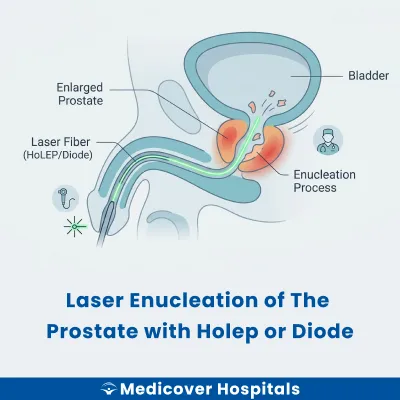
Laser Enucleation of the Prostate with HoLEP (Holmium Laser Enucleation of the Prostate) or Diode is a minimally invasive surgical procedure. It involves the removal of excess prostate tissue. The prostate is a gland in the male reproductive system. This procedure uses laser technology to precisely remove the obstructive tissue, improving urine flow.
This surgery is needed for conditions like Benign Prostatic Hyperplasia (BPH), where the prostate enlarges and obstructs urine flow. If untreated, BPH can lead to urinary retention, bladder stones, or kidney damage. Modern surgical approaches for this procedure include HoLEP and Diode laser techniques. These methods offer effective treatment with minimal recovery time.
Laser Enucleation of the Prostate With Holep or Diode Doctors Near You
Discover skilled urologists for Laser Enucleation of the Prostate with HoLEP or Diode at Medicover Hospitals. Choose your city and book a consultation to explore treatment options.
Why Choose Medicover Hospitals for Laser Enucleation of the Prostate With Holep or Diode?
Get a second opinion from trusted experts and makeconfident, informed decisions.
 Get Second Opinion
Complete Guide To Laser Enucleation Of The Prostate With Holep Or Diode
Everything you need to know about the procedure, preparation, and recovery
Laser Enucleation of the Prostate with HoLEP or Diode Surgery Indications
Doctors recommend Laser Enucleation of the Prostate with HoLEP or Diode surgery when patients experience significant urinary symptoms due to an enlarged prostate. This procedure is often considered when other treatments have not provided relief.
Severe Urinary Retention
Patients may experience difficulty urinating or a complete inability to urinate. Examination often reveals a significantly enlarged prostate obstructing urine flow. When medications fail to improve symptoms, surgery becomes necessary.
Frequent Urinary Tract Infections (UTIs)
Recurrent UTIs can occur due to incomplete bladder emptying. Tests may show residual urine in the bladder post-voiding. If antibiotics and other treatments do not prevent infections, surgical intervention is advised.
Bladder Stones
Patients might suffer from pain, blood in urine, or frequent urination due to bladder stones. Imaging tests often show stones formed due to incomplete bladder emptying. Surgery is recommended when stones recur despite treatment.
Significant Bladder Outlet Obstruction
Symptoms include weak urine stream and straining during urination. Diagnostic tests may reveal a high post-void residual volume. When lifestyle changes and medications fail, surgery is considered.
Recurrent Hematuria
Patients may notice blood in their urine. Examination and tests often show an enlarged prostate as the cause. If conservative management does not resolve the bleeding, surgery is indicated.
How to Prepare for Laser Enucleation of the Prostate with HoLEP or Diode?
Proper preparation is crucial for a successful Laser Enucleation of the Prostate. It helps minimise risks and ensures a smoother recovery.
- Medication Adjustment: Stop NSAIDs, anticoagulants, and herbal supplements 7-10 days before surgery.
- Fasting Guidelines: Do not eat or drink anything for at least 6-8 hours before the procedure.
- Bowel Preparation: Follow the doctor's instructions for bowel prep to ensure a clear surgical field.
- Pelvic Floor Exercises: Practice pelvic floor exercises to aid recovery and improve bladder control post-surgery.
- Comfortable Clothing: Wear loose, comfortable clothing on the day of the surgery for ease of movement.
- Transportation Arrangement: Arrange for someone to drive you home after the procedure as you may feel drowsy.
- Medication List: Bring a list of all medications with dosages to inform the medical team.
- Pre-Surgery Consultation: Attend all pre-surgery appointments to discuss any concerns and finalise preparations.
Laser Enucleation of the Prostate with HoLEP or Diode Surgery (Step-by-Step)
Overview: This procedure is performed by urologists. It typically lasts 1 to 3 hours. General or regional anaesthesia is used.
- Preparation: The patient is positioned on the surgical table. Anaesthesia is administered for comfort.
- Insertion: A resectoscope is inserted through the urethra. No external incisions are made.
- Enucleation: The laser (HoLEP or Diode) is used to separate the enlarged prostate tissue from its capsule. This is done with precision to avoid damage to surrounding areas.
- Morcellation: The enucleated tissue is cut into smaller pieces using a morcellator. These pieces are then removed through the resectoscope.
- Hemostasis: Any bleeding is controlled using a bipolar cautery. This ensures a clear surgical field.
- Completion: The resectoscope is carefully withdrawn. A catheter is placed to aid urine drainage and allow healing.
- Recovery: The patient is moved to a recovery area. Monitoring continues until anaesthesia effects wear off.
Who Performs Laser Enucleation of the Prostate with HoLEP or Diode Surgery?
This procedure is carried out by urology specialists. They specialise in urinary tract and male reproductive system surgeries. Their expertise ensures the procedure is done safely and effectively.
Recovery After Laser Enucleation of the Prostate with HoLEP or Diode Surgery
Recovery after laser enucleation of the prostate using HoLEP or diode surgery is generally smooth. Patients can expect some mild discomfort initially, but most symptoms improve within a few weeks. It's important to follow the doctor's advice for a successful recovery.
Day 1-3:
- Rest is crucial. Avoid strenuous activities.
- Expect mild discomfort and possible blood in urine.
- Stay hydrated. Drink plenty of water.
Day 4-7:
- Gradually increase light activities like walking.
- Continue with a soft diet. Include curd, dal-rice, and soups.
- Avoid lifting heavy objects.
Day 8-14:
- Most patients can resume work or school if feeling comfortable.
- Introduce more solid foods like khichdi and moong dal.
- Monitor for any unusual symptoms.
Phase 3 (Week 3-4):
- Resume normal activities gradually.
- Continue with a balanced diet. Avoid spicy and oily foods.
- Follow up with your doctor for a check-up.
When to Seek Urgent Help
- Severe pain not relieved by medication.
- Heavy bleeding or large blood clots in urine.
- Fever or signs of infection.
- Difficulty urinating or inability to urinate.
Benefits of Laser Enucleation of the Prostate with HoLEP or Diode Surgery
Laser enucleation of the prostate using HoLEP or Diode technology offers several advantages for treating benign prostatic hyperplasia (BPH).
- Minimally Invasive: This procedure involves less tissue damage compared to traditional surgery.
- Effective Symptom Relief: Patients often experience significant improvement in urinary symptoms.
- Shorter Hospital Stay: Many patients can be discharged the same day or within 24 hours.
- Low Recurrence Rate: The risk of needing repeat procedures is reduced.
- Quick Recovery: Most individuals return to normal activities within a few days.
Risks and Complications of Laser Enucleation of the Prostate with HoLEP or Diode Surgery
While generally safe, laser enucleation of the prostate carries some risks and potential complications.
- Common: Temporary urinary incontinence may occur post-surgery.
- Common: Some patients experience urinary tract infections.
- Rare: Bleeding requiring transfusion is uncommon but possible.
- Rare: Injury to surrounding tissues, though infrequent, can happen.
- Rare: Retrograde ejaculation may occur, affecting fertility.
- Rare: Stricture formation in the urethra can develop over time.
- Rare: Anesthesia-related complications may arise.
Cost of Laser Enucleation of the Prostate with HoLEP or Diode Surgery
The cost for Laser Enucleation of the Prostate with HoLEP or Diode Surgery at Medicover Hospitals ranges from ₹85,000 and ₹3,50,000, depending on the ward category. Prices vary based on the type of accommodation chosen, ensuring transparent pricing for all patients.
We offer insurance and TPA support, accepting CGHS, ESI, and major TPAs, with a cashless facility available for your convenience. Please contact the hospital for the latest insurance panel details as these may change periodically.
Frequently Asked Questions
1. How much does Laser Enucleation of the Prostate with HoLEP or Diode surgery cost at Medicover Hospitals?
The cost of Laser Enucleation of the Prostate with HoLEP or Diode surgery ranges from ₹85,000 and ₹3,50,000 across Medicover Hospitals.
2. Is Laser Enucleation of the Prostate with HoLEP or Diode surgery covered under health insurance at Medicover?
Laser Enucleation of the Prostate with HoLEP or Diode surgery is often covered by CGHS, ESI, and major TPAs. Please contact the hospital for current panel details.
3. Will I need a catheter after prostate enucleation?
Yes, a catheter is usually required for a short period after the procedure. It helps in draining urine while the prostate heals.
4. Can I experience urinary incontinence post-surgery?
Some patients may experience temporary urinary incontinence after the surgery. This usually improves within a few weeks as healing progresses.
5. What dietary changes are recommended post-surgery?
Post-surgery, a light diet including curd, dal-rice, and khichdi is recommended. Avoid spicy and oily foods to aid recovery.
6. Will sexual function be affected after the procedure?
There might be temporary changes in sexual function post-surgery. Most men regain normal function within a few months.
7. Is there a risk of retrograde ejaculation?
Yes, retrograde ejaculation is a common side effect of prostate enucleation. It is not harmful but may affect fertility.


