 Call
Call Patient Reports
Best Hospital for Laparoscopic Cholecystectomy Surgery with Expert Care
At Medicover Hospitals, our team of general and laparoscopic surgeons, with qualifications such as MS and DNB, perform laparoscopic cholecystectomy. This minimally invasive procedure involves smaller incisions, resulting in reduced blood loss and a shorter hospital stay for patients.
Expert Surgeons
Yearly Surgeries
Patient Satisfaction
What is Laproscopic Cholecystectomy?
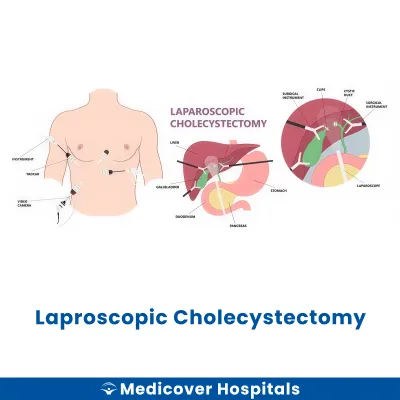
Laparoscopic cholecystectomy is a minimally invasive surgical procedure to remove the gallbladder. The gallbladder is a small organ located under the liver that stores bile (a digestive fluid). During the procedure, small incisions are made in the abdomen. A laparoscope (a thin tube with a camera) and surgical tools are inserted to perform the surgery. This method typically results in less pain and quicker recovery compared to open surgery.
This surgery is often needed to treat gallstones, which can cause pain, infection, or inflammation. Other conditions include cholecystitis (inflammation of the gallbladder) and pancreatitis (inflammation of the pancreas). If untreated, these conditions can lead to severe complications. Modern approaches include single-incision laparoscopic surgery and robotic-assisted laparoscopic cholecystectomy. These techniques aim to enhance precision and reduce recovery time.
Laparoscopic Cholecystectomy Doctors Near You
Find experienced general surgeons for laparoscopic cholecystectomy at Medicover Hospitals across India. Choose your city and book a consultation to discuss your treatment options today.
Why Choose Medicover Hospitals for Laproscopic Cholecystectomy?
Advanced General Surgery OT: Equipped with laparoscopic towers, 4K camera systems, and harmonic scalpels for precise surgical interventions.
Get a second opinion from trusted experts and makeconfident, informed decisions.
 Get Second Opinion
Complete Guide To Laproscopic Cholecystectomy
Everything you need to know about the procedure, preparation, and recovery
Laparoscopic Cholecystectomy Surgery Indications
Laparoscopic cholecystectomy is often recommended when the gallbladder causes significant health issues. This minimally invasive procedure is suggested when symptoms persist despite conservative treatments.
Gallstones with Pain
Patients often experience severe abdominal pain, especially after meals. Ultrasound or CT scans reveal gallstones. When dietary changes and medications fail to relieve pain, surgery is advised.
Cholecystitis
Symptoms include fever, nausea, and right upper abdominal pain. Blood tests may show elevated white blood cells. If antibiotics and rest do not resolve the inflammation, surgery is necessary.
Pancreatitis due to Gallstones
Patients may have intense abdominal pain and vomiting. Blood tests show elevated pancreatic enzymes. When gallstones block the bile duct and cause recurrent episodes, removal of the gallbladder is recommended.
Gallbladder Polyps
Polyps may cause discomfort or be found incidentally during imaging. If polyps are large or symptomatic, and there's a risk of cancer, surgery is suggested.
Biliary Dyskinesia
Symptoms include chronic abdominal pain without stones. A HIDA scan shows poor gallbladder function. When symptoms persist and affect quality of life, surgery is considered.
How to Prepare for Laparoscopic Cholecystectomy?
Proper preparation is crucial for a smooth laparoscopic cholecystectomy. It helps reduce risks and ensures a quicker recovery.
- Medication Review: Stop NSAIDs, anticoagulants, and herbal supplements as advised by your doctor.
- Fasting: Do not eat or drink anything for at least 6-8 hours before the surgery.
- Pre-Surgery Tests: Complete any blood tests or imaging tests as recommended by your healthcare provider.
- Clothing: Wear loose, comfortable clothing on the day of the surgery for ease of movement post-operation.
- Transportation: Arrange for someone to drive you home after the procedure, as you will not be able to drive yourself.
- Medication List: Bring a list of all medications you take, including dosages, to the hospital.
- Personal Items: Leave valuables at home and bring only essentials to the hospital.
- Smoking and Alcohol: Avoid smoking and alcohol for at least 24 hours before the surgery.
Laparoscopic Cholecystectomy Surgery (Step-by-Step)
Laparoscopic cholecystectomy is performed by general surgeons. The procedure typically lasts 1-2 hours and is done under general anaesthesia.
- Preparation: The patient is given general anaesthesia. They are unconscious and feel no pain. The abdomen is cleaned and sterilised.
- Incision and Access: Small incisions (about 1-2 cm) are made in the abdomen. A trocar is inserted to create access points for surgical instruments.
- Insertion of Laparoscope: A laparoscope, a thin tube with a camera, is inserted through one of the incisions. It provides a view of the gallbladder on a monitor.
- Dissection: Using instruments like a harmonic scalpel or bipolar cautery, the surgeon carefully dissects and detaches the gallbladder from the liver and bile duct.
- Removal: The gallbladder is removed through one of the incisions. A curette may be used to ensure complete removal.
- Closure: The incisions are closed with sutures or surgical glue. The patient is then moved to recovery.
- Recovery: The patient wakes up in the recovery room. They may experience mild discomfort, which is managed with medication.
Who Performs Laparoscopic Cholecystectomy Surgery?
Laparoscopic cholecystectomy is performed by gastroenterologists or general surgeons specialising in minimally invasive procedures. They are trained to use laparoscopic instruments and techniques to safely remove the gallbladder.
Recovery After Laparoscopic Cholecystectomy Surgery
Recovery from laparoscopic cholecystectomy is generally quick. Most patients return to normal activities within a week or two. However, it's important to follow your doctor's advice for a smooth recovery.
Day 1-2:
- Rest is crucial. Avoid strenuous activities.
- Start with a liquid diet. Gradually introduce light foods like soups and moong dal.
- Pain and discomfort around the incision sites are normal. Follow prescribed pain management.
Day 3-5:
- Begin short walks to improve circulation.
- Introduce soft foods such as khichdi, dal-rice, and curd.
- Avoid fatty and spicy foods to prevent digestive issues.
Day 6-7:
- Most patients can resume work or school, depending on how they feel.
- Continue with a balanced diet. Include more solid foods gradually.
- Monitor incision sites for any signs of infection.
Phase 2 (Week 2-4):
- Gradually increase physical activity. Avoid heavy lifting for at least 4 weeks.
- Return to a normal diet, but keep it balanced and healthy.
- Continue to avoid high-fat foods to prevent digestive discomfort.
When to Seek Urgent Help:
- Fever or chills.
- Severe abdominal pain or swelling.
- Persistent nausea or vomiting.
- Redness, swelling, or discharge from the incision sites.
- Yellowing of the skin or eyes (jaundice).
Benefits of Laparoscopic Cholecystectomy Surgery
Laparoscopic cholecystectomy is a minimally invasive procedure for gallbladder removal.
- Minimal Scarring: Small incisions lead to less visible scars.
- Faster Recovery: Patients often experience quicker recovery times compared to open surgery.
- Reduced Pain: Less postoperative pain due to smaller incisions.
- Shorter Hospital Stay: Many patients can return home the same day or after a short stay.
Risks and Complications of Laparoscopic Cholecystectomy Surgery
While generally safe, laparoscopic cholecystectomy carries some risks.
- Infection at the incision site.
- Bleeding during or after the procedure.
- Injury to the bile duct, which may require further treatment.
- Leakage of bile into the abdomen.
- Blood clots in the legs or lungs.
- Reaction to anaesthesia.
Cost of Laparoscopic Cholecystectomy Surgery
The cost of a laparoscopic cholecystectomy surgery can vary from Rs. 50,000 to Rs. 1,20,000, depending on factors such as the surgical approach, duration of hospital stay, room category, required diagnostics, and post-operative care.
At Medicover Hospitals, we ensure transparent pricing. We offer support for insurance and TPA services, including CGHS, ESI, and major TPAs. A cashless facility is available for your convenience. Please contact the hospital for the latest insurance panel details, as these may change periodically.
Frequently Asked Questions
1. How much does Laparoscopic Cholecystectomy surgery cost at Medicover Hospitals?
The cost of laparoscopic cholecystectomy surgery typically ranges from Rs. 50,000 to Rs. 1,20,
2. Please contact Medicover Hospitals for detailed pricing information. 2. Is Laparoscopic Cholecystectomy surgery covered under health insurance at Medicover?
Laparoscopic cholecystectomy is often covered by CGHS, ESI, and major TPAs. Please contact the hospital for current panel details.
3. What organ is removed in this surgery?
The gallbladder is removed during a laparoscopic cholecystectomy. This organ stores bile produced by the liver.
4. Can I eat spicy food after gallbladder removal?
After surgery, avoid spicy foods for a few weeks. Start with bland foods like curd, dal-rice, and khichdi.
5. Will I experience digestive issues post-surgery?
Some patients may experience changes in digestion. These usually improve over time as the body adjusts.
6. Is bile duct injury a risk during this surgery?
Bile duct injury is a rare complication of laparoscopic cholecystectomy. Surgeons take precautions to minimize this risk.
7. How soon can I return to work post-surgery?
Most patients can return to work within 1-2 weeks. Recovery time may vary based on individual health and job type.


