 Call
Call Patient Reports
Laparotomy with Peritoneal Lavage and Drainage Surgery Hospital with Advanced Surgical Care
At Medicover Hospitals our general surgeons with qualifications like MS, DNB, and FMAS, perform open laparotomy with peritoneal lavage and drainage. This surgical approach effectively addresses abdominal infections. Patients benefit from reduced complications and improved recovery times with this procedure.
Expert Surgeons
Yearly Surgeries
Patient Satisfaction
What is Laparotomy With Peritoneal Lavage and Drainage?
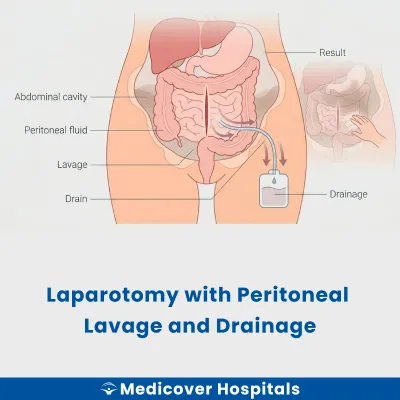
Laparotomy with Peritoneal Lavage and Drainage is a surgical procedure involving the abdomen. A laparotomy is an incision made in the abdominal wall to access the abdominal cavity. Peritoneal lavage involves washing out the peritoneal cavity (the space within the abdomen that houses organs) with a sterile solution. Drainage refers to removing fluid or pus from the cavity. This procedure helps in diagnosing and treating conditions within the abdomen.
This surgery is often needed for conditions like abdominal trauma, infections, or internal bleeding. If left untreated, these conditions can lead to severe complications or infections. Modern surgical approaches for this procedure include open surgery and minimally invasive techniques like laparoscopy. These methods aim to reduce recovery time and improve outcomes.
Laparotomy With Peritoneal Lavage and Drainage Doctors Near You
Find experienced general-surgeons for laparotomy with peritoneal lavage and drainage at Medicover Hospitals across India. Choose your city and book a consultation to discuss your surgical needs.
Why Choose Medicover Hospitals for Laparotomy With Peritoneal Lavage and Drainage?
Get a second opinion from trusted experts and makeconfident, informed decisions.
 Get Second Opinion
Complete Guide To Laparotomy With Peritoneal Lavage And Drainage
Everything you need to know about the procedure, preparation, and recovery
Laparotomy with Peritoneal Lavage and Drainage Surgery Indications
Doctors recommend laparotomy with peritoneal lavage and drainage when there is a need to explore the abdominal cavity and manage specific conditions. This procedure is often considered when non-surgical treatments are insufficient.
Peritonitis
Patients may experience severe abdominal pain, fever, and tenderness. On examination, doctors find signs of inflammation in the abdominal cavity. Imaging may reveal fluid accumulation. When antibiotics and other treatments fail, surgery is required.
Abdominal Trauma
After an injury, patients might have abdominal pain, swelling, or bruising. Doctors use imaging to detect internal bleeding or organ damage. If conservative management does not stabilize the patient, surgery is necessary to control bleeding and repair injuries.
Intestinal Perforation
Symptoms include sudden, severe abdominal pain and signs of infection. X-rays or CT scans show free air or fluid in the abdomen. When medication and observation do not resolve the issue, surgical intervention is needed to repair the perforation.
Intra-abdominal Abscess
Patients often have fever, pain, and swelling in the abdomen. Ultrasound or CT scans may show fluid collections. If drainage through less invasive methods is not effective, surgery is required to remove the abscess.
Unresolved Bowel Obstruction
Symptoms include abdominal pain, vomiting, and inability to pass gas or stool. Imaging shows blockage in the intestines. When conservative treatments like nasogastric suction fail, surgery is performed to relieve the obstruction.
How to Prepare for Laparotomy with Peritoneal Lavage and Drainage?
Proper preparation is crucial for a successful laparotomy with peritoneal lavage and drainage. It ensures safety and helps in achieving the desired surgical outcomes.
- Medication Review: Stop NSAIDs, anticoagulants, and herbal supplements at least a week before surgery, as advised by your doctor.
- Fasting: Do not eat or drink anything for at least 8 hours before the surgery to prepare for anaesthesia.
- Bowel Preparation: Follow your doctor's instructions for bowel prep to ensure a clear surgical field.
- Clothing: Wear loose, comfortable clothing on the day of the surgery for ease and comfort.
- Transportation: Arrange for someone to drive you home post-surgery as you may feel drowsy from anaesthesia.
- Medication List: Bring a list of all medications you are taking, including dosages, for the medical team.
- Pre-Surgery Instructions: Follow any additional instructions provided by your healthcare provider for optimal preparation.
- Rest Well: Ensure you get a good night's sleep before the surgery to help your body recover better.
Laparotomy with Peritoneal Lavage and Drainage Surgery (Step-by-Step)
Overview: This procedure is performed by general surgeons It typically lasts 2-4 hours and is done under general anaesthesia.
- Preparation: The patient is given general anaesthesia to ensure they are asleep and pain-free. The surgical area is cleaned and sterilised.
- Incision: A midline incision, usually about 10-15 cm, is made on the abdomen. This allows access to the abdominal cavity.
- Exploration: The surgeon examines the abdominal organs to identify any issues. Surgical instruments like retractors and forceps are used.
- Peritoneal Lavage: A saline solution is introduced into the abdominal cavity. This helps in cleaning and removing any contaminants or blood.
- Drainage: Any excess fluid or pus is drained using suction devices. Trocar or drainage tubes may be inserted to facilitate this process.
- Closure: The incision is closed with sutures or staples. A sterile dressing is applied to protect the wound.
- Recovery: The patient is moved to the recovery room. They are monitored as they wake from anaesthesia.
Who Performs Laparotomy with Peritoneal Lavage and Drainage Surgery?
This surgery is performed by general surgeons. They are trained to handle various abdominal conditions and perform complex surgical procedures. Their expertise ensures the procedure is conducted safely and effectively.
Recovery After Laparotomy with Peritoneal Lavage and Drainage Surgery
Recovery from laparotomy with peritoneal lavage and drainage surgery requires careful attention to diet, activity, and monitoring for complications. Expect a gradual return to normal activities over several weeks.
Day 1-3:
- Rest is crucial. Avoid any strenuous activity.
- Start with clear liquids. Gradually introduce soft foods like soups and dal-rice.
- Pain and discomfort are common. Follow prescribed medication schedules.
Day 4-7:
- Continue with light activities. Short walks are encouraged to prevent blood clots.
- Introduce easily digestible foods like khichdi and moong dal. Avoid spicy or oily foods.
- Monitor the surgical site for any signs of infection.
Week 2-4:
- Gradually increase activity levels. Avoid lifting heavy objects.
- Return to work or school may be possible, depending on recovery progress.
- Include curd and soft fruits in your diet for better digestion.
Week 4-6:
- Most patients can resume normal activities, but listen to your body.
- Maintain a balanced diet to support healing.
- Regular follow-up appointments are essential to monitor recovery.
When to Seek Urgent Help:
- High fever or chills.
- Severe abdominal pain or swelling.
- Persistent nausea or vomiting.
- Redness or discharge from the incision site.
Benefits of Laparotomy with Peritoneal Lavage and Drainage Surgery
This surgical procedure is vital for diagnosing and treating abdominal issues.
- Effective Diagnosis: Helps identify the cause of abdominal pain or infection.
- Infection Control: Removes infected fluids, reducing the risk of sepsis.
- Improved Recovery: Facilitates faster healing by cleaning the abdominal cavity.
- Comprehensive Treatment: Allows for direct intervention in abdominal conditions.
Risks and Complications of Laparotomy with Peritoneal Lavage and Drainage Surgery
While generally safe, this procedure carries some risks, as with any surgery.
- Common: Infection at the incision site.
- Common: Bleeding during or after the procedure.
- Rare: Damage to internal organs.
- Rare: Formation of scar tissue leading to bowel obstruction.
- Rare: Adverse reactions to anaesthesia.
- Rare: Blood clots forming in the legs or lungs.
Cost of Laparotomy with Peritoneal Lavage and Drainage Surgery
The cost of Laparotomy with Peritoneal Lavage and Drainage Surgery at Medicover Hospitals ranges from Rs. 5000 to Rs. 155000. The price varies based on the ward category chosen, such as day care, general, twin sharing, private, and more. We offer transparent pricing to ensure clarity for our patients.
Insurance and TPA support is available, with acceptance of CGHS, ESI, and major TPAs. A cashless facility is also offered for convenience. Please contact the hospital for the latest insurance panel details as these may change periodically.
Frequently Asked Questions
1. How much does Laparotomy with Peritoneal Lavage and Drainage surgery cost at Medicover Hospitals?
The cost ranges from Rs. 5000 to Rs. 155000 across Medicover Hospitals, depending on the type of room and care required.
2. Is Laparotomy with Peritoneal Lavage and Drainage surgery covered under health insurance at Medicover?
Yes, it is covered by CGHS, ESI, and major TPAs, with cashless options available. Please contact the hospital for current panel details.
3. Will I need a special diet after peritoneal lavage?
Yes, a light diet like dal-rice, khichdi, and curd is recommended initially. Gradually return to your regular diet as advised by your doctor.
4. Can infection recur after peritoneal lavage?
There is a possibility of recurrence if the underlying cause isn't addressed. Regular follow-ups and adherence to medical advice are crucial.
5. How soon can I resume activities post-surgery?
You can typically resume light activities within 2-3 weeks. However, avoid heavy lifting and strenuous tasks for at least 6 weeks.
6. Will I experience abdominal pain after surgery?
Mild abdominal pain is common post-surgery and should subside in a few days. Consult your doctor if the pain persists or worsens.
7. Are there risks of organ damage during the procedure?
While rare, there is a risk of damage to nearby organs during surgery. Surgeons take precautions to minimize any such risks.


