 Call
Call Patient Reports
Laparoscopic Unilateral Adrenalectomy Surgery by Expert Urologists
At Medicover Hospitals, our skilled urologists perform Laparoscopic Unilateral Adrenalectomy using minimally invasive techniques. With qualifications like MCh, DNB, and MS, they ensure precise surgical intervention. This approach results in smaller incisions and reduced blood loss, promoting faster recovery for patients across India.
Expert Surgeons
Yearly Surgeries
Patient Satisfaction
What is Laparoscopic Unilateral Adrenalectomy?
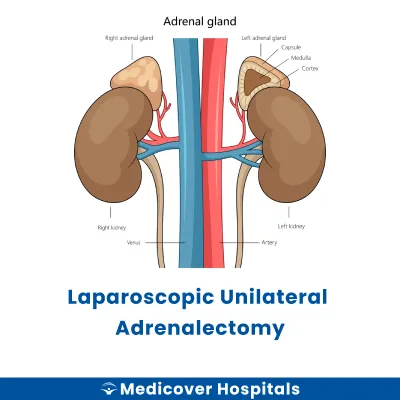
Laparoscopic Unilateral Adrenalectomy is a minimally invasive surgical procedure. It involves the removal of one adrenal gland. The adrenal glands are small organs located above each kidney. They produce hormones like adrenaline and cortisol. This surgery uses small incisions and a camera to guide the surgeon.
This procedure is necessary when there is a tumour or abnormal growth in one adrenal gland. Conditions like adrenal adenomas or pheochromocytomas may require this surgery. If left untreated, these conditions can lead to hormonal imbalances and other health issues. Modern surgical approaches include laparoscopic and robotic-assisted techniques. These methods aim to reduce recovery time and minimise scarring.
Laparoscopic Unilateral Adrenalectomy Doctors Near You
Find expert urologists for laparoscopic unilateral adrenalectomy at Medicover Hospitals across India. Choose your city and book a consultation to explore your treatment options today.
Why Choose Medicover Hospitals for Laparoscopic Unilateral Adrenalectomy?
Get a second opinion from trusted experts and makeconfident, informed decisions.
 Get Second Opinion
Complete Guide To Laparoscopic Unilateral Adrenalectomy
Everything you need to know about the procedure, preparation, and recovery
Laparoscopic Unilateral Adrenalectomy Surgery Indications
Laparoscopic unilateral adrenalectomy is recommended when an adrenal gland disorder affects one side and requires surgical intervention. Doctors suggest this procedure when conservative treatments are ineffective or when the condition poses significant health risks.
Adrenal Tumours
Patients may experience unexplained weight gain, high blood pressure, or hormonal imbalances. Imaging tests like CT or MRI reveal a tumour on one adrenal gland. Surgery is considered when the tumour is large or causing significant symptoms.
Pheochromocytoma
Symptoms include episodes of severe headaches, palpitations, and sweating. Blood tests show elevated catecholamines, and imaging confirms a tumour. Surgery is advised when medication fails to control symptoms or if the tumour is large.
Primary Aldosteronism
Patients often have resistant hypertension and low potassium levels. Blood tests indicate high aldosterone levels. Surgery is recommended when medication does not adequately control blood pressure or correct potassium levels.
Cushing's Syndrome
Signs include weight gain, skin changes, and muscle weakness. Tests show high cortisol levels, and imaging identifies an adrenal mass. Surgery is necessary when medical therapy is ineffective.
Adrenal Incidentaloma
These are often found during imaging for other conditions. Though asymptomatic, further tests may reveal hormonal activity or growth. Surgery is considered when there's a risk of malignancy or significant hormone production.
How to Prepare for Laparoscopic Unilateral Adrenalectomy?
Proper preparation is crucial for a smooth laparoscopic unilateral adrenalectomy. It helps minimise risks and ensures a quicker recovery.
- Medication Review: Inform your doctor about all medications. Stop NSAIDs, anticoagulants, and herbal supplements as advised.
- Fasting Guidelines: Do not eat or drink anything for at least 8 hours before the surgery to ensure safe anaesthesia.
- Pre-Surgery Tests: Complete all required blood tests and imaging studies as instructed by your healthcare provider.
- Clothing: Wear loose, comfortable clothing on the day of the surgery for ease of movement post-operation.
- Transportation: Arrange for someone to drive you home after the procedure, as you will not be able to drive yourself.
- Medication List: Bring a list of your current medications, including dosages, to the hospital.
- Smoking and Alcohol: Avoid smoking and alcohol for at least 24 hours before surgery to reduce complications.
- Personal Items: Leave valuables at home and bring only essentials to the hospital.
Laparoscopic Unilateral Adrenalectomy Surgery (Step-by-Step)
This surgery is performed by urology doctors. It typically lasts 2 to 4 hours and is done under general anaesthesia.
- Preparation: The patient is positioned on the operating table. General anaesthesia is administered to ensure the patient is asleep and pain-free.
- Incision and Access: Small incisions, usually 1-2 cm, are made in the abdomen. A trocar is inserted through these incisions to provide access for surgical instruments.
- Insertion of Laparoscope: A laparoscope, a thin tube with a camera, is inserted through one of the incisions. It provides a magnified view of the adrenal gland on a monitor.
- Dissection: Using instruments like a harmonic scalpel and bipolar cautery, the surgeon carefully dissects and separates the adrenal gland from surrounding tissues.
- Removal of Adrenal Gland: The adrenal gland is detached and removed through one of the incisions. Care is taken to minimise bleeding and preserve nearby structures.
- Closure: The incisions are closed with sutures or surgical glue. Dressings are applied to protect the wounds.
- Recovery: The patient is moved to a recovery room. They are monitored as they wake up from anaesthesia. Pain management and post-operative care instructions are provided.
Who Performs Laparoscopic Unilateral Adrenalectomy Surgery?
This surgery is performed by urologists who specialise in minimally invasive procedures. They are trained to use laparoscopic techniques and instruments to safely remove the adrenal gland.
Recovery After Laparoscopic Unilateral Adrenalectomy Surgery
Recovery from laparoscopic unilateral adrenalectomy is generally swift. Patients can expect a gradual return to normal activities, with some dietary and activity modifications.
Day 1-3:
- Rest is crucial. Avoid strenuous activities.
- Start with a liquid diet and gradually introduce soft foods like soups and moong dal.
- Pain and discomfort are common. Follow prescribed medication.
Day 4-7:
- Increase mobility slowly. Short walks are encouraged.
- Introduce light meals such as dal-rice and khichdi.
- Monitor the surgical site for any signs of infection.
Day 8-14:
- Resume normal daily activities, but avoid heavy lifting.
- Continue with a balanced diet including curd and soft vegetables.
- Most patients can return to work or school, depending on their comfort and job demands.
Phase 3 (Week 3-4):
- Gradually resume exercise routines, avoiding high-impact activities.
- Focus on a nutritious diet to support healing.
- Regular follow-up appointments to monitor recovery progress.
When to Seek Urgent Help
- Severe abdominal pain or swelling.
- Persistent fever or chills.
- Redness or discharge from the incision site.
- Difficulty breathing or chest pain.
Benefits of Laparoscopic Unilateral Adrenalectomy Surgery
Laparoscopic unilateral adrenalectomy is a minimally invasive procedure to remove one adrenal gland. It offers several advantages over traditional surgery.
- Reduced Recovery Time: Patients typically experience a quicker recovery compared to open surgery.
- Less Pain: The minimally invasive nature often results in less postoperative pain.
- Smaller Incisions: The procedure involves small incisions, leading to minimal scarring.
- Lower Risk of Infection: Smaller incisions reduce the risk of infection.
Risks and Complications of Laparoscopic Unilateral Adrenalectomy Surgery
While generally safe, laparoscopic unilateral adrenalectomy carries certain risks and complications.
- Common: Bleeding during or after the procedure.
- Common: Infection at the site of incision.
- Rare: Injury to surrounding organs such as the kidney or liver.
- Rare: Blood clots forming in the legs or lungs.
- Rare: Hormonal imbalances due to removal of the adrenal gland.
Cost of Laparoscopic Unilateral Adrenalectomy Surgery
The cost of Laparoscopic Unilateral Adrenalectomy Surgery at Medicover Hospitals ranges from Rs.27,500 to Rs.1,20,000. The price varies based on the ward category chosen, such as general, twin sharing, or private rooms. We offer transparent pricing to ensure clarity for our patients.
Insurance and TPA support are available, with acceptance of CGHS, ESI, and major TPAs. A cashless facility is also provided for convenience. Please contact the hospital for the latest insurance panel details as these may change periodically.
Frequently Asked Questions
1. How much does Laparoscopic Unilateral Adrenalectomy surgery cost at Medicover Hospitals?
The cost for Laparoscopic Unilateral Adrenalectomy surgery at Medicover Hospitals ranges from Rs. 27,500 to Rs. 120,000, depending on the facility and room type.
2. Is Laparoscopic Unilateral Adrenalectomy surgery covered under health insurance at Medicover?
Laparoscopic Unilateral Adrenalectomy surgery is often covered by CGHS, ESI, and major TPAs. Please contact the hospital for current panel details.
3. Will I need hormone replacement after adrenalectomy?
You may require hormone replacement therapy if the remaining adrenal gland does not compensate. Your doctor will evaluate your hormone levels post-surgery.
4. Can I exercise after adrenalectomy?
Light activities can be resumed after two weeks, but avoid strenuous exercise for six weeks. Consult your doctor before starting any fitness regimen.
5. What foods should I eat post-adrenalectomy?
Consume a balanced diet including curd, dal-rice, and khichdi. Avoid high-sodium foods to support adrenal function and recovery.
6. Will I experience fatigue after adrenalectomy?
Fatigue is common post-surgery due to hormonal adjustments. It typically improves over weeks as your body adapts.
7. Can adrenalectomy affect my blood pressure?
Yes, adrenalectomy can impact blood pressure, especially if the adrenal gland was producing excess hormones. Regular monitoring is essential post-surgery.
8. What is the purpose of an adrenalectomy?
An adrenalectomy is performed to remove one or both adrenal glands, usually to treat tumors, hormone overproduction, or conditions like Cushing’s syndrome or pheochromocytoma. The goal is to eliminate the source of abnormal hormone secretion or remove cancerous or suspicious growths.
9. Is adrenalectomy considered a major surgery?
Yes, an adrenalectomy is considered a major surgery, especially when performed as an open procedure rather than laparoscopically. However, minimally invasive techniques often result in less pain, shorter hospital stays, and quicker recovery.


