 Call
Call Patient Reports
Laparoscopic Repair of Ureterovaginal Surgery by Expert Urologists
At Medicover Hospitals, our expert urologists, holding qualifications like MS, DNB, and MCh, perform laparoscopic repair of ureterovaginal fistulas. This minimally invasive approach ensures smaller incisions and reduced blood loss, leading to quicker recovery and shorter hospital stays for patients across India.
Expert Surgeons
Yearly Surgeries
Patient Satisfaction
What is Laparoscopic Repair of Ureterovaginal?
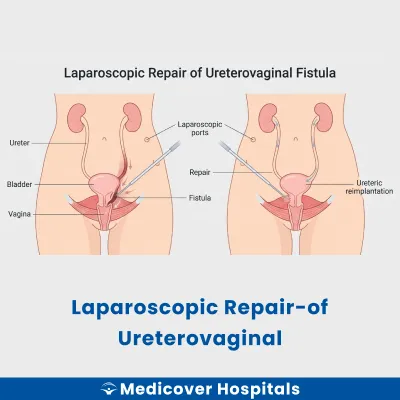
Laparoscopic Repair of Ureterovaginal is a minimally invasive surgery to fix a ureterovaginal fistula. This is an abnormal connection between the ureter (tube carrying urine from the kidney to the bladder) and the vagina. The procedure uses small incisions and a camera to guide the repair, reducing recovery time and scarring.
This surgery is needed when a ureterovaginal fistula causes urine to leak into the vagina. It can result from childbirth, surgery, or radiation therapy. If untreated, it can lead to infections and kidney damage. Modern surgical approaches include robotic-assisted laparoscopy. These techniques offer precision and quicker recovery. Always consult with a healthcare provider for the best treatment option.
Laparoscopic Repair of Ureterovaginal Doctors Near You
Discover skilled urologists for laparoscopic repair of ureterovaginal issues at Medicover Hospitals across India. Choose your city and book a consultation to explore effective treatment options.
Why Choose Medicover Hospitals for Laparoscopic Repair of Ureterovaginal?
Get a second opinion from trusted experts and makeconfident, informed decisions.
 Get Second Opinion
Complete Guide To Laparoscopic Repair Of Ureterovaginal
Everything you need to know about the procedure, preparation, and recovery
Laparoscopic Repair of Ureterovaginal Surgery Indications
Doctors recommend laparoscopic repair of ureterovaginal fistulas when non-surgical treatments fail. This minimally invasive procedure is often chosen to address complications affecting the urinary and reproductive systems.
Persistent Urinary Leakage
Patients may experience continuous urine leakage from the vagina. This occurs when a Abnormal passageway forms between the ureter and the vaginal wall. Imaging tests like CT scans reveal the abnormal connection. Surgery is advised when leakage persists despite conservative management.
Recurrent Urinary Tract Infections (UTIs)
Frequent UTIs can be a sign of a ureterovaginal fistula. Patients often report burning sensation during urination and pelvic pain. Lab tests show recurrent infections. If antibiotics and other treatments fail, surgical repair is necessary.
Pelvic Pain and Discomfort
Chronic pelvic pain and discomfort may indicate a fistula. Patients often feel pain during intercourse or daily activities. Physical examination and imaging confirm the diagnosis. Surgery is considered when pain relief methods do not work.
Hydronephrosis
Imaging may show swelling of the kidney due to urine backflow, known as hydronephrosis. Patients might experience flank pain or notice reduced urine output. When drainage procedures are ineffective, laparoscopic repair is recommended.
Failed Conservative Treatment
Conservative measures like catheterization or stenting may be attempted initially. Persistent symptoms or lack of improvement in imaging results indicate the need for surgical intervention. Laparoscopic repair is then considered the best option.
How to Prepare for Laparoscopic Repair of Ureterovaginal?
Proper preparation is crucial for a smooth laparoscopic repair of ureterovaginal fistula. It helps minimise risks and ensures a quicker recovery.
- Medication Review: Stop NSAIDs, anticoagulants, and herbal supplements at least a week before surgery.
- Fasting: Do not eat or drink anything for at least 8 hours before the procedure to prepare for anaesthesia.
- Bowel Preparation: Follow your doctor's instructions for bowel prep, if advised, to ensure a clear surgical area.
- Pelvic Floor Exercises: Perform recommended exercises to strengthen muscles and aid recovery.
- Clothing: Wear loose, comfortable clothing on the day of the surgery for ease and comfort.
- Transportation: Arrange for someone to take you home post-surgery as you may feel drowsy.
- Medication List: Bring a list of all medications with dosages to inform the medical team.
- Pre-Surgery Consultation: Attend all pre-surgery appointments to discuss any concerns or questions.
Laparoscopic Repair of Ureterovaginal Surgery (Step-by-Step)
Overview: This procedure is performed by urologists. It typically lasts 2-4 hours and is done under general anaesthesia.
- Preparation: The patient is placed under general anaesthesia. The surgical area is cleaned and sterilised.
- Incision: Small incisions, usually 1-2 cm, are made in the abdomen. A trocar is inserted through these incisions.
- Insertion of Laparoscope: A laparoscope is inserted through the trocar. This device provides a clear view of the internal organs on a monitor.
- Identification of Ureterovaginal Fistula: The surgeon uses the laparoscope to locate the ureterovaginal fistula. This step requires precision and care.
- Repair of Fistula: Using instruments like a harmonic scalpel and bipolar cautery, the surgeon carefully repairs the fistula. This involves separating the ureter from the vagina and closing the fistula.
- Closure: Once the repair is complete, the instruments are removed. The small incisions are closed with sutures or surgical glue.
- Recovery: The patient is moved to a recovery area. They are monitored as they wake from anaesthesia.
Who Performs Laparoscopic Repair of Ureterovaginal Surgery?
This surgery is performed by urology doctor who specialise in the urinary tract and related structures. They have expertise in minimally invasive techniques, ensuring precise repair of the ureterovaginal fistula.
Recovery After Laparoscopic Repair of Ureterovaginal Surgery
Recovery from laparoscopic repair of ureterovaginal fistula involves gradual healing and resuming daily activities. Patients can expect some discomfort initially, but it typically improves over time. Adhering to post-operative instructions is crucial for a smooth recovery.
Day 1-3:
- Rest is essential. Avoid strenuous activities.
- Stick to a light diet. Include soft foods like curd, dal-rice, and soups.
- Stay hydrated. Drink plenty of water.
Day 4-7:
- Gradually increase activity levels. Short walks are encouraged.
- Continue with a balanced diet. Incorporate khichdi and moong dal for easy digestion.
- Avoid lifting heavy objects.
Week 2:
- Most patients can resume work or school, depending on their comfort.
- Continue avoiding heavy lifting and intense physical activities.
- Maintain a nutritious diet to support healing.
Phase 3-6 Weeks:
- Gradual return to normal activities, including light exercise.
- Consult your doctor before resuming any vigorous activities.
- Follow-up appointments are crucial to monitor recovery.
When to Seek Urgent Help:
- Severe abdominal pain or swelling.
- Fever above 100.4°F (38°C).
- Persistent nausea or vomiting.
- Unusual discharge or bleeding from the incision site.
- Difficulty urinating or changes in urine output.
Benefits of Laparoscopic Repair of Ureterovaginal Surgery
Laparoscopic repair of ureterovaginal fistula offers several advantages over traditional surgery.
- Minimally Invasive: Smaller incisions lead to less pain and quicker recovery.
- Reduced Hospital Stay: Patients often experience shorter hospitalisation periods.
- Lower Infection Risk: Minimally invasive techniques reduce the likelihood of infections.
- Improved Precision: Enhanced visualisation allows for more accurate repairs.
- Cosmetic Benefits: Smaller scars are less noticeable post-surgery.
Risks and Complications of Laparoscopic Repair of Ureterovaginal Surgery
While generally safe, laparoscopic repair of ureterovaginal fistula carries certain risks and complications.
Common Risks
- Bleeding during or after the procedure.
- Infection at the incision sites.
Rare Risks
- Injury to surrounding organs such as the bladder or intestines.
- Formation of blood clots in the legs or lungs.
- Anesthesia-related complications.
- Recurrence of the fistula requiring further treatment.
Cost of Laparoscopic Repair of Ureterovaginal Surgery
The cost for Laparoscopic Repair of Ureterovaginal Surgery at Medicover Hospitals ranges from ₹1,40,000 and ₹3,00,000. The price varies depending on the ward category chosen. We offer transparent pricing and support for insurance and TPA, including CGHS, ESI, and major TPAs. Cashless facilities are available to ease the financial process for patients. Please contact the hospital for the latest insurance panel details as these may change periodically.
Frequently Asked Questions
1. How much does Laparoscopic Repair of Ureterovaginal surgery cost at Medicover Hospitals?
The cost for Laparoscopic Repair of Ureterovaginal surgery at Medicover Hospitals ranges from ₹1,40,000 and ₹3,00,000, depending on the chosen package.
2. Is Laparoscopic Repair of Ureterovaginal surgery covered under health insurance at Medicover?
Yes, it is often covered by CGHS, ESI, and major TPAs. Please contact the hospital for current panel details.
3. Will I need a catheter after ureterovaginal repair?
Yes, a catheter is typically required to ensure proper urine drainage. It is usually removed a few days post-surgery.
4. Can I experience urinary incontinence post-surgery?
Some patients may experience temporary urinary incontinence. It generally improves with time and pelvic floor exercises.
5. Will I need to avoid certain activities after surgery?
Yes, avoid heavy lifting and strenuous activities for at least 4-6 weeks. Gradual resumption of normal activities is recommended.
6. Can I eat spicy food after ureterovaginal repair?
It's best to avoid spicy food for a few weeks post-surgery. Opt for bland meals like dal-rice and khichdi initially.
7. Is there a risk of fistula recurrence after surgery?
There is a small risk of recurrence, but it's rare. Regular follow-ups help monitor healing and prevent complications.


